Department of Physiology and Pathophysiology, School of Basic Medical Sciences, Peking University; Key Laboratory of Molecular Cardiovascular Science, Ministry of Education, Beijing, 100191, China.
Department of Pediatrics, Peking University First Hospital, Beijing, 100034, China.
Cell Res. 2021 Jul;31(7):773-790. doi: 10.1038/s41422-020-00464-8. Epub 2021 Jan 28.
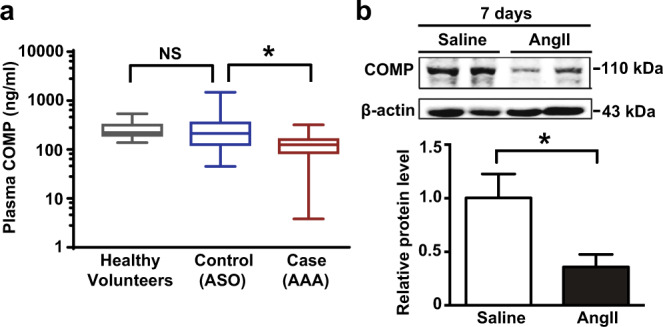
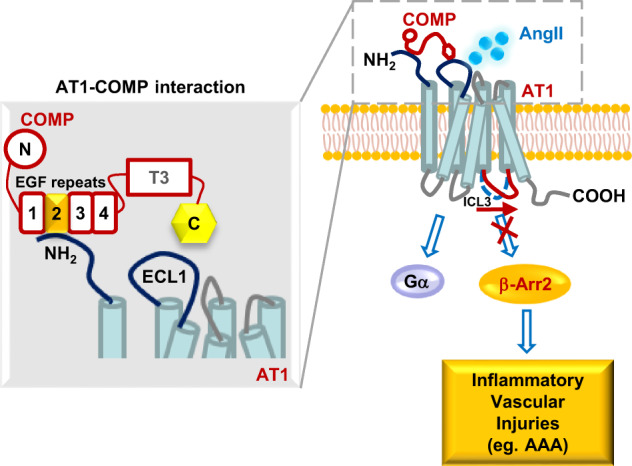
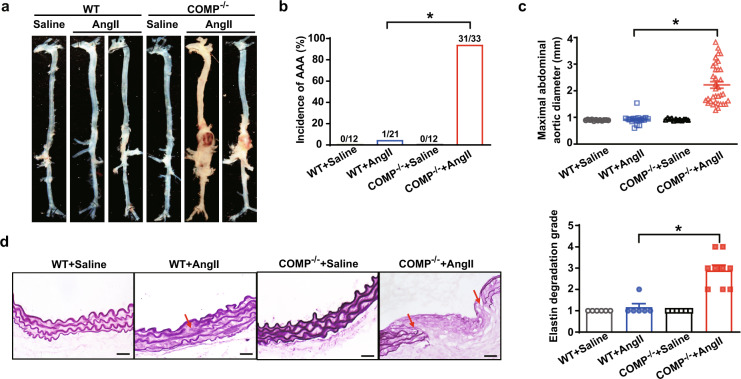
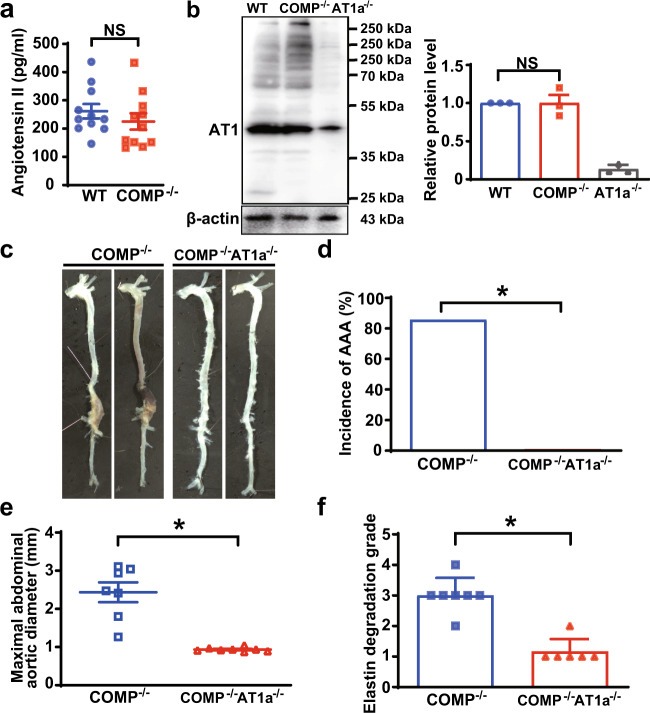
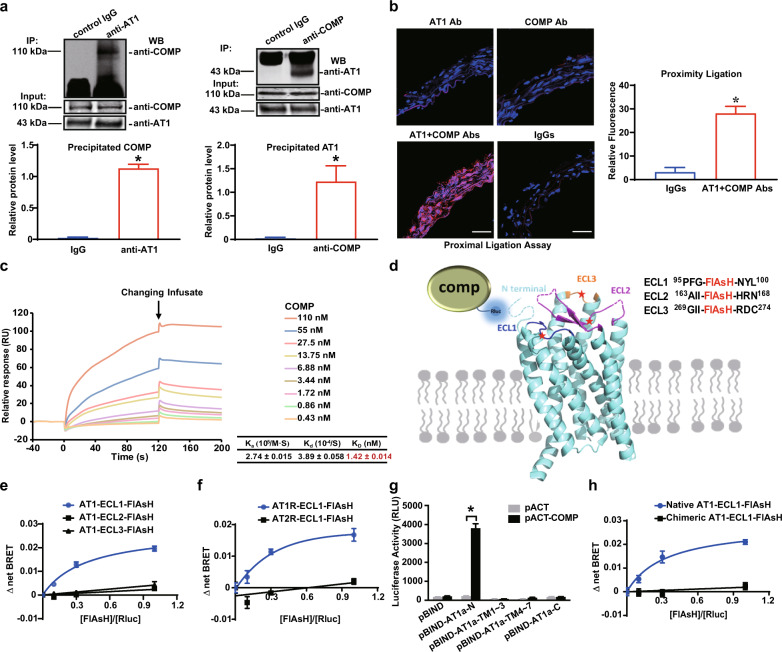
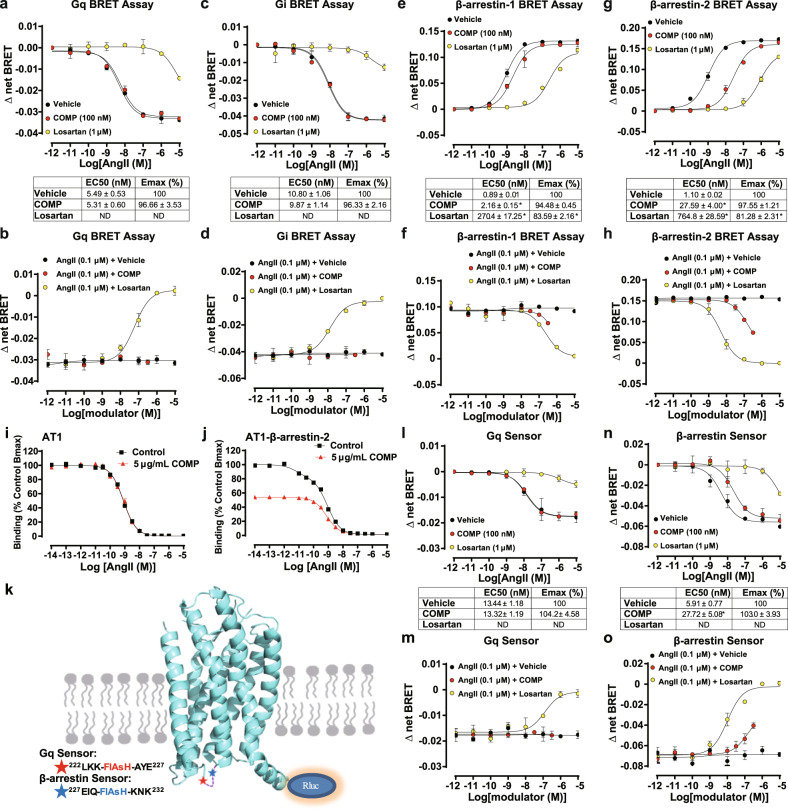
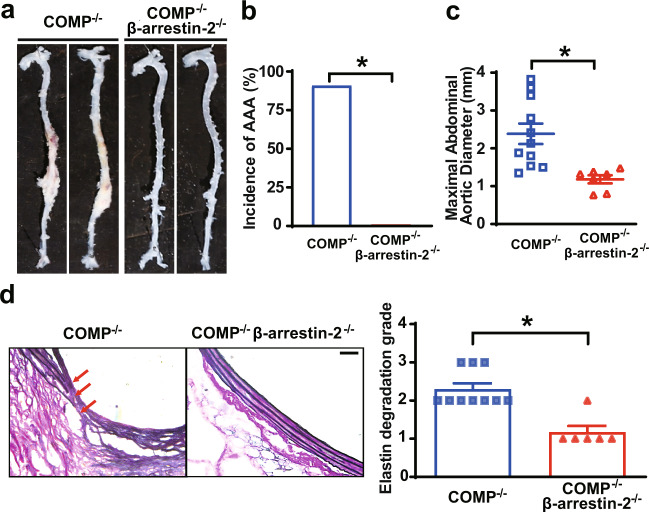
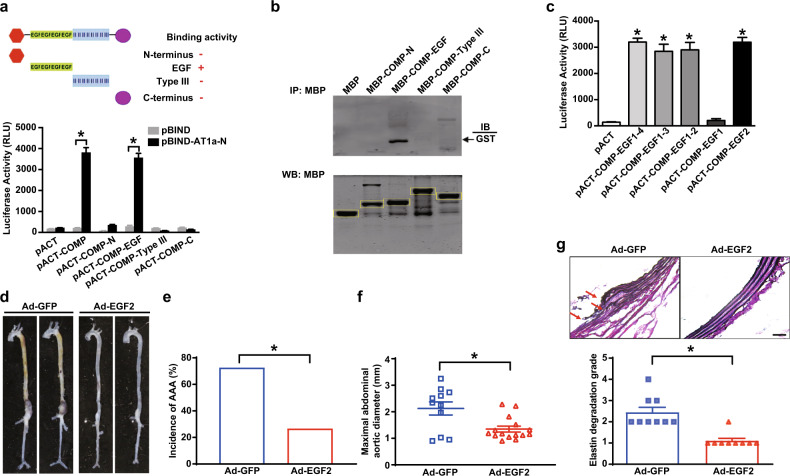
Compelling evidence has revealed that biased activation of G protein-coupled receptor (GPCR) signaling, including angiotensin II (AngII) receptor type 1 (AT1) signaling, plays pivotal roles in vascular homeostasis and injury, but whether a clinically relevant endogenous biased antagonism of AT1 signaling exists under physiological and pathophysiological conditions has not been clearly elucidated. Here, we show that an extracellular matrix protein, cartilage oligomeric matrix protein (COMP), acts as an endogenous allosteric biased modulator of the AT1 receptor and its deficiency is clinically associated with abdominal aortic aneurysm (AAA) development. COMP directly interacts with the extracellular N-terminus of the AT1 via its EGF domain and inhibits AT1-β-arrestin-2 signaling, but not Gq or Gi signaling, in a selective manner through allosteric regulation of AT1 intracellular conformational states. COMP deficiency results in activation of AT1a-β-arrestin-2 signaling and subsequent exclusive AAA formation in response to AngII infusion. AAAs in COMP or ApoE mice are rescued by AT1a or β-arrestin-2 deficiency, or the application of a peptidomimetic mimicking the AT1-binding motif of COMP. Explorations of the endogenous biased antagonism of AT1 receptor or other GPCRs may reveal novel therapeutic strategies for cardiovascular diseases.
有强有力的证据表明,G 蛋白偶联受体(GPCR)信号的偏向激活,包括血管紧张素 II(AngII)受体 1 型(AT1)信号,在血管稳态和损伤中起着关键作用,但在生理和病理生理条件下,是否存在临床相关的 AT1 信号偏向拮抗作用尚未得到明确阐明。在这里,我们表明细胞外基质蛋白软骨寡聚基质蛋白(COMP)作为 AT1 受体的内源性变构偏向调节剂,其缺乏与腹主动脉瘤(AAA)的发展有关。COMP 通过其 EGF 结构域直接与 AT1 的细胞外 N 端相互作用,并通过变构调节 AT1 细胞内构象状态,以选择性的方式抑制 AT1-β-arrestin-2 信号,而不抑制 Gq 或 Gi 信号。COMP 缺乏导致 AT1a-β-arrestin-2 信号的激活,随后在 AngII 输注时仅形成 AAA。在 COMP 或 ApoE 小鼠中,通过 AT1a 或 β-arrestin-2 缺乏或应用模拟 COMP 与 AT1 结合基序的肽模拟物,可以挽救 AAA。对 AT1 受体或其他 GPCR 的内源性偏向拮抗作用的研究可能会揭示心血管疾病的新治疗策略。