College of Veterinary Medicine, Northeast Agricultural University, Harbin, 150030, Heilongjiang, China.
Heilongjiang Key Laboratory for Experimental Animals and Comparative Medicine, Harbin, 150030, Heilongjiang, China.
Vet Res. 2021 Jan 29;52(1):15. doi: 10.1186/s13567-020-00885-8.
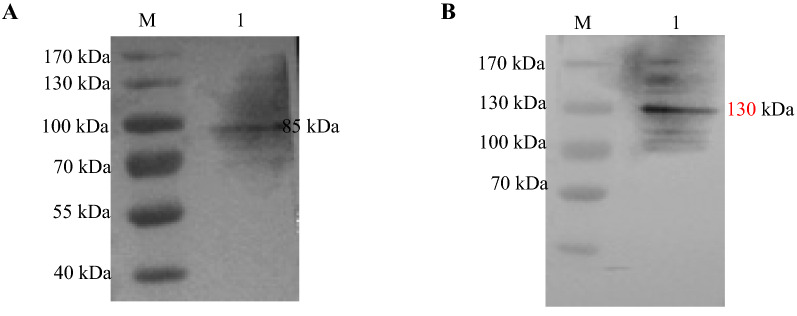
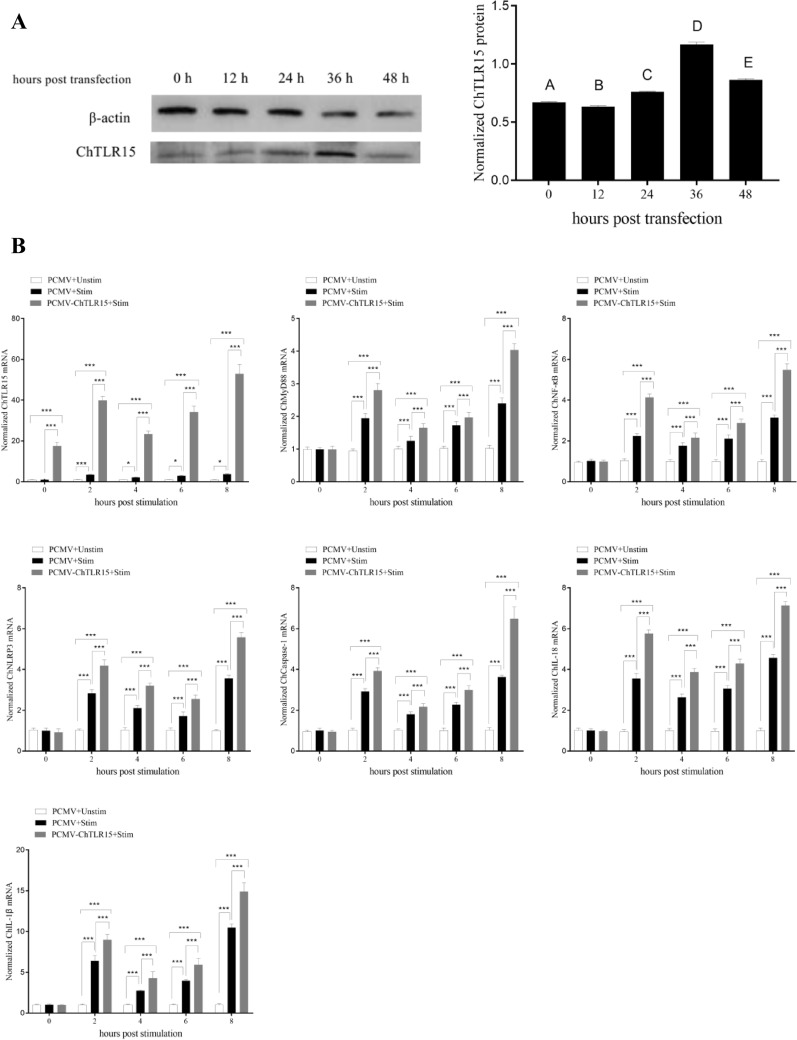
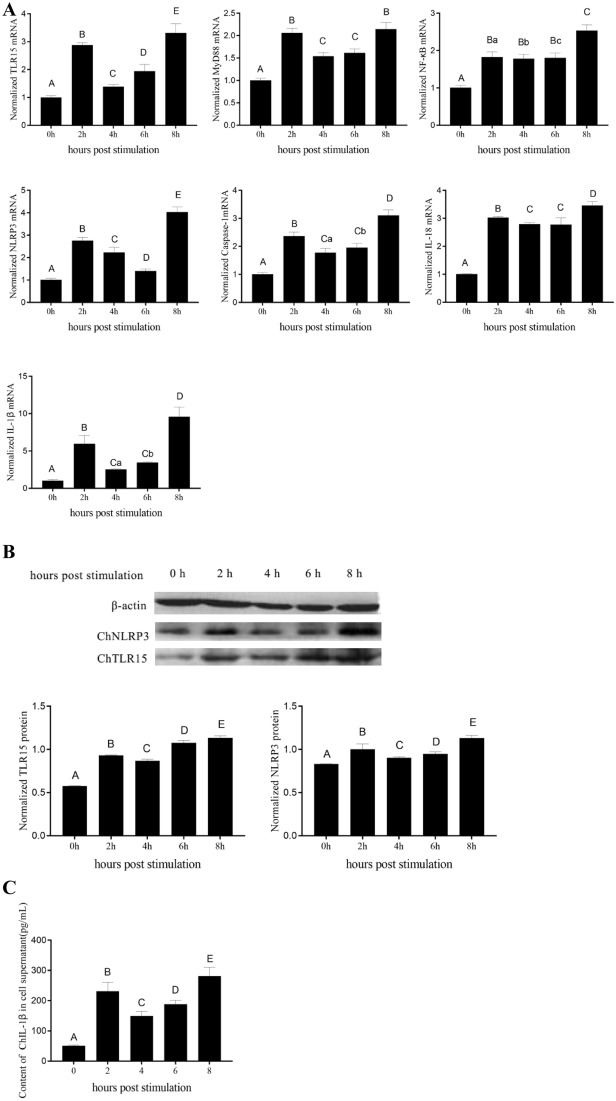
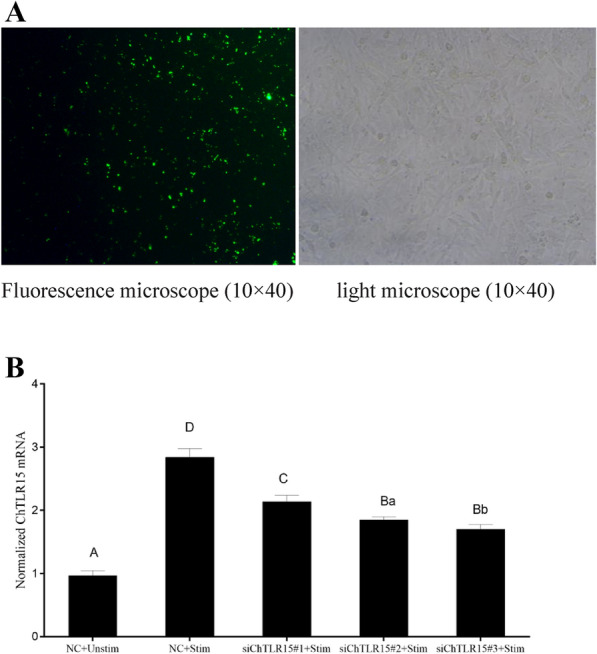
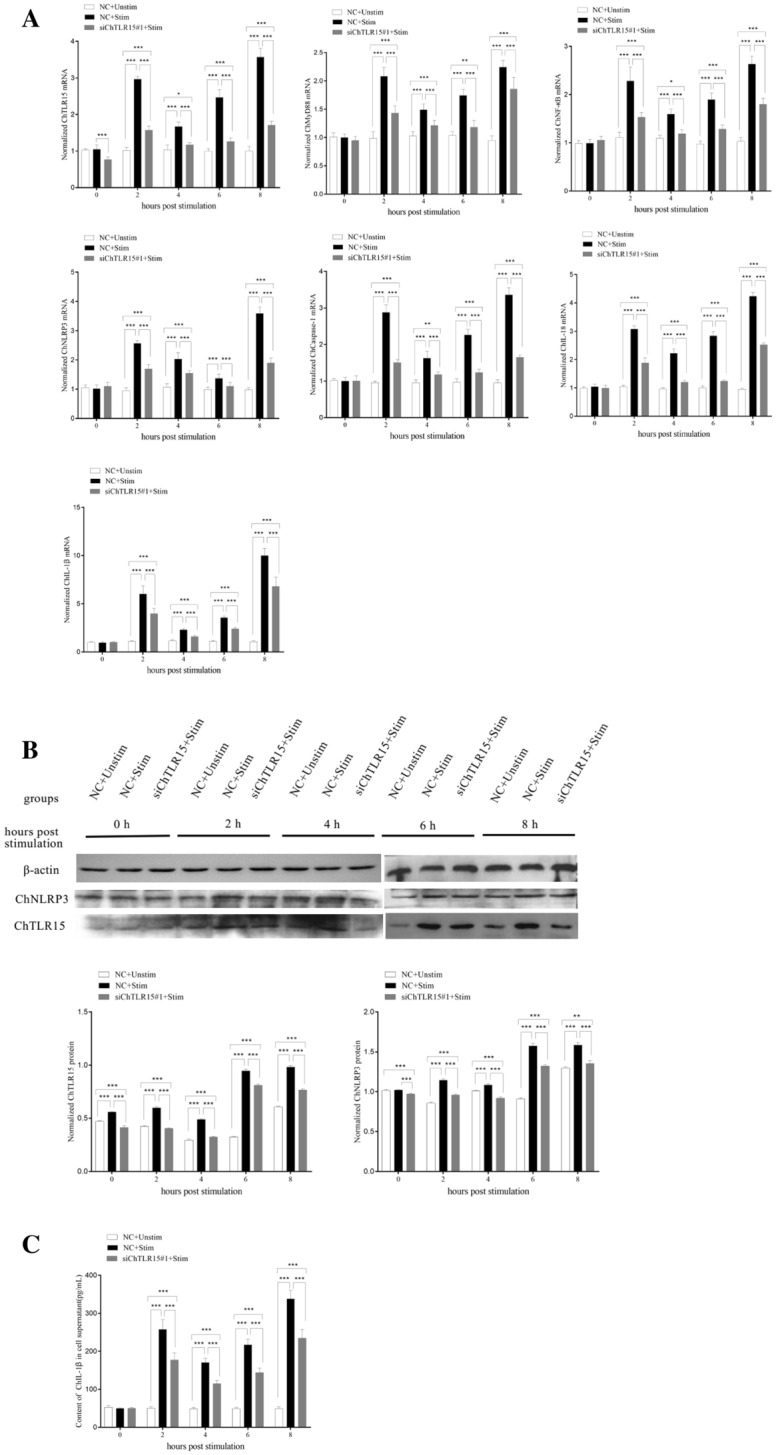
Avian coccidiosis caused by Eimeria leads to severe economic losses in the global poultry industry. Although chicken Toll-like receptor 15 (ChTLR15) was reported to be involved in Eimeria infection, the detailed mechanism underlying its role in the inflammatory response remains to be discovered. The present study demonstrated that the mRNA expression levels of ChTLR15, ChMyD88, ChNF-κB, ChNLRP3, ChCaspase-1, ChIL-18 and ChIL-1β and the protein levels of ChTLR15 and ChNLRP3 in cecal tissues of Eimeria-infected chickens were significantly elevated at 4, 12, and 24 h compared with those in noninfected control chickens (p < 0.01). Moreover, the mRNA levels of molecules in the ChTLR15/ChNF-κB and ChNLRP3/ChIL-1β pathways and the protein levels of ChTLR15 and ChNLRP3 in chicken embryo fibroblast cells (DF-1) stimulated by E. tenella sporozoites were consistent with those in Eimeria-infected chickens. Furthermore, overexpression of ChTLR15 in DF1 cells augmented activation of the ChTLR15/ChNF-κB and ChNLRP3/ChIL-1β pathways when stimulated with E. tenella sporozoites, while knockdown of ChTLR15 in DF1 cells showed inverse effects. Taken together, the present study provides evidence that E. tenella sporozoites specifically activate ChTLR15 and then trigger activation of the ChNLRP3/ChIL-1β pathway, which partially mediates inflammatory responses to Eimeria infection.
鸡球虫病由艾美耳属球虫引起,给全球家禽业造成了严重的经济损失。虽然鸡 Toll 样受体 15(ChTLR15)已被报道参与了艾美耳属感染,但它在炎症反应中的作用的详细机制仍有待发现。本研究表明,在感染艾美耳属球虫的鸡盲肠组织中,ChTLR15、ChMyD88、ChNF-κB、ChNLRP3、ChCaspase-1、ChIL-18 和 ChIL-1β 的 mRNA 表达水平以及 ChTLR15 和 ChNLRP3 的蛋白水平在 4、12 和 24 h 时均显著高于未感染对照鸡(p<0.01)。此外,在鸡胚成纤维细胞(DF-1)中,由柔嫩艾美耳球虫孢子刺激的 ChTLR15/ChNF-κB 和 ChNLRP3/ChIL-1β 通路中的分子的 mRNA 水平以及 ChTLR15 和 ChNLRP3 的蛋白水平与感染艾美耳属球虫的鸡一致。此外,当用柔嫩艾美耳球虫孢子刺激时,DF1 细胞中 ChTLR15 的过表达增强了 ChTLR15/ChNF-κB 和 ChNLRP3/ChIL-1β 通路的激活,而 DF1 细胞中 ChTLR15 的敲低则显示出相反的效果。综上所述,本研究提供的证据表明,柔嫩艾美耳球虫孢子特异性激活 ChTLR15,进而触发 ChNLRP3/ChIL-1β 通路的激活,该通路部分介导了对艾美耳属感染的炎症反应。