Tsinghua-Peking Joint Center for Life Sciences, School of Medicine and School of Life Sciences, Tsinghua University, Beijing, 100084, China.
State Key Laboratory of Membrane Biology, Biomedical Pioneering Innovation Center (BIOPIC), School of Life Sciences, and College of Future Technology, Peking University, Beijing, 100871, China.
Cell Res. 2021 Jun;31(6):613-630. doi: 10.1038/s41422-020-00466-6. Epub 2021 Jan 29.
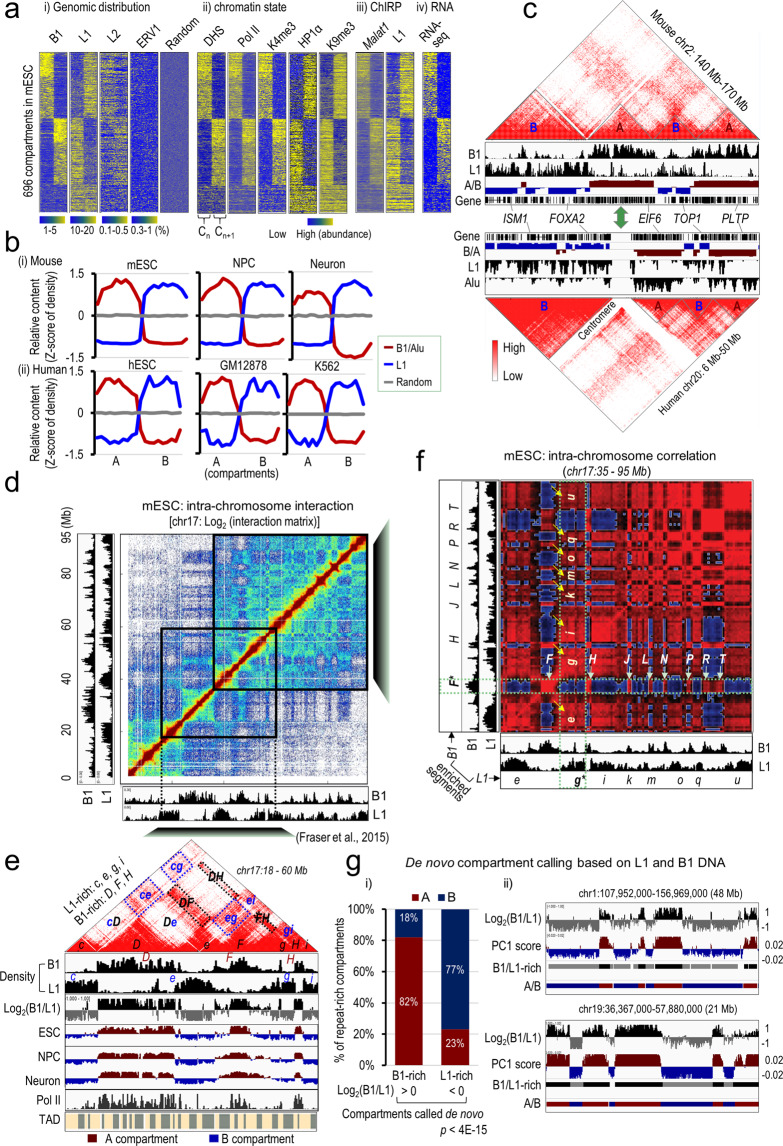
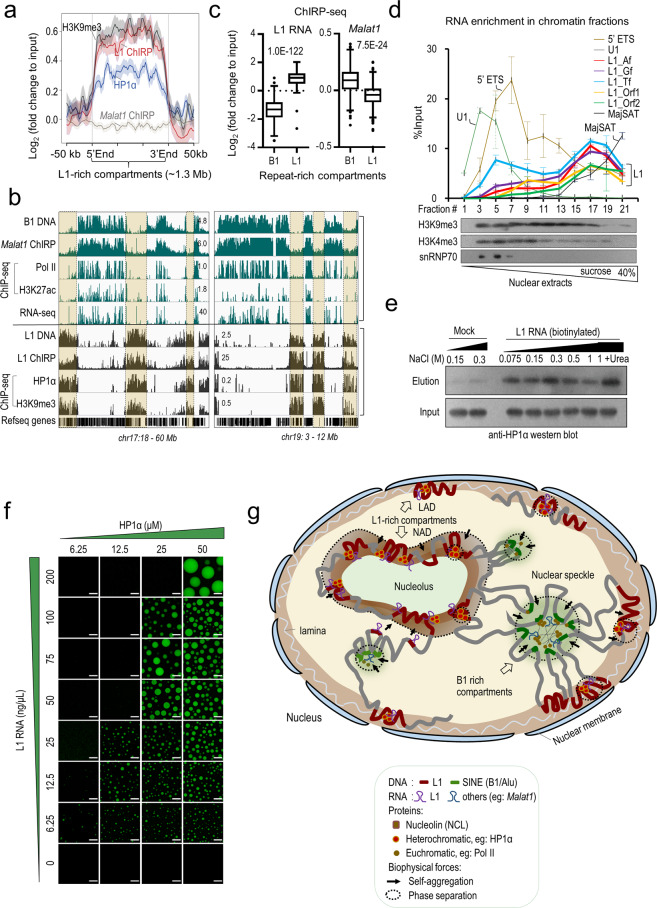
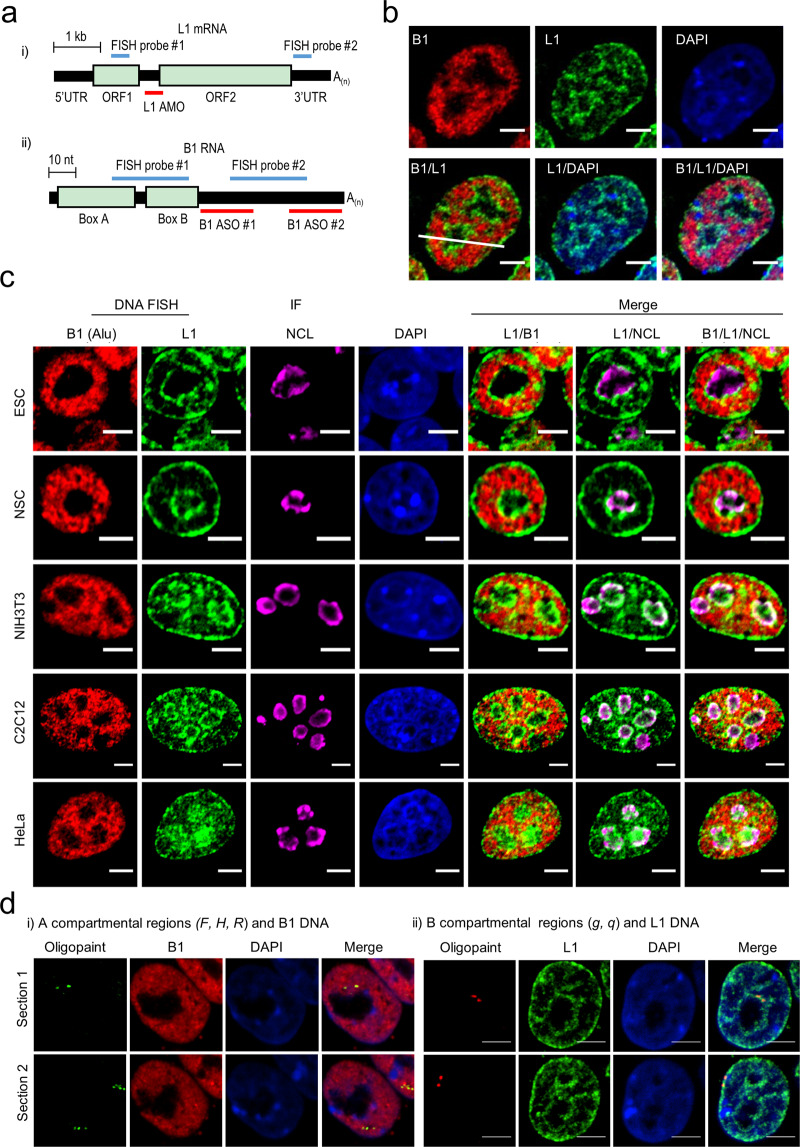
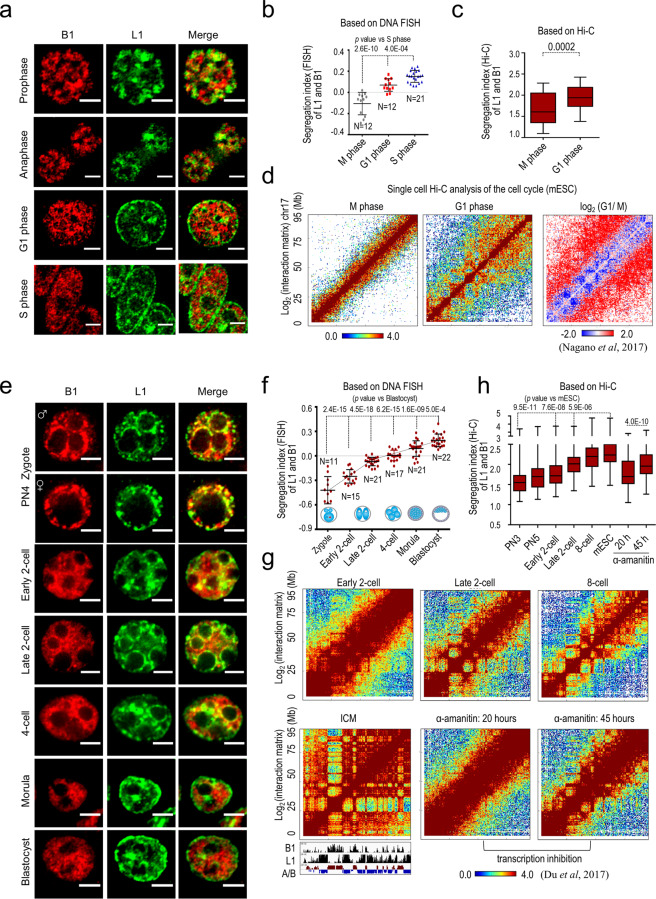
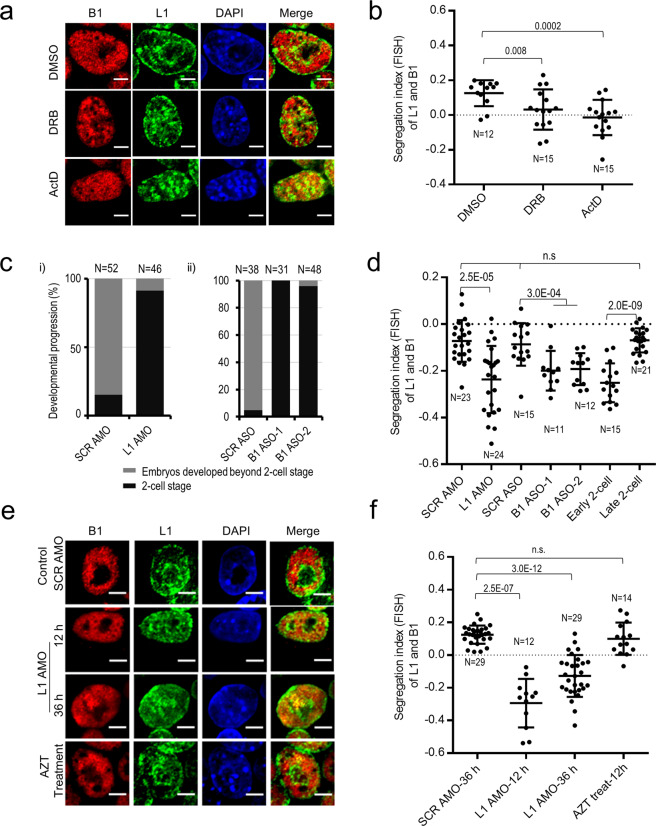
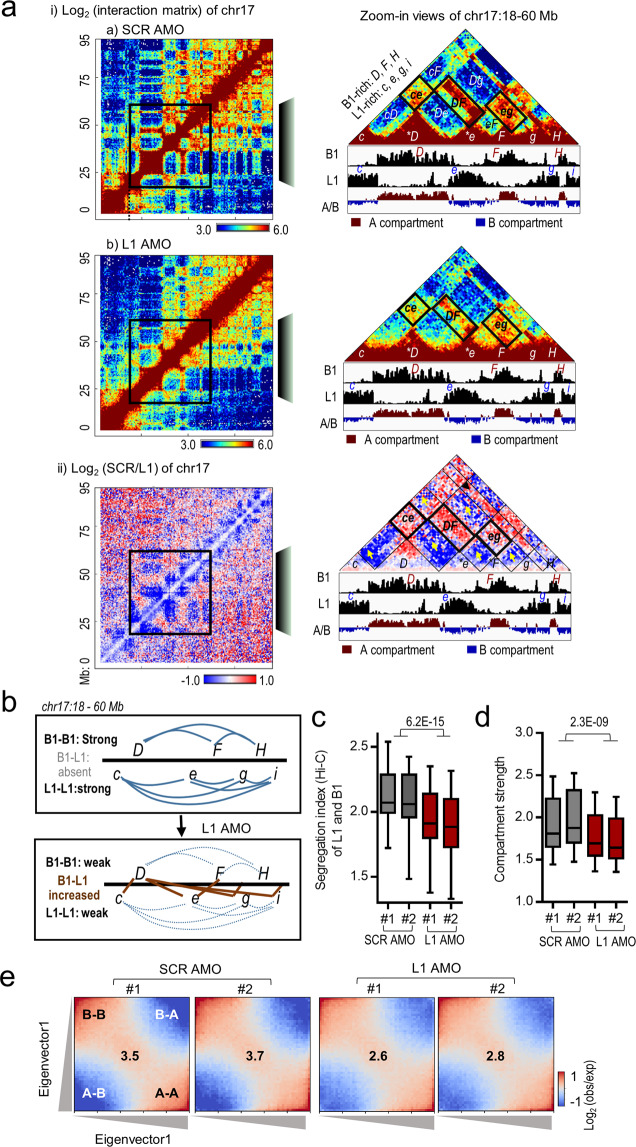
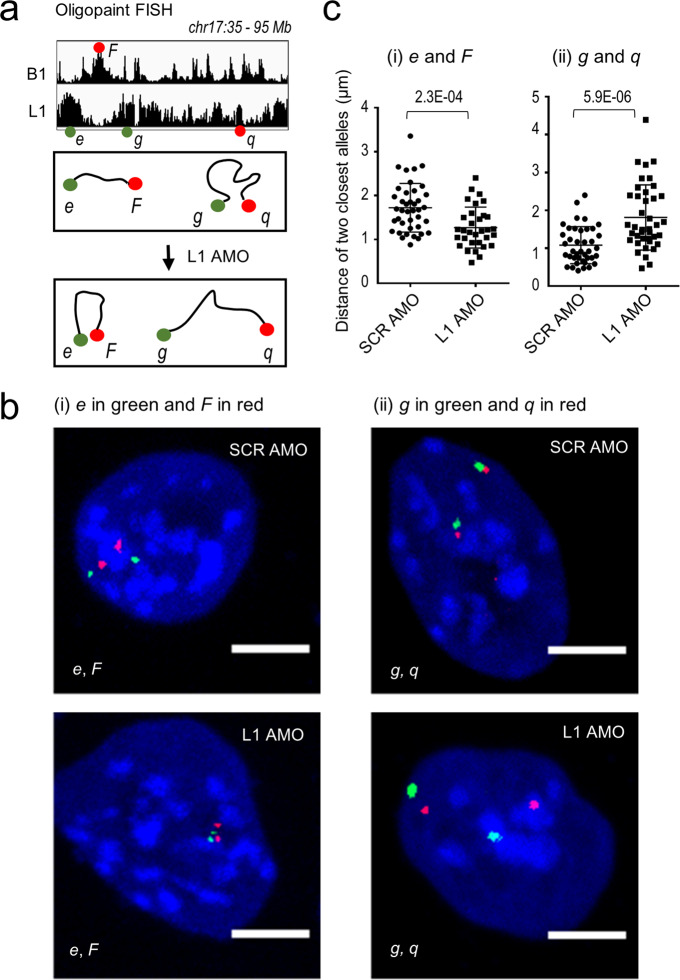
Organization of the genome into euchromatin and heterochromatin appears to be evolutionarily conserved and relatively stable during lineage differentiation. In an effort to unravel the basic principle underlying genome folding, here we focus on the genome itself and report a fundamental role for L1 (LINE1 or LINE-1) and B1/Alu retrotransposons, the most abundant subclasses of repetitive sequences, in chromatin compartmentalization. We find that homotypic clustering of L1 and B1/Alu demarcates the genome into grossly exclusive domains, and characterizes and predicts Hi-C compartments. Spatial segregation of L1-rich sequences in the nuclear and nucleolar peripheries and B1/Alu-rich sequences in the nuclear interior is conserved in mouse and human cells and occurs dynamically during the cell cycle. In addition, de novo establishment of L1 and B1 nuclear segregation is coincident with the formation of higher-order chromatin structures during early embryogenesis and appears to be critically regulated by L1 and B1 transcripts. Importantly, depletion of L1 transcripts in embryonic stem cells drastically weakens homotypic repeat contacts and compartmental strength, and disrupts the nuclear segregation of L1- or B1-rich chromosomal sequences at genome-wide and individual sites. Mechanistically, nuclear co-localization and liquid droplet formation of L1 repeat DNA and RNA with heterochromatin protein HP1α suggest a phase-separation mechanism by which L1 promotes heterochromatin compartmentalization. Taken together, we propose a genetically encoded model in which L1 and B1/Alu repeats blueprint chromatin macrostructure. Our model explains the robustness of genome folding into a common conserved core, on which dynamic gene regulation is overlaid across cells.
基因组组织为常染色质和异染色质,在谱系分化过程中似乎是进化保守且相对稳定的。为了揭示基因组折叠的基本原理,我们专注于基因组本身,并报告了 L1(LINE1 或 LINE-1)和 B1/Alu 反转录转座子(重复序列中最丰富的亚类)在染色质区隔化中起着基本作用。我们发现,L1 和 B1/Alu 的同型聚类将基因组划分成明显排斥的区域,并描绘和预测了 Hi-C 区室。富含 L1 的序列在核和核仁周围的空间分离以及富含 B1/Alu 的序列在核内部的空间分离在小鼠和人类细胞中是保守的,并在细胞周期中动态发生。此外,L1 和 B1 的核分离的从头建立与早期胚胎发生过程中高级染色质结构的形成同时发生,并且似乎受到 L1 和 B1 转录本的严格调控。重要的是,胚胎干细胞中 L1 转录本的耗竭大大削弱了同型重复接触和区室强度,并破坏了 L1 或 B1 丰富的染色体序列在全基因组和个别位点的核分离。从机制上讲,L1 重复 DNA 和 RNA 与异染色质蛋白 HP1α 的核共定位和液滴形成表明了一种相分离机制,通过该机制,L1 促进了异染色质区室化。总之,我们提出了一个遗传编码模型,其中 L1 和 B1/Alu 重复序列勾勒出染色质宏观结构。我们的模型解释了基因组折叠为共同保守核心的稳健性,在此基础上,细胞间动态基因调控被叠加。