Department of Gastroenterology and Hepatology, University Medical Center Groningen, Groningen, The Netherlands.
Department of Genetics, University Medical Center Groningen, Groningen, The Netherlands.
J Crohns Colitis. 2021 Aug 2;15(8):1326-1338. doi: 10.1093/ecco-jcc/jjab020.
The human gastrointestinal tract harbours distinct microbial communities essential for health. Little is known about small intestinal communities, despite the small intestine playing a fundamental role in nutrient absorption and host-microbe immune homeostasis. We aimed to explore the small intestine microbial composition and metabolic potential, in the context of inflammatory bowel disease [IBD].
Metagenomes derived from faecal samples and extensive phenotypes were collected from 57 individuals with an ileostomy or ileoanal pouch, and compared with 1178 general population and 478 IBD faecal metagenomes. Microbiome features were identified using MetaPhAn2 and HUMAnN2, and association analyses were performed using multivariate linear regression.
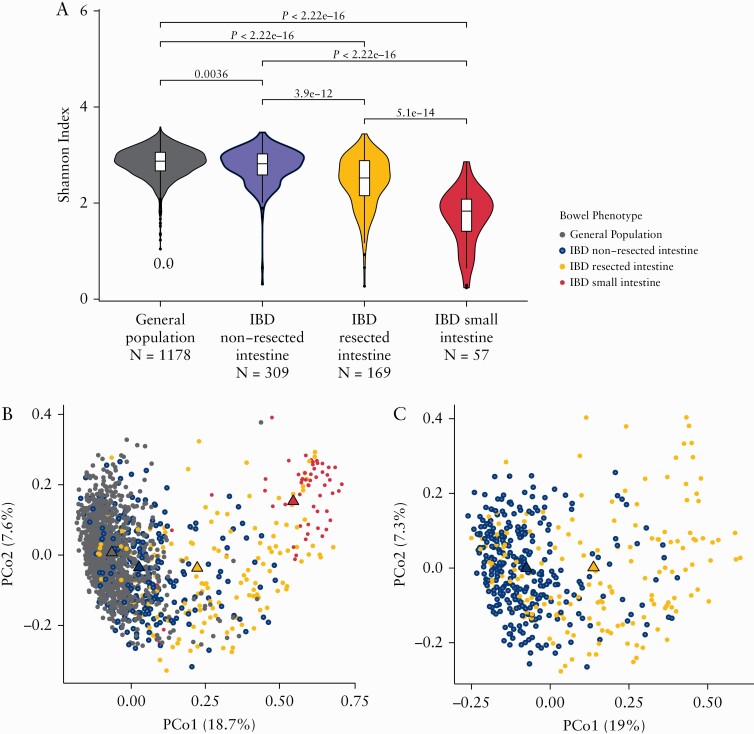
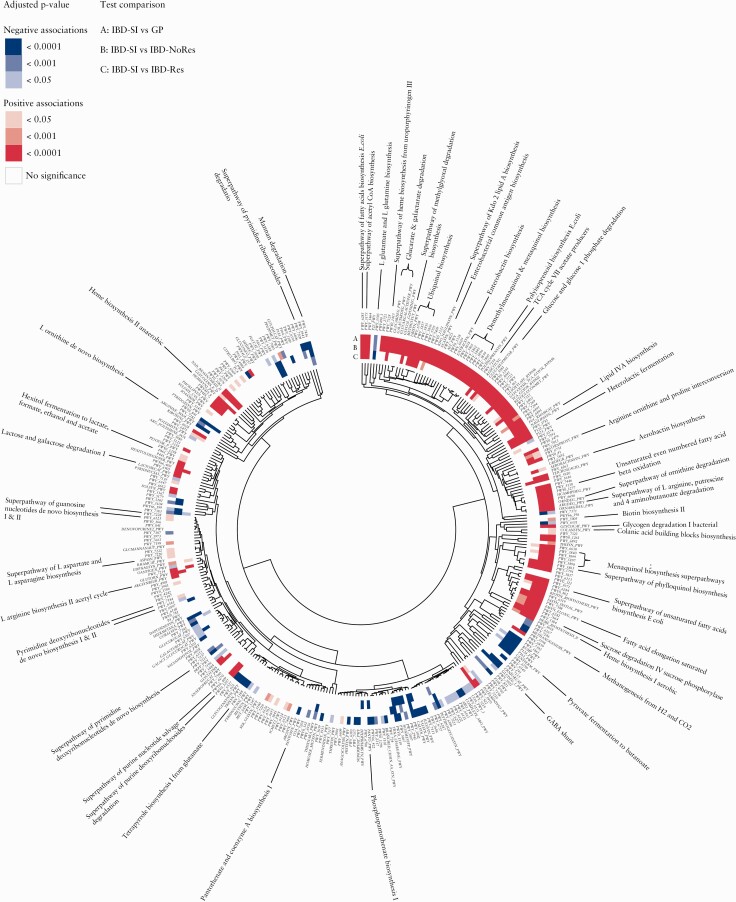
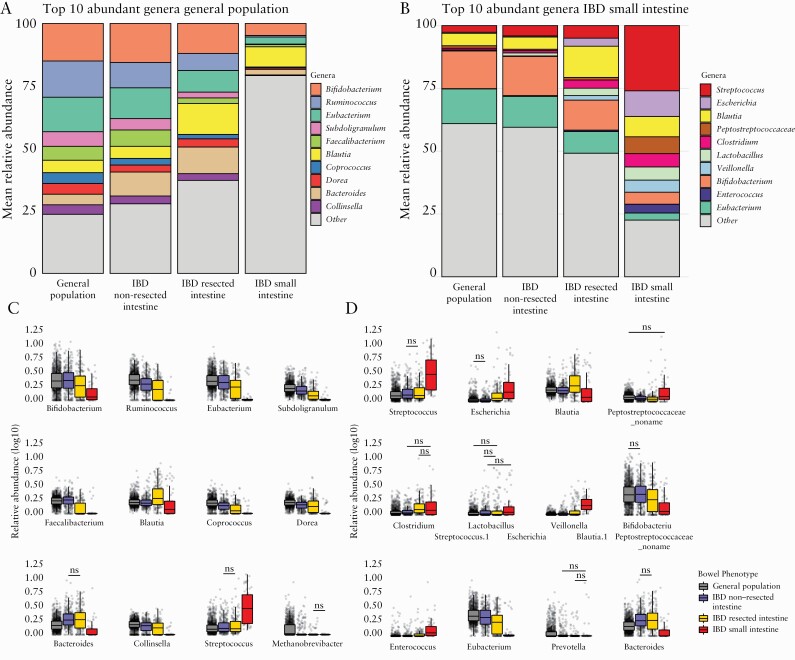
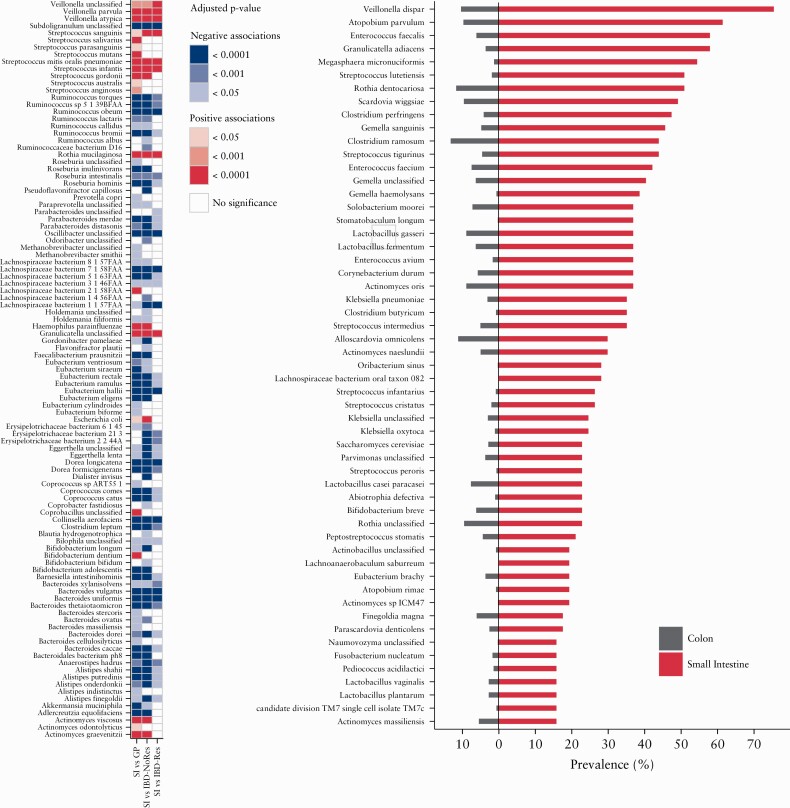
Small intestinal samples had a significantly lower bacterial diversity, compared with the general population and, to a lesser extent, IBD samples. Comparing bacterial composition, small intestinal samples clustered furthest from general population samples and closest to IBD samples with intestinal resections. Veillonella atypica, Streptococcus salivarius, and Actinomyces graevenitzii were among the species significantly enriched in the small intestine. Predicted metabolic pathways in the small intestine are predominantly involved in simple carbohydrate and energy metabolism, but also suggest a higher pro-inflammatory potential.
We described the bacterial composition and metabolic potential of the small intestinal microbiota. The colonic microbiome of IBD patients, particularly with intestinal resections, showed resemblance to that of the small intestine. Moreover, several features characterising the small intestinal microbiome have been previously associated with IBD. These results highlight the importance of studying the small intestinal microbiota to gain new insight into disease pathogenesis.
人类胃肠道中存在着独特的微生物群落,这些微生物对健康至关重要。尽管小肠在营养吸收和宿主-微生物免疫平衡中起着基础性作用,但人们对小肠微生物群落知之甚少。本研究旨在探索炎症性肠病(IBD)患者小肠微生物组成和代谢潜能。
我们从 57 例回肠造口或回肠贮袋术患者的粪便样本中提取了宏基因组,并收集了广泛的表型数据,然后将这些数据与 1178 例普通人群和 478 例 IBD 粪便宏基因组进行了比较。使用 MetaPhAn2 和 HUMAnN2 鉴定了微生物组特征,并使用多元线性回归进行了关联分析。
与普通人群相比,小肠样本的细菌多样性明显较低,与 IBD 样本相比则较低。比较细菌组成,小肠样本与普通人群样本聚类距离最远,与接受肠道切除术的 IBD 样本聚类距离最近。韦荣球菌属(Veillonella)、唾液链球菌(Streptococcus salivarius)和缓症放线菌(Actinomyces graevenitzii)是在小肠中显著富集的物种之一。小肠中预测的代谢途径主要涉及简单碳水化合物和能量代谢,但也提示存在更高的促炎潜能。
我们描述了小肠微生物群的细菌组成和代谢潜能。IBD 患者的结肠微生物群,特别是接受肠道切除术的患者,与小肠微生物群具有相似性。此外,一些特征可以将小肠微生物群与 IBD 联系起来。这些结果强调了研究小肠微生物群以深入了解疾病发病机制的重要性。