Department of Nursing, College of Health Science And Medicine, Wolaita Sodo University, Wolaita Sodo, Ethiopia.
School of Medicine, College of Health Science and Medicine, Wolaita Sodo University, Wolaita Sodo, Ethiopia.
BMC Infect Dis. 2021 Jan 30;21(1):131. doi: 10.1186/s12879-021-05827-z.
Blood transfusion is one of the routine therapeutic interventions in hospitals that can be lifesaving. However, this intervention is related to several transfusion-related infections. Hepatitis C viral infection is one of the most common causes of transfusion-related hepatitis. Subsequently, this systematic review and meta-analysis was aimed to estimate the seroprevalence of hepatitis C virus infection among blood donors in Ethiopia.
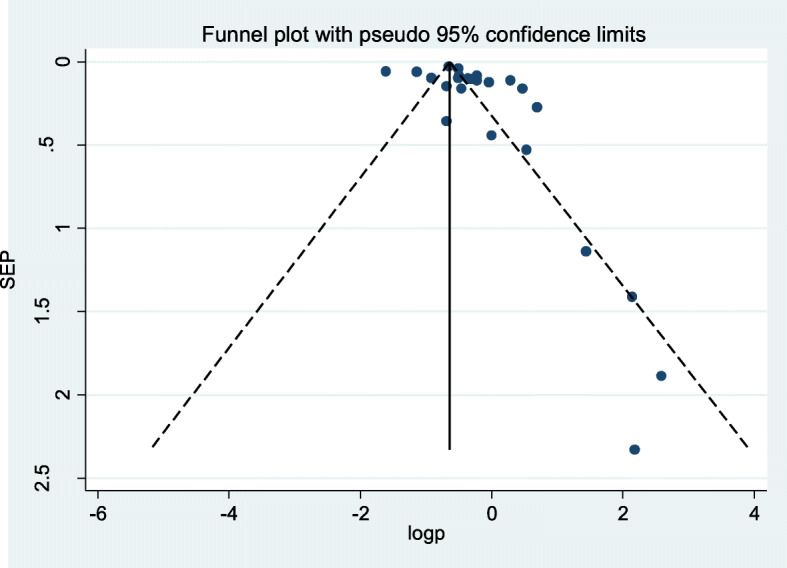
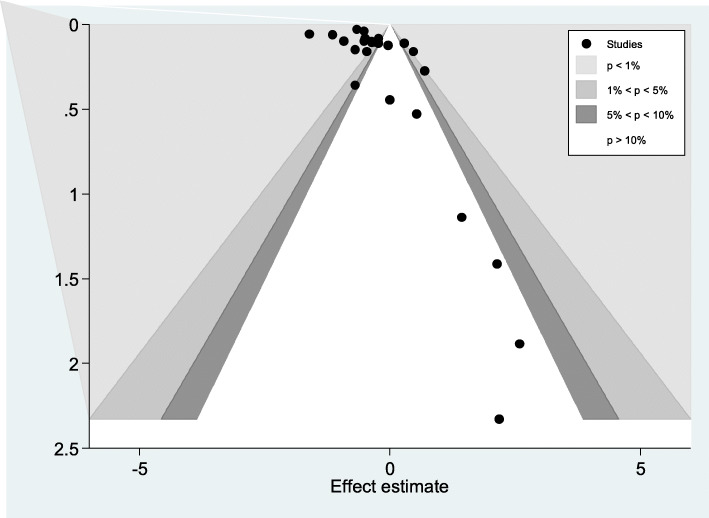
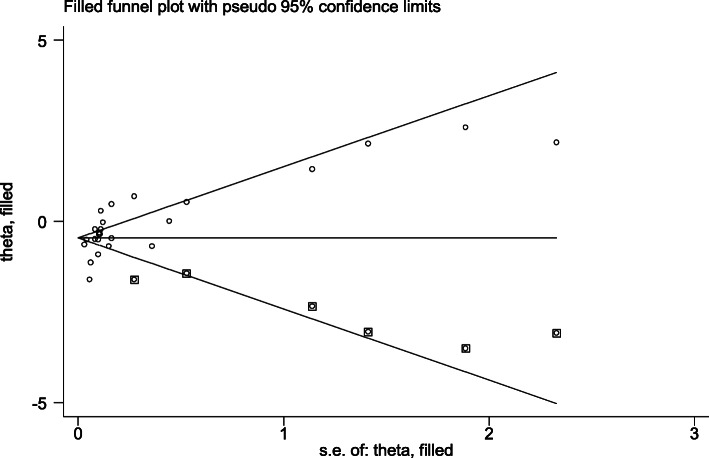
PubMed, Google Scholar, Health InterNetwork Access to Research Initiative (HINARI), Excerpta Medica database (EMBASE), and Cochrane library, the web of science, African journal of online (AJOL), and Google Scholar was searched. The data were extracted using Microsoft Excel and analyzed by using STATA version 14. Publication bias was checked by funnel plot, contour-enhanced funnel plots, trim and fill analysis and more objectively through Egger's regression test, with P < 0.05 considered to indicate potential publication bias. The heterogeneity of studies was checked using I2 statistics. Pooled analysis was conducted using a weighted inverse variance random-effects model. Subgroup analysis was done by region and study period. A sensitivity analysis was employed.
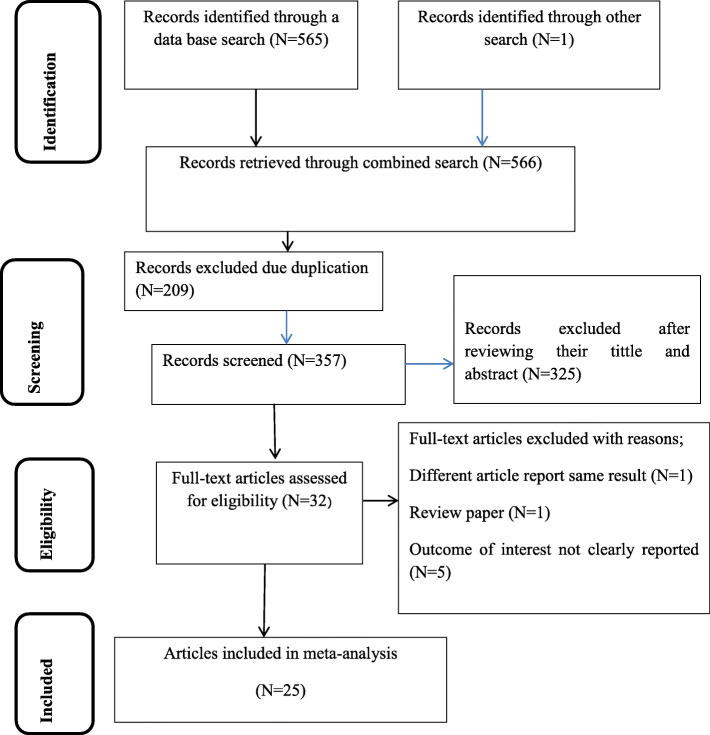
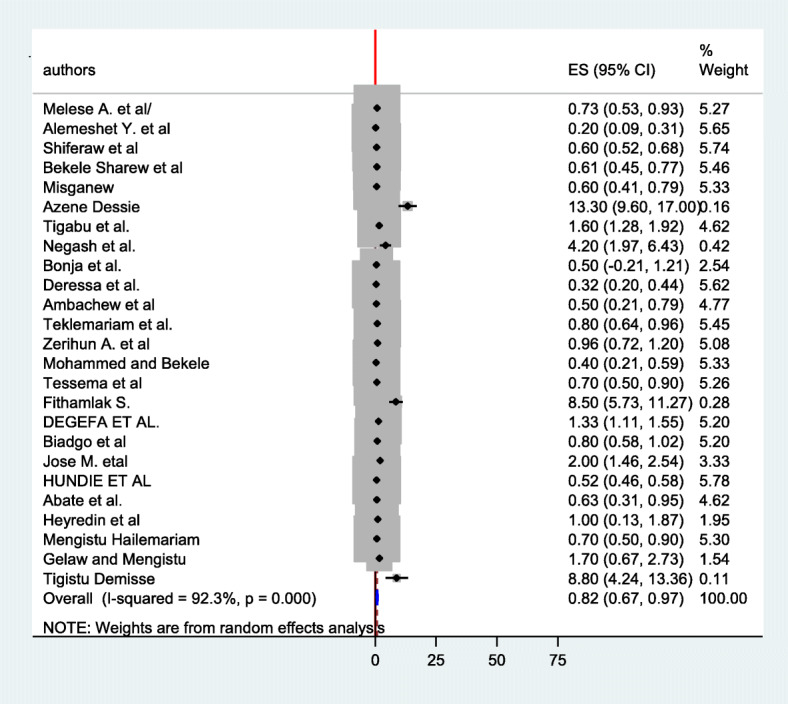
A total of 25 studies with 197,172 study participants were used to estimate the seroprevalence of hepatitis c virus among blood donors. The overall seroprevalence of hepatitis C virus was 0.819% (95% CI: 0.67-0.969; I2 = 92.3%). Regional sub-group analysis showed that the pooled prevalence of hepatitis c virus infection among blood donors found to be 0.563% in Somali, 1.08% in Oromia, 0.847% in Amhara, and 0.908% in south nations nationalities and peoples region.
The pooled seroprevalence of hepatitis C virus infection among blood donors in Ethiopia found to be low. Moreover, there should be systematic strategies that enhance donor screening and retention of safe regular donors.
输血是医院常规治疗干预措施之一,可挽救生命。然而,这种干预与几种输血相关感染有关。丙型肝炎病毒感染是输血相关肝炎的最常见原因之一。因此,本系统评价和荟萃分析旨在估计埃塞俄比亚献血者丙型肝炎病毒感染的血清流行率。
检索了 PubMed、Google Scholar、Health InterNetwork Access to Research Initiative (HINARI)、Excerpta Medica 数据库 (EMBASE)、Cochrane 图书馆、Web of Science、African journal of online (AJOL) 和 Google Scholar。使用 Microsoft Excel 提取数据,并使用 STATA 版本 14 进行分析。通过漏斗图、等高线增强漏斗图、修剪和填充分析以及更客观的 Egger 回归检验来检查发表偏倚,P<0.05 表示存在潜在的发表偏倚。使用 I2 统计量检查研究的异质性。使用加权倒数方差随机效应模型进行汇总分析。按地区和研究期间进行亚组分析。进行了敏感性分析。
共纳入 25 项研究,涉及 197172 名研究参与者,用于估计献血者丙型肝炎病毒的血清流行率。丙型肝炎病毒的总血清流行率为 0.819%(95%CI:0.67-0.969;I2=92.3%)。区域亚组分析显示,在索马里,献血者丙型肝炎病毒感染的 pooled 患病率为 0.563%;在奥罗莫州为 1.08%;在阿姆哈拉州为 0.847%;在南部民族国家和人民地区为 0.908%。
埃塞俄比亚献血者丙型肝炎病毒感染的 pooled 血清流行率较低。此外,应该制定系统策略,加强献血者筛查,保留安全的常规献血者。