Soma D D, Zogo B, Taconet P, Somé A, Coulibaly S, Baba-Moussa L, Ouédraogo G A, Koffi A, Pennetier C, Dabiré K R, Moiroux N
Institut de Recherche en Sciences de la Santé (IRSS), Bobo-Dioulasso, Burkina Faso.
Université Nazi Boni (UNB), Bobo-Dioulasso, Burkina Faso.
BMC Public Health. 2021 Jan 30;21(1):251. doi: 10.1186/s12889-021-10304-y.
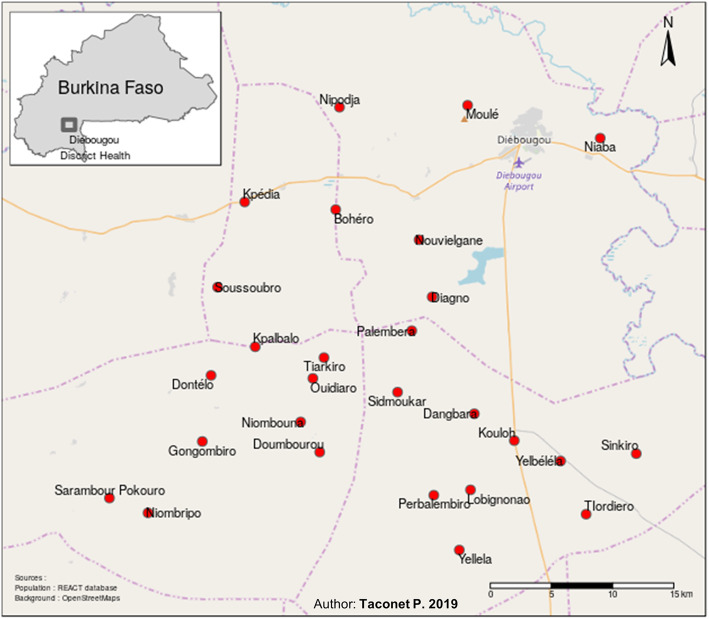
To sustain the efficacy of malaria vector control, the World Health Organization (WHO) recommends the combination of effective tools. Before designing and implementing additional strategies in any setting, it is critical to monitor or predict when and where transmission occurs. However, to date, very few studies have quantified the behavioural interactions between humans and Anopheles vectors in Africa. Here, we characterized residual transmission in a rural area of Burkina Faso where long lasting insecticidal nets (LLIN) are widely used.
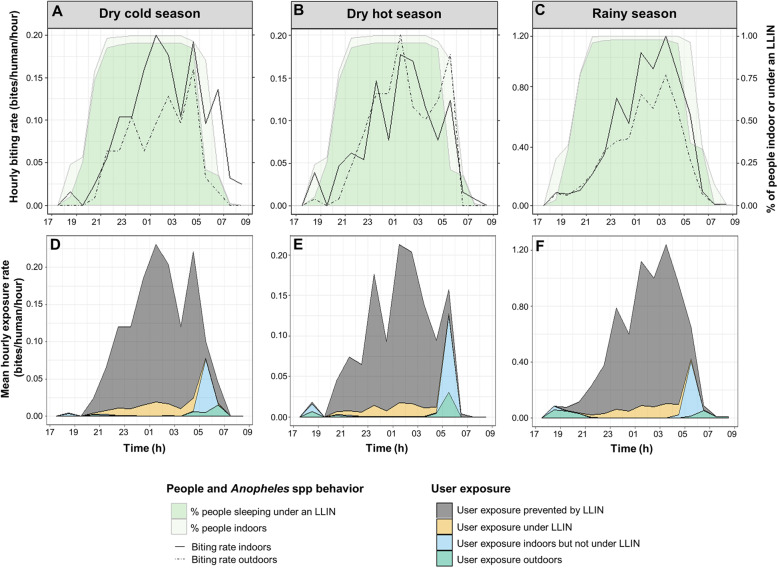
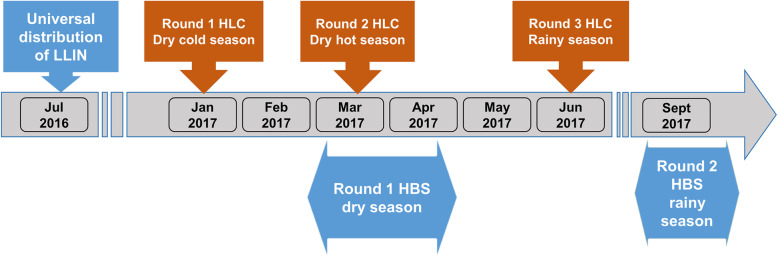
We analysed data on both human and malaria vectors behaviours from 27 villages to measure hourly human exposure to vector bites in dry and rainy seasons using a mathematical model. We estimated the protective efficacy of LLINs and characterised where (indoors vs. outdoors) and when both LLIN users and non-users were exposed to vector bites.
The percentage of the population who declared sleeping under a LLIN the previous night was very high regardless of the season, with an average LLIN use ranging from 92.43 to 99.89%. The use of LLIN provided > 80% protection against exposure to vector bites. The proportion of exposure for LLIN users was 29-57% after 05:00 and 0.05-12% before 20:00. More than 80% of exposure occurred indoors for LLIN users and the estimate reached 90% for children under 5 years old in the dry cold season.
LLINs are predicted to provide considerable protection against exposure to malaria vector bites in the rural area of Diébougou. Nevertheless, LLIN users are still exposed to vector bites which occurred mostly indoors in late morning. Therefore, complementary strategies targeting indoor biting vectors in combination with LLIN are expected to be the most efficient to control residual malaria transmission in this area.
为维持疟疾媒介控制的效果,世界卫生组织(WHO)建议采用多种有效工具相结合的方式。在任何地区设计和实施额外策略之前,监测或预测传播发生的时间和地点至关重要。然而,迄今为止,很少有研究对非洲人类与按蚊媒介之间的行为相互作用进行量化。在此,我们对布基纳法索一个农村地区的残余传播情况进行了特征描述,该地区广泛使用长效驱虫蚊帐(LLIN)。
我们分析了来自27个村庄的人类和疟疾媒介行为数据,使用数学模型来测量旱季和雨季每小时人类暴露于媒介叮咬的情况。我们估计了LLIN的保护效果,并确定了LLIN使用者和非使用者暴露于媒介叮咬的地点(室内与室外)和时间。
无论季节如何,前一晚宣称睡在LLIN下的人口比例都非常高,LLIN的平均使用率在92.43%至99.89%之间。使用LLIN可提供>80%的保护,防止暴露于媒介叮咬。LLIN使用者在05:00之后的暴露比例为29 - 57%,在20:00之前为0.05 - 12%。LLIN使用者超过80%的暴露发生在室内,在干燥寒冷季节,5岁以下儿童的这一估计值达到90%。
预计LLIN能为迪埃博古农村地区的疟疾媒介叮咬暴露提供相当程度的保护。然而,LLIN使用者仍会暴露于媒介叮咬,且大多发生在上午晚些时候的室内。因此,针对室内叮咬媒介并与LLIN相结合的补充策略有望成为控制该地区残余疟疾传播最有效的方法。