Department of Neurology, NYU Langone Health, 550 1st Avenue, New York, NY 10016, USA; Department of Population Health, NYU Langone Health, 550 1st Avenue, New York, NY 10016, USA.
Department of Neurology, NYU Langone Health, 550 1st Avenue, New York, NY 10016, USA.
Gen Hosp Psychiatry. 2021 Mar-Apr;69:41-49. doi: 10.1016/j.genhosppsych.2020.12.008. Epub 2021 Jan 7.
Although hand temperature and electromyograph biofeedback have evidence for migraine prevention, to date, no study has evaluated heartrate variability (HRV) biofeedback for migraine.
2-arm randomized trial comparing an 8-week app-based HRV biofeedback (HeartMath) to waitlist control. Feasibility/acceptability outcomes included number and duration of sessions, satisfaction, barriers and adverse events. Primary clinical outcome was Migraine-Specific Quality of Life Questionnaire (MSQv2).
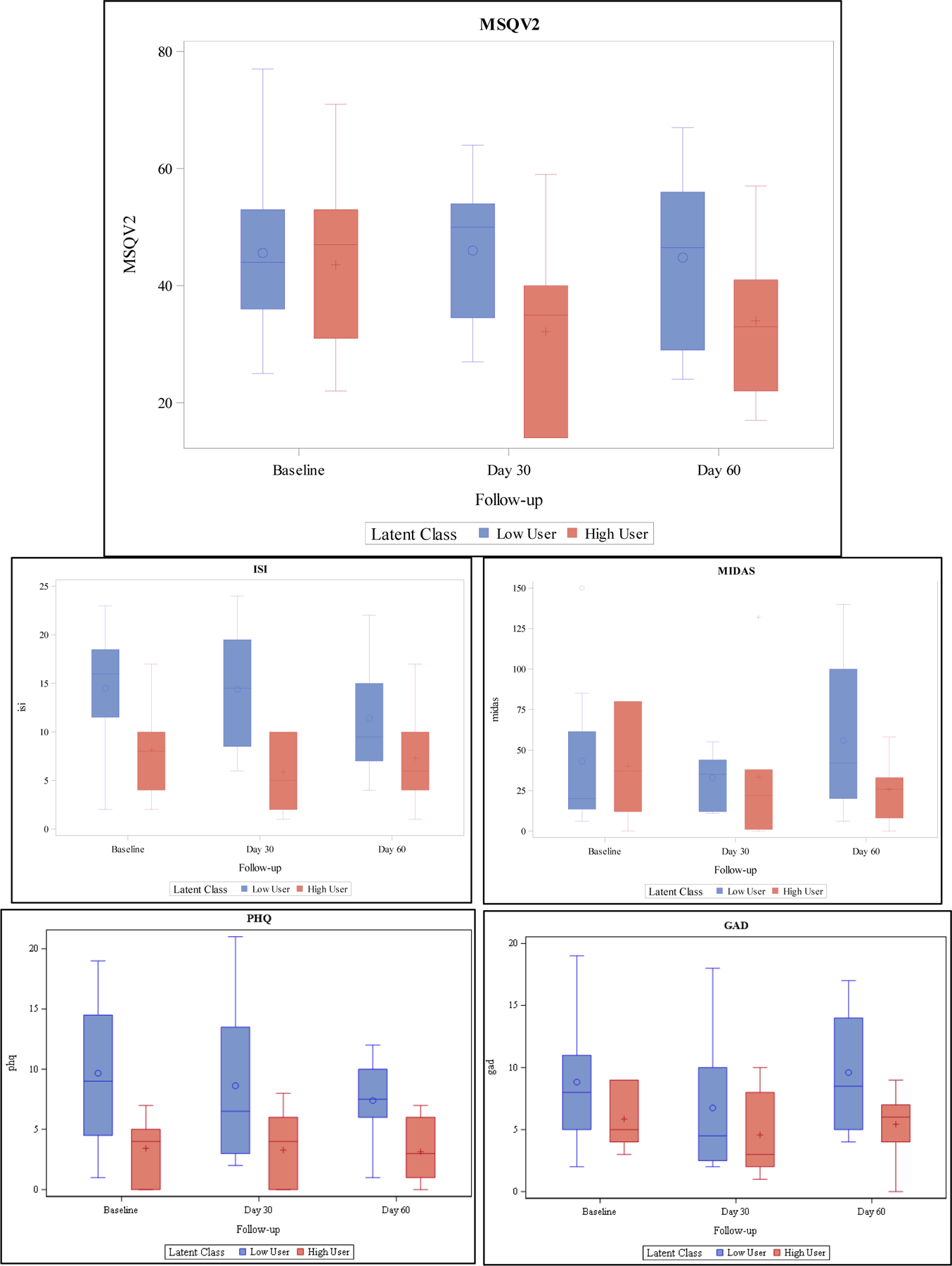
There were 52 participants (26/arm). On average, participants randomized to the Hearthmath group completed 29 sessions (SD = 29, range: 2-86) with an average length of 6:43 min over 36 days (SD = 27, range: 0, 88) before discontinuing. 9/29 reported technology barriers. 43% said that they were likely to recommend Heartmath to others. Average MSQv2 decreases were not significant between the Heartmath and waitlist control (estimate = 0.3, 95% CI = -3.1 - 3.6). High users of Heartmath reported a reduction in MSQv2 at day 30 (-12.3 points, p = 0.010) while low users did not (p = 0.765).
App-based HRV biofeedback was feasible and acceptable on a time-limited basis for people with migraine. Changes in the primary clinical outcome did not differ between biofeedback and control; however, high users of the app reported more benefit than low users.
尽管手部温度和肌电图生物反馈已被证明可预防偏头痛,但迄今为止,尚无研究评估过心率变异性(HRV)生物反馈对偏头痛的作用。
这是一项为期 8 周的基于应用程序的 HRV 生物反馈(HeartMath)与候补对照的双臂随机试验。可行性/可接受性结果包括疗程次数和持续时间、满意度、障碍和不良事件。主要临床结局为偏头痛特异性生活质量问卷(MSQv2)。
共有 52 名参与者(每组 26 名)。平均而言,随机分配到 Heartmath 组的参与者完成了 29 次疗程(SD=29,范围:2-86),在 36 天(SD=27,范围:0-88)内平均每次疗程持续 6:43 分钟,然后停止。9/29 名参与者报告存在技术障碍。43%的参与者表示可能会向其他人推荐 Heartmath。Heartmath 组和候补对照组的 MSQv2 平均下降均不显著(估计值=0.3,95%CI=-3.1-3.6)。高 Heartmath 用户在第 30 天报告 MSQv2 降低(-12.3 分,p=0.010),而低 Heartmath 用户则没有(p=0.765)。
在有限的时间内,基于应用程序的 HRV 生物反馈对偏头痛患者是可行且可接受的。生物反馈与对照组之间的主要临床结局没有差异;然而,该应用程序的高用户报告的获益高于低用户。