• 文献检索
  • 文档翻译
  • 深度研究
  • 学术资讯
  • Suppr Zotero 插件Zotero 插件
  • 邀请有礼
  • 套餐&价格
  • 历史记录
应用&插件
Suppr Zotero 插件Zotero 插件浏览器插件Mac 客户端Windows 客户端微信小程序
定价
高级版会员购买积分包购买API积分包
服务
文献检索文档翻译深度研究API 文档MCP 服务
关于我们
关于 Suppr公司介绍联系我们用户协议隐私条款
关注我们

Suppr 超能文献

核心技术专利:CN118964589B侵权必究
粤ICP备2023148730 号-1Suppr @ 2026

文献检索

告别复杂PubMed语法,用中文像聊天一样搜索,搜遍4000万医学文献。AI智能推荐,让科研检索更轻松。

立即免费搜索

文件翻译

保留排版,准确专业,支持PDF/Word/PPT等文件格式,支持 12+语言互译。

免费翻译文档

深度研究

AI帮你快速写综述,25分钟生成高质量综述,智能提取关键信息,辅助科研写作。

立即免费体验

对人畜共患冠状病毒的密码子使用分析显示,SARS-CoV-2 对人类的适应性较低。

Codon usage analysis of zoonotic coronaviruses reveals lower adaptation to humans by SARS-CoV-2.

机构信息

Center for Emerging and Zoonotic Diseases, College of Veterinary Medicine, South China Agricultural University, Guangzhou 510642, China; Guangdong Laboratory for Lingnan Modern Agriculture, Guangzhou 510642, China.

出版信息

Infect Genet Evol. 2021 Apr;89:104736. doi: 10.1016/j.meegid.2021.104736. Epub 2021 Jan 28.

DOI:10.1016/j.meegid.2021.104736
PMID:33516969
原文链接:https://pmc.ncbi.nlm.nih.gov/articles/PMC7843097/
Abstract

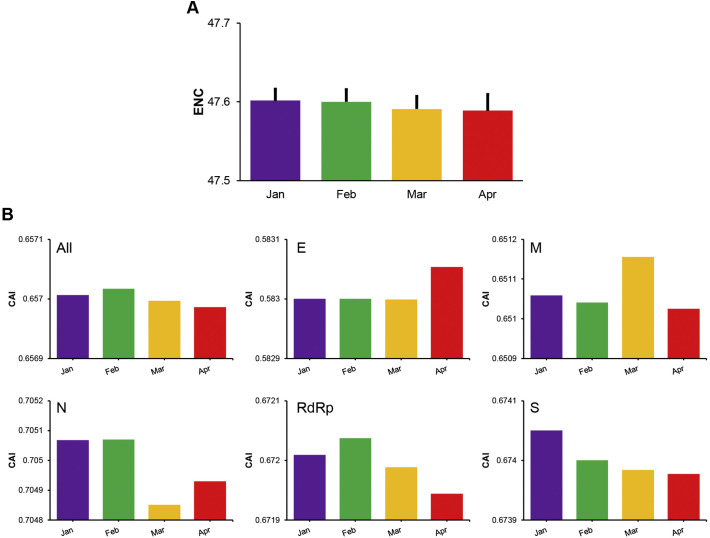
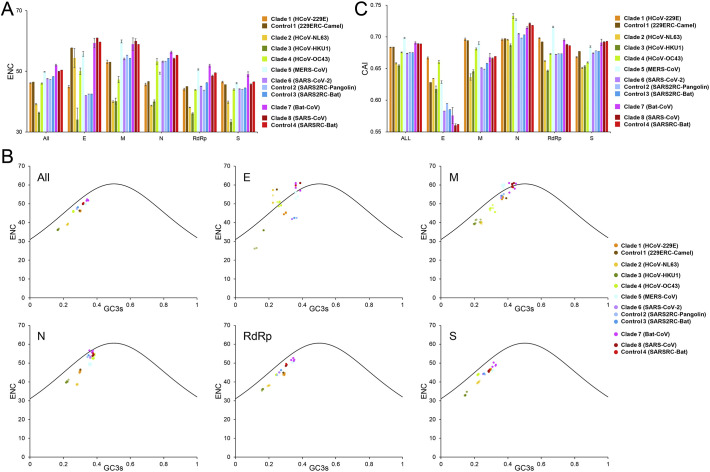
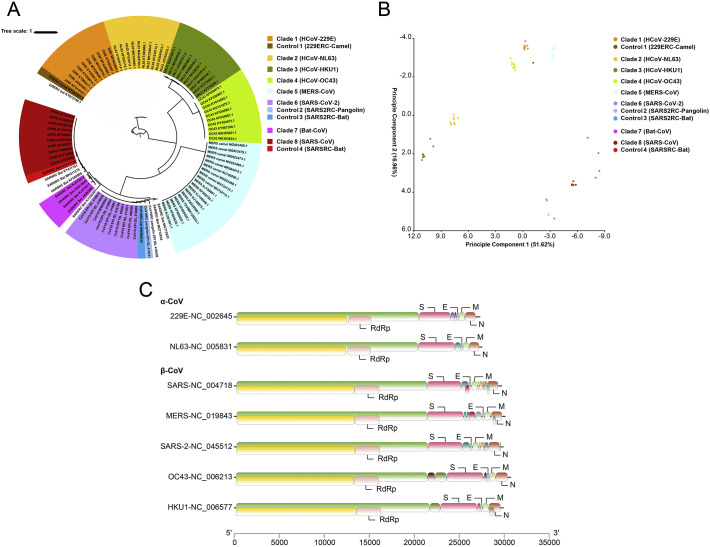
Since 2002, the world has witnessed major outbreaks of acute respiratory illness by three zoonotic coronaviruses (CoVs), which differ from each other in pathogenicity. Reasons for the lower pathogenicity of SARS-CoV-2 than the other two zoonotic coronaviruses, SARS-CoV and MERS-CoV, are not well understood. We herein compared the codon usage patterns of the three zoonotic CoVs causing severe acute respiratory syndromes and four human-specific CoVs (NL63, 229E, OC43, and HKU1) causing mild diseases. We found that the seven viruses have different codon usages, with SARS-CoV-2 having the lowest effective number of codons (ENC) among the zoonotic CoVs. Human codon adaptation index (CAI) analysis revealed that the CAI value of SARS-CoV-2 is the lowest among the zoonotic CoVs. The ENC and CAI values of SARS-CoV-2 were more similar to those of the less-pathogenic human-specific CoVs. To further investigate adaptive evolution within SARS-CoV-2, we examined codon usage patterns in 3573 genomes of SARS-CoV-2 collected over the initial 4 months of the pandemic. We showed that the ENC values and the CAI values of SARS-CoV-2 were decreasing over the period. The low ENC and CAI values could be responsible for the lower pathogenicity of SARS-CoV-2. While mutational pressure appears to shape codon adaptation in the overall genomes of SARS-CoV-2 and other zoonotic CoVs, the E gene of SARS-CoV-2, which has the highest codon usage bias, appears to be under strong natural selection. Data from the study contribute to our understanding of the pathogenicity and evolution of SARS-CoV-2 in humans.

摘要

自 2002 年以来,世界已经见证了三种人畜共患冠状病毒(CoV)引起的急性呼吸道疾病的重大爆发,这三种病毒在致病性上有所不同。导致 SARS-CoV-2 的致病性低于另外两种人畜共患冠状病毒 SARS-CoV 和 MERS-CoV 的原因尚未得到很好的理解。我们在此比较了引起严重急性呼吸综合征的三种人畜共患 CoV 和引起轻度疾病的四种人类特异性 CoV(NL63、229E、OC43 和 HKU1)的密码子使用模式。我们发现,这七种病毒的密码子使用方式不同,其中 SARS-CoV-2 的有效密码子数(ENC)在人畜共患 CoV 中最低。人类密码子适应指数(CAI)分析表明,SARS-CoV-2 的 CAI 值在人畜共患 CoV 中最低。SARS-CoV-2 的 ENC 和 CAI 值与致病性较低的人类特异性 CoV 更相似。为了进一步研究 SARS-CoV-2 内的适应性进化,我们检查了在大流行最初 4 个月内收集的 3573 个 SARS-CoV-2 基因组中的密码子使用模式。我们表明,SARS-CoV-2 的 ENC 值和 CAI 值在此期间呈下降趋势。低 ENC 和 CAI 值可能是 SARS-CoV-2 致病性较低的原因。虽然突变压力似乎塑造了 SARS-CoV-2 和其他人畜共患 CoV 的整体基因组中的密码子适应,但 SARS-CoV-2 的 E 基因具有最高的密码子使用偏好性,似乎受到强烈的自然选择。该研究的数据有助于我们理解 SARS-CoV-2 在人类中的致病性和进化。
https://cdn.ncbi.nlm.nih.gov/pmc/blobs/ce84/7843097/6f4b4723b0d1/gr3_lrg.jpg
https://cdn.ncbi.nlm.nih.gov/pmc/blobs/ce84/7843097/156a8f3fddc9/gr1_lrg.jpg
https://cdn.ncbi.nlm.nih.gov/pmc/blobs/ce84/7843097/2e4e9ec98798/gr2_lrg.jpg
https://cdn.ncbi.nlm.nih.gov/pmc/blobs/ce84/7843097/6f4b4723b0d1/gr3_lrg.jpg
https://cdn.ncbi.nlm.nih.gov/pmc/blobs/ce84/7843097/156a8f3fddc9/gr1_lrg.jpg
https://cdn.ncbi.nlm.nih.gov/pmc/blobs/ce84/7843097/2e4e9ec98798/gr2_lrg.jpg
https://cdn.ncbi.nlm.nih.gov/pmc/blobs/ce84/7843097/6f4b4723b0d1/gr3_lrg.jpg

相似文献

1
Codon usage analysis of zoonotic coronaviruses reveals lower adaptation to humans by SARS-CoV-2.对人畜共患冠状病毒的密码子使用分析显示,SARS-CoV-2 对人类的适应性较低。
Infect Genet Evol. 2021 Apr;89:104736. doi: 10.1016/j.meegid.2021.104736. Epub 2021 Jan 28.
2
Comparative analysis of protein synthesis rate in COVID-19 with other human coronaviruses.新冠病毒与其他人类冠状病毒的蛋白质合成率比较分析。
Infect Genet Evol. 2020 Nov;85:104432. doi: 10.1016/j.meegid.2020.104432. Epub 2020 Jun 25.
3
Comparative analysis of human coronaviruses focusing on nucleotide variability and synonymous codon usage patterns.聚焦于核苷酸变异性和同义密码子使用模式的人类冠状病毒比较分析。
Genomics. 2021 Jul;113(4):2177-2188. doi: 10.1016/j.ygeno.2021.05.008. Epub 2021 May 19.
4
Deciphering the co-adaptation of codon usage between respiratory coronaviruses and their human host uncovers candidate therapeutics for COVID-19.解析呼吸道冠状病毒与其人类宿主之间的密码子使用协同进化关系揭示了针对 COVID-19 的候选治疗药物。
Infect Genet Evol. 2020 Nov;85:104471. doi: 10.1016/j.meegid.2020.104471. Epub 2020 Jul 22.
5
From SARS and MERS CoVs to SARS-CoV-2: Moving toward more biased codon usage in viral structural and nonstructural genes.从 SARS 和 MERS CoVs 到 SARS-CoV-2:病毒结构和非结构基因中更偏向于使用密码子。
J Med Virol. 2020 Jun;92(6):660-666. doi: 10.1002/jmv.25754. Epub 2020 Mar 16.
6
The Evolution of Severe Acute Respiratory Syndrome Coronavirus-2 during Pandemic and Adaptation to the Host.严重急性呼吸综合征冠状病毒 2 型在大流行期间的进化和对宿主的适应。
J Mol Evol. 2021 Jul;89(6):341-356. doi: 10.1007/s00239-021-10008-2. Epub 2021 May 15.
7
Analysis of SARS-CoV-2 synonymous codon usage evolution throughout the COVID-19 pandemic.分析 COVID-19 大流行期间 SARS-CoV-2 同义密码子使用的进化情况。
Virology. 2022 Mar;568:56-71. doi: 10.1016/j.virol.2022.01.011. Epub 2022 Feb 2.
8
In-silico nucleotide and protein analyses of S-gene region in selected zoonotic coronaviruses reveal conserved domains and evolutionary emergence with trajectory course of viral entry from SARS-CoV-2 genomic data.对选定的人畜共患冠状病毒 S 基因区域进行的核苷酸和蛋白质计算机分析揭示了保守结构域,并从 SARS-CoV-2 基因组数据中推断出病毒进入的轨迹和进化起源。
Pan Afr Med J. 2020 Nov 30;37:285. doi: 10.11604/pamj.2020.37.285.24663. eCollection 2020.
9
Non-optimal codon usage preferences of coronaviruses determine their promiscuity for infecting multiple hosts.冠状病毒非最佳密码子使用偏好决定了其感染多种宿主的混杂性。
FEBS J. 2021 Sep;288(17):5201-5223. doi: 10.1111/febs.15835. Epub 2021 Apr 7.
10
Surveillance of Bat Coronaviruses in Kenya Identifies Relatives of Human Coronaviruses NL63 and 229E and Their Recombination History.肯尼亚蝙蝠冠状病毒监测发现人类冠状病毒NL63和229E的亲属及其重组历史。
J Virol. 2017 Feb 14;91(5). doi: 10.1128/JVI.01953-16. Print 2017 Mar 1.

引用本文的文献

1
SARS-CoV-2 CoCoPUTs: analyzing GISAID and NCBI data to obtain codon statistics, mutations, and free energy over a multiyear period.严重急性呼吸综合征冠状病毒2(SARS-CoV-2)的密码子使用情况分析:通过分析全球共享流感数据倡议组织(GISAID)和美国国立生物技术信息中心(NCBI)的数据,获取多年来的密码子统计信息、突变情况和自由能。
Virus Evol. 2025 Jan 17;11(1):veae115. doi: 10.1093/ve/veae115. eCollection 2025.
2
Optimization and Deoptimization of Codons in SARS-CoV-2 and Related Implications for Vaccine Development.SARS-CoV-2 密码子的优化和去优化及其对疫苗开发的相关影响。
Adv Sci (Weinh). 2023 Aug;10(23):e2205445. doi: 10.1002/advs.202205445. Epub 2023 Jun 2.
3

本文引用的文献

1
Estimates of the ongoing need for social distancing and control measures post-"lockdown" from trajectories of COVID-19 cases and mortality.根据新冠病毒疾病(COVID-19)病例和死亡率的变化趋势,对“解封”后持续保持社交距离及采取管控措施的必要性进行评估。
Eur Respir J. 2020 Jul 23;56(1). doi: 10.1183/13993003.01483-2020. Print 2020 Jul.
2
Emergence of genomic diversity and recurrent mutations in SARS-CoV-2.新冠病毒基因组多样性和反复出现的突变。
Infect Genet Evol. 2020 Sep;83:104351. doi: 10.1016/j.meegid.2020.104351. Epub 2020 May 5.
3
Isolation of SARS-CoV-2-related coronavirus from Malayan pangolins.
Utilizing the codon adaptation index to evaluate the susceptibility to HIV-1 and SARS-CoV-2 related coronaviruses in possible target cells in humans.
利用密码子适应指数评估人类可能的靶细胞中对 HIV-1 和 SARS-CoV-2 相关冠状病毒的易感性。
Front Cell Infect Microbiol. 2023 Jan 25;12:1085397. doi: 10.3389/fcimb.2022.1085397. eCollection 2022.
4
Analysis of SARS-CoV-2 synonymous codon usage evolution throughout the COVID-19 pandemic.分析 COVID-19 大流行期间 SARS-CoV-2 同义密码子使用的进化情况。
Virology. 2022 Mar;568:56-71. doi: 10.1016/j.virol.2022.01.011. Epub 2022 Feb 2.
5
Transmission cluster of COVID-19 cases from Uruguay: emergence and spreading of a novel SARS-CoV-2 ORF6 deletion.从乌拉圭新冠肺炎病例传播集群看新型 SARS-CoV-2 ORF6 缺失的出现和扩散
Mem Inst Oswaldo Cruz. 2022 Jan 10;116:e210275. doi: 10.1590/0074-02760210275. eCollection 2022.
6
Codon usage, phylogeny and binding energy estimation predict the evolution of SARS-CoV-2.密码子使用、系统发育和结合能估计预测了严重急性呼吸综合征冠状病毒2(SARS-CoV-2)的进化。
One Health. 2021 Dec;13:100352. doi: 10.1016/j.onehlt.2021.100352. Epub 2021 Nov 24.
7
Study on the Characteristic Codon Usage Pattern in Porcine Epidemic Diarrhea Virus Genomes and Its Host Adaptation Phenotype.猪流行性腹泻病毒基因组特征密码子使用模式及其宿主适应性表型的研究
Front Microbiol. 2021 Oct 18;12:738082. doi: 10.3389/fmicb.2021.738082. eCollection 2021.
从马来穿山甲中分离出 SARS-CoV-2 相关冠状病毒。
Nature. 2020 Jul;583(7815):286-289. doi: 10.1038/s41586-020-2313-x. Epub 2020 May 7.
4
Codon Usage and Phenotypic Divergences of SARS-CoV-2 Genes.SARS-CoV-2 基因的密码子使用和表型差异。
Viruses. 2020 Apr 30;12(5):498. doi: 10.3390/v12050498.
5
Susceptibility of ferrets, cats, dogs, and other domesticated animals to SARS-coronavirus 2.雪貂、猫、狗和其他驯养动物对 SARS-CoV-2 的易感性。
Science. 2020 May 29;368(6494):1016-1020. doi: 10.1126/science.abb7015. Epub 2020 Apr 8.
6
COVID-19, SARS and MERS: are they closely related?新型冠状病毒肺炎、严重急性呼吸综合征和中东呼吸综合征:它们有何关联?
Clin Microbiol Infect. 2020 Jun;26(6):729-734. doi: 10.1016/j.cmi.2020.03.026. Epub 2020 Mar 28.
7
Identifying SARS-CoV-2-related coronaviruses in Malayan pangolins.鉴定马来穿山甲体内的 SARS-CoV-2 相关冠状病毒
Nature. 2020 Jul;583(7815):282-285. doi: 10.1038/s41586-020-2169-0. Epub 2020 Mar 26.
8
From SARS and MERS CoVs to SARS-CoV-2: Moving toward more biased codon usage in viral structural and nonstructural genes.从 SARS 和 MERS CoVs 到 SARS-CoV-2:病毒结构和非结构基因中更偏向于使用密码子。
J Med Virol. 2020 Jun;92(6):660-666. doi: 10.1002/jmv.25754. Epub 2020 Mar 16.
9
Dissimilation of synonymous codon usage bias in virus-host coevolution due to translational selection.由于翻译选择,病毒-宿主共同进化中同义密码子使用偏好的异化。
Nat Ecol Evol. 2020 Apr;4(4):589-600. doi: 10.1038/s41559-020-1124-7. Epub 2020 Mar 2.
10
Pathogenicity and transmissibility of 2019-nCoV-A quick overview and comparison with other emerging viruses.2019-nCoV 的致病性和传染性:快速概述及与其他新兴病毒的比较
Microbes Infect. 2020 Mar;22(2):69-71. doi: 10.1016/j.micinf.2020.01.004. Epub 2020 Feb 4.