Key Laboratory of Applied Technology on Green-Eco-Healthy Animal Husbandry of Zhejiang Province, Zhejiang Provincial Engineering Laboratory for Animal Health and Internet Technology, College of Animal Science and Technology, Zhejiang Agriculture & Forestry University, Hangzhou 311300, China.
Key Laboratory of Applied Technology on Green-Eco-Healthy Animal Husbandry of Zhejiang Province, Zhejiang Provincial Engineering Laboratory for Animal Health and Internet Technology, College of Animal Science and Technology, Zhejiang Agriculture & Forestry University, Hangzhou 311300, China.
Poult Sci. 2021 Feb;100(2):810-819. doi: 10.1016/j.psj.2020.10.041. Epub 2020 Nov 2.
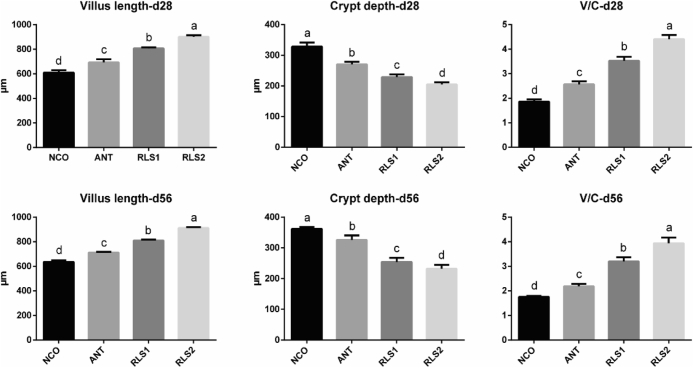
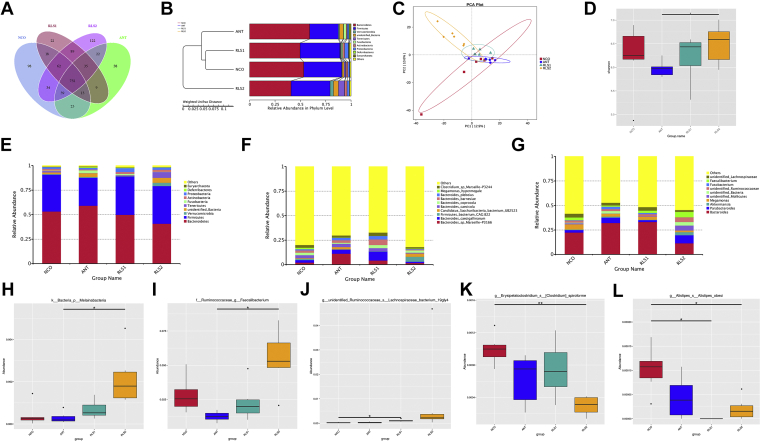
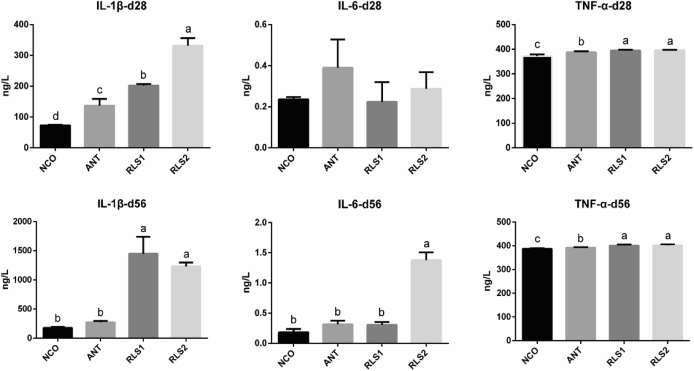
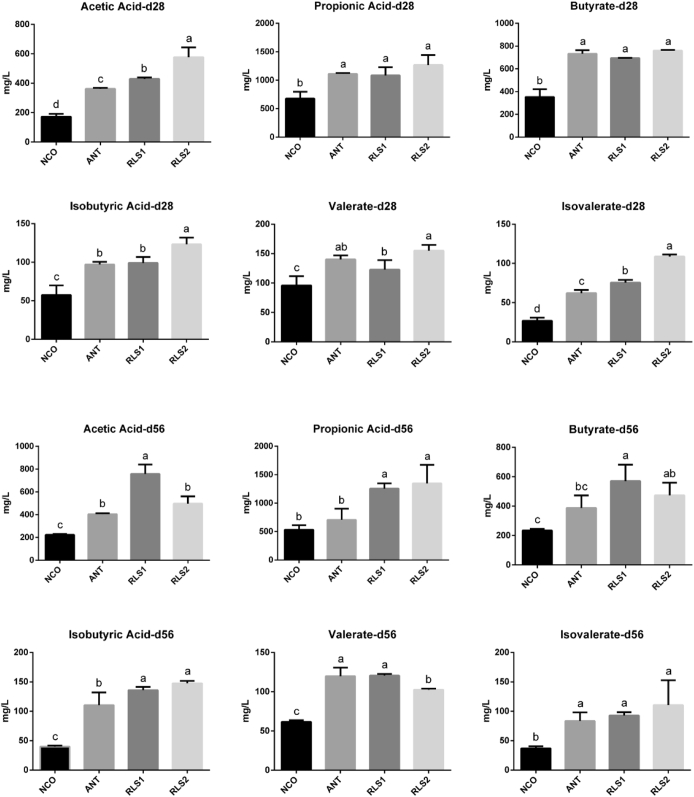
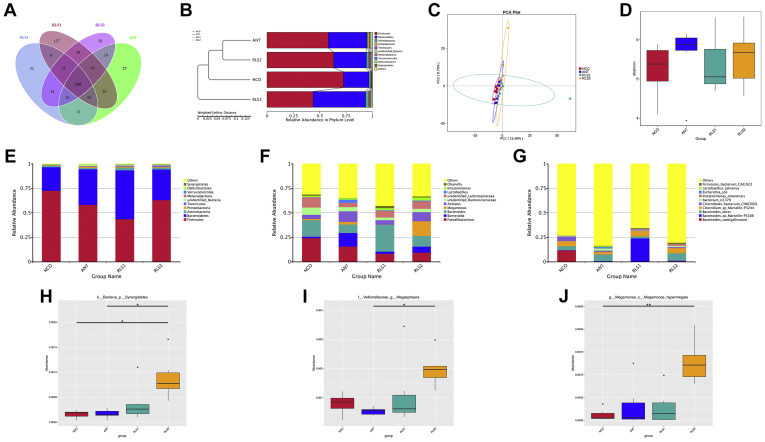
This study determined the effects of dietary supplementation of rhamnolipids (RLS) on the growth performance, gut morphology, immune function, intestinal volatile fatty acid, and microflora community in Linnan yellow broilers. A total of 480 1-day-old broiler chicks were randomly assigned to groups for supplementation with one of the following for 56 d: no supplement (control), 30 mg/kg bacitracin (ANT), 500 mg/kg RLS, or 1,000 mg/kg RLS (RLS2). The RLS2 diet was found to improve the final BW and ADG on day 56. The RLS diet reduced jejunal crypt depth, increased jejunal villus length, and increased serum IgA, IgM, IgY, IL-1β, IL-6, and tumor necrosis factor-alpha (TNF-α) levels. The RLS broilers had higher cecum concentrations of acetic acid, propionic acid, butyrate, isobutyric acid, valerate, and isovalerate. High-throughput sequencing indicated that RLS affected microbial quantity and diversity in the cecum. Bacterial richness was higher in the RLS broilers than the ANT broilers. The RLS broilers had higher relative abundances of Megasphaera hypermegale and Lachnospiraceae bacterium 19gly4 on day 28 and Clostridium spiroforme and Alistipes obesi on day 56. These results suggest that RLS supplementation improves growth performance, benefits the intestinal villus morphology, regulates host immune function, and raises intestinal volatile fatty acid content and the relative abundance of the gut microbiota in broiler chickens.
本研究旨在探讨鼠李糖脂(RLS)对岭南黄肉鸡生长性能、肠道形态、免疫功能、肠道挥发性脂肪酸和微生物群落的影响。将 480 只 1 日龄肉鸡随机分为 4 组,分别在基础日粮中添加以下物质:不添加(对照组)、30mg/kg 杆菌肽锌(ANT)、500mg/kg RLS 和 1000mg/kg RLS(RLS2),试验期为 56d。结果表明,与对照组相比,RLS2 组显著提高了肉鸡的末重和第 56 天的平均日增重。RLS 组降低了空肠隐窝深度,增加了空肠绒毛长度,提高了血清 IgA、IgM、IgY、IL-1β、IL-6 和肿瘤坏死因子-α(TNF-α)水平。RLS 组盲肠中乙酸、丙酸、丁酸、异丁酸、戊酸和异戊酸的浓度更高。高通量测序结果表明,RLS 影响了盲肠微生物的数量和多样性。RLS 组的细菌丰富度高于 ANT 组。RLS 组肉鸡在第 28 天的 Megasphaera hypermegale 和 Lachnospiraceae bacterium 19gly4 以及第 56 天的 Clostridium spiroforme 和 Alistipes obesi 的相对丰度较高。这些结果表明,RLS 可改善肉鸡生长性能,促进肠道绒毛形态发育,调节机体免疫功能,提高肉鸡肠道挥发性脂肪酸含量和肠道微生物群落的相对丰度。