Pappas Nikolaos
Department of Hospitality, Events, Aviation and Tourism, University of Sunderland, Sir Tom Cowie Campus, St. Peter's Way, SR6 0DD, Sunderland, UK.
Tour Manag. 2021 Jun;84:104287. doi: 10.1016/j.tourman.2021.104287. Epub 2021 Jan 9.
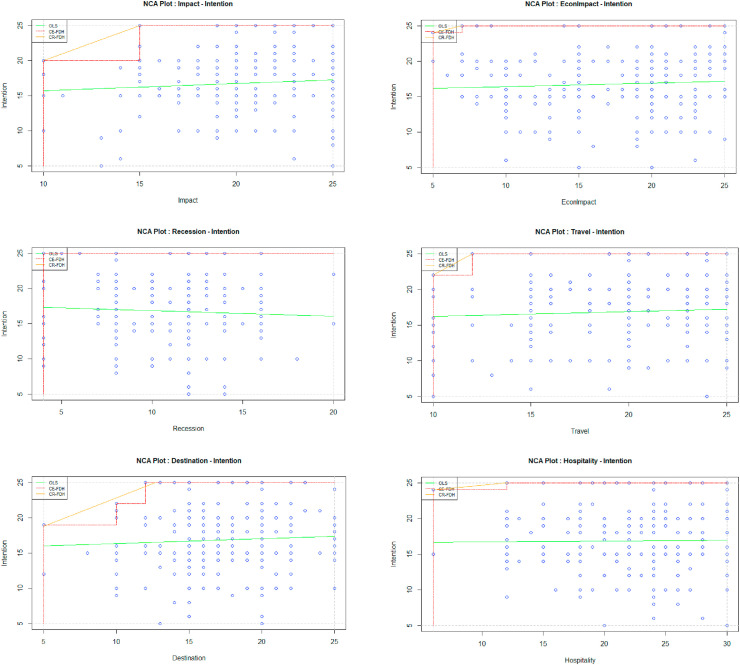
The travel, tourism and hospitality industries have been the worst affected of the world's major economic sectors during the COVID19 pandemic, which has had a devastating effect on both destinations and organisations. Drawing from a sample (N = 385) of adult permanent residents of Athens, Greece, the study examines the impact of COVID19 upon holiday intention. The chaordic systems are evaluated through the use of fuzzy-set Qualitative Comparative Analysis, whilst the study also used Necessary Condition Analysis for the calculation of the size effects of the examined conditions. The findings reveal two sufficient complex configurations leading to holiday intention: (i) holiday risks, and (ii) impact of COVID19. Based on the results, the article also offers a set of managerial implications. The contribution of the study is to both theoretical and methodological tourism domains.
在新冠疫情期间,旅游、旅游业和酒店业是全球主要经济部门中受影响最严重的,疫情对旅游目的地和相关机构都产生了毁灭性影响。该研究以希腊雅典成年永久居民为样本(N = 385),考察了新冠疫情对度假意愿的影响。通过模糊集定性比较分析对混沌系统进行评估,同时该研究还使用必要条件分析来计算所考察条件的规模效应。研究结果揭示了导致度假意愿的两种充分复杂配置:(i)度假风险,以及(ii)新冠疫情的影响。基于这些结果,本文还提出了一系列管理启示。该研究对旅游领域的理论和方法都有贡献。