Nilsen Kirby T, Walkowiak Sean, Kumar Santosh, Molina Oscar I, Randhawa Harpinder S, Dhariwal Raman, Byrns Brook, Pozniak Curtis J, Henriquez Maria A
Brandon Research and Development Centre, Agriculture and Agri-Food Canada, Brandon, MB, Canada.
Grain Research Laboratory, Canadian Grain Commission, Winnipeg, MB, Canada.
Front Plant Sci. 2021 Jan 13;11:570418. doi: 10.3389/fpls.2020.570418. eCollection 2020.
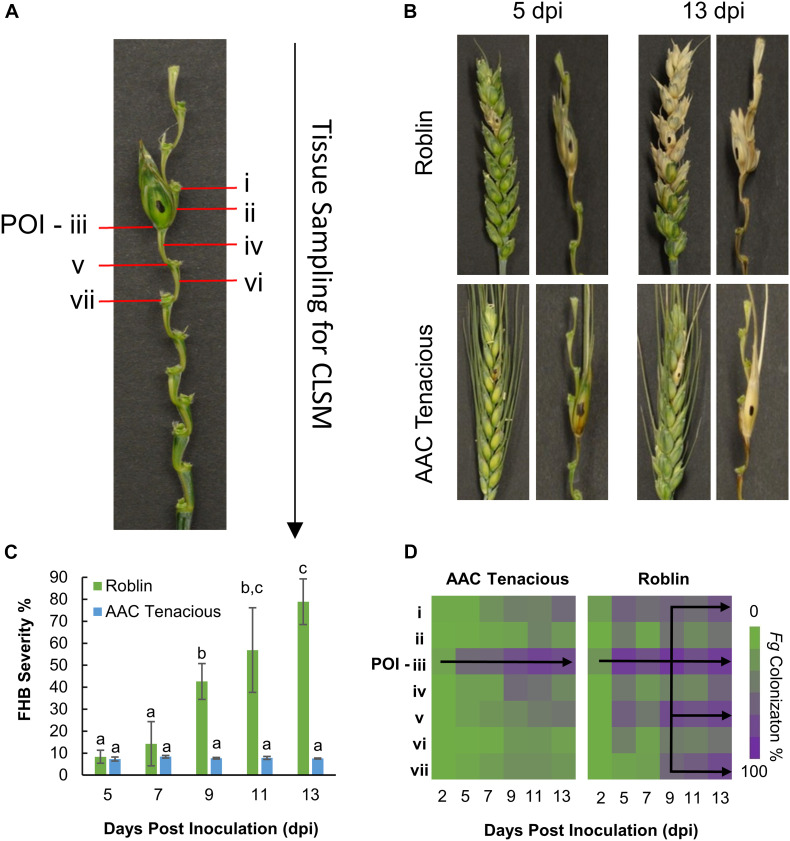
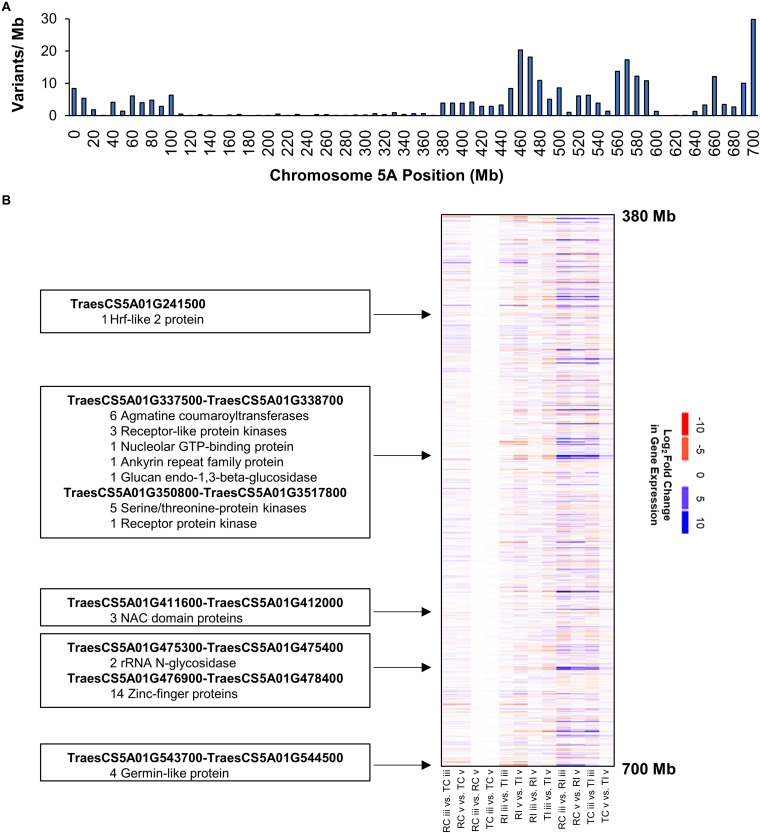
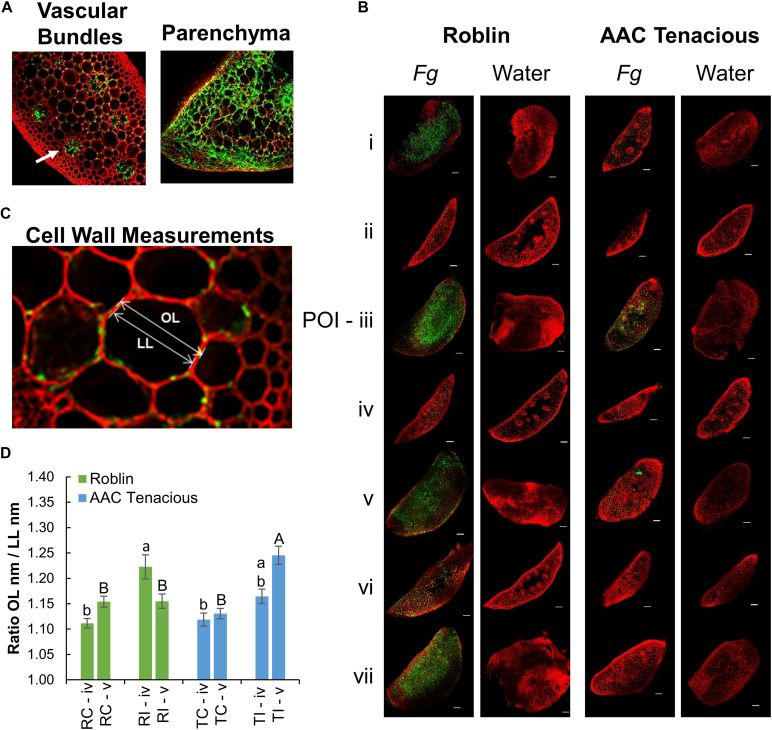
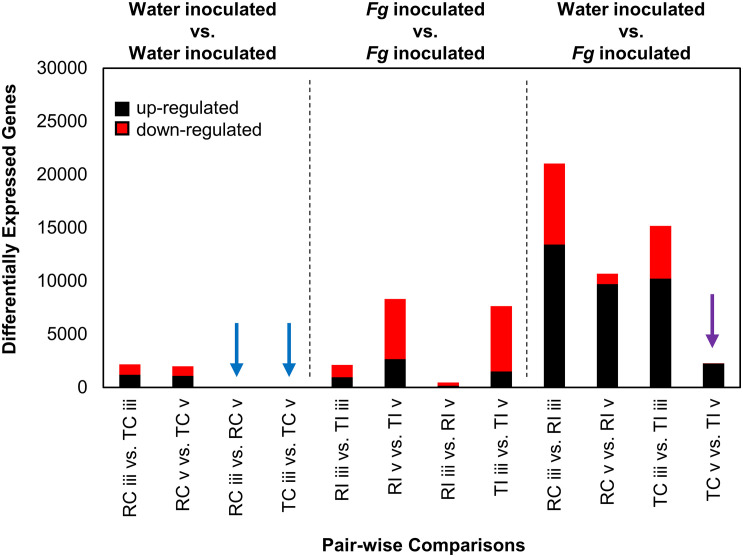
Fusarium head blight (FHB) is a serious fungal disease affecting wheat and other cereals worldwide. This fungus causes severe yield and quality losses from a reduction in grain quality and contamination of grain with mycotoxins. Intensive breeding efforts led to the release of AAC Tenacious, which was the first spring wheat cultivar registered in Canada with a resistant (R) rating to FHB. To elucidate the physiological mechanisms of resistance, we performed histological and transcriptomic analyses of AAC Tenacious and a susceptible control Roblin after inoculation with (). The spikelet and rachis of infected wheat spikes were hand sectioned and monitored by confocal and fluorescent microscopy. Visible hyphae were observed within the inoculated spikelets for AAC Tenacious; however, the infection was largely restricted to the point of inoculation (POI), whereas the adjacent florets in Roblin were heavily infected. Significant cell wall thickening within the rachis node below the POI was evident in AAC Tenacious compared to Roblin in response to inoculation. Rachis node and rachilla tissues from the POI and the rachis node below the POI were collected at 5 days post inoculation for RNAseq. Significant changes in gene expression were detected in both cultivars in response to infection. The rachis node below the POI in AAC Tenacious had fewer differentially expressed genes (DEGs) when compared to the uninoculated control, likely due to its increased disease resistance. Analysis of DEGs in Roblin and AAC Tenacious revealed the activation of genes and pathways in response to infection, including those putatively involved in cell wall modification and defense response.
小麦赤霉病(FHB)是一种严重的真菌病害,在全球范围内影响小麦和其他谷物。这种真菌会导致严重的产量和质量损失,包括谷物品质下降以及谷物被霉菌毒素污染。经过大量的育种工作,培育出了AAC Tenacious,它是加拿大首个登记的对小麦赤霉病具有抗性(R)评级的春小麦品种。为了阐明其抗性的生理机制,我们对接种后的AAC Tenacious和感病对照品种Roblin进行了组织学和转录组分析。对接种后的小麦穗的小穗和穗轴进行手工切片,并通过共聚焦显微镜和荧光显微镜进行监测。在接种的小穗中,AAC Tenacious可见菌丝;然而,感染主要局限于接种点(POI),而Roblin相邻的小花则受到严重感染。与Roblin相比,接种后AAC Tenacious在接种点下方的穗轴节中明显出现显著的细胞壁增厚。在接种后5天,从接种点和接种点下方的穗轴节收集穗轴节和小穗轴组织用于RNA测序。两个品种在感染后均检测到基因表达的显著变化。与未接种对照相比,AAC Tenacious接种点下方的穗轴节中差异表达基因(DEG)较少,这可能是由于其抗病性增强。对Roblin和AAC Tenacious中的DEG分析揭示了感染后基因和途径的激活,包括那些可能参与细胞壁修饰和防御反应的基因和途径。