Shen Jiyuan, Hao Zhiyun, Wang Jiqing, Hu Jiang, Liu Xiu, Li Shaobin, Ke Na, Song Yize, Lu Yujie, Hu Liyan, Qiao Lirong, Wu Xinmiao, Luo Yuzhu
Gansu Key Laboratory of Herbivorous Animal Biotechnology, Faculty of Animal Science and Technology, Gansu Agricultural University, Lanzhou, China.
Front Genet. 2021 Jan 13;11:619399. doi: 10.3389/fgene.2020.619399. eCollection 2020.
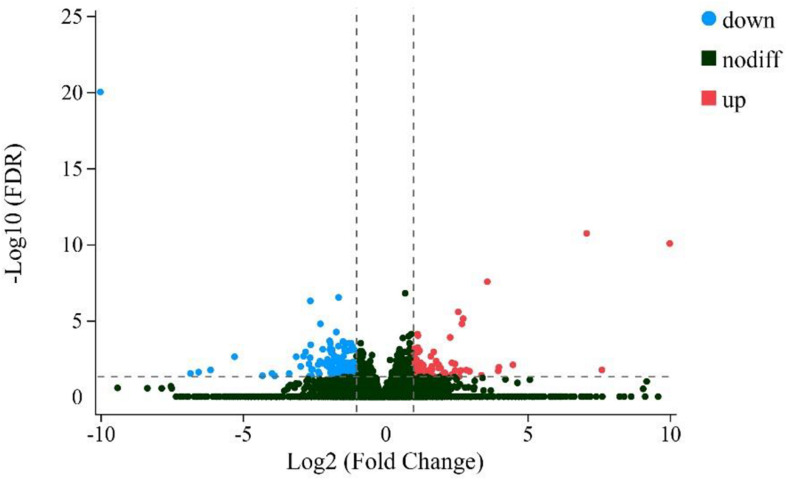
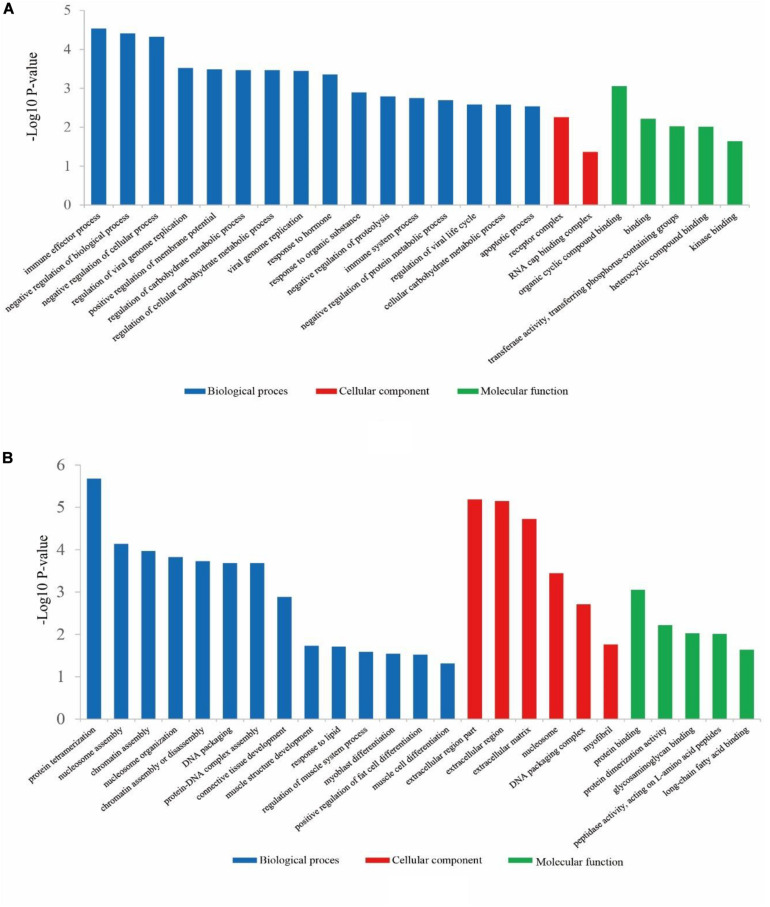
Carcass weight, meat quality and muscle components are important traits economically and they underpin most of the commercial return to goat producers. In this study, the muscle tissues were collected from five Liaoning cashmere (LC) goats and five Ziwuling black (ZB) goats with phenotypic difference in carcass weight, some meat quality traits and muscle components. The histological quantitative of collagen fibers and the transcriptome profiles in the muscle tissues were investigated using Masson-trichrome staining and RNA-Seq, respectively. The percentage of total collagen fibers in the muscle tissues from ZB goats was less than those from LC goats, suggesting that these ZB goats had more tender meat. An average of 15,919 and 15,582 genes were found to be expressed in muscle tissues from LC and ZB goats, respectively. Compared to LC goats, the expression levels of 78 genes were up-regulated in ZB goats, while 133 genes were down-regulated. Gene ontology (GO) and Kyoto Encyclopedia of Genes and Genomes (KEGG) analyses revealed that the differentially expressed genes (DEGs) were significantly enriched in GO terms related to the muscle growth and development and the deposition of intramuscular fat and lipid metabolism, hippo signaling pathway and Jak-STAT signaling pathway. The results provide an improved understanding of the genetic mechanisms regulating meat production performance in goats, and will help us improve the accuracy of selection for meat traits in goats using marker-assisted selection based on these differentially expressed genes obtained.
胴体重量、肉质和肌肉成分是重要的经济性状,它们是山羊生产者大部分商业回报的基础。在本研究中,从五只辽宁绒山羊(LC)和五只子午岭黑山羊(ZB)采集肌肉组织,这两种山羊在胴体重量、一些肉质性状和肌肉成分方面存在表型差异。分别使用Masson三色染色法和RNA测序技术研究了肌肉组织中胶原纤维的组织学定量和转录组图谱。ZB山羊肌肉组织中总胶原纤维的百分比低于LC山羊,这表明这些ZB山羊的肉更嫩。在LC山羊和ZB山羊的肌肉组织中分别平均发现15,919个和15,582个基因表达。与LC山羊相比,ZB山羊中有78个基因的表达水平上调,而133个基因下调。基因本体(GO)和京都基因与基因组百科全书(KEGG)分析表明,差异表达基因(DEG)在与肌肉生长发育、肌内脂肪沉积和脂质代谢、河马信号通路和Jak-STAT信号通路相关的GO术语中显著富集。这些结果有助于更好地理解调控山羊产肉性能的遗传机制,并将帮助我们基于获得的这些差异表达基因,通过标记辅助选择提高山羊肉性状选择的准确性。