Rijpma Myrthe G, Shdo Suzanne M, Shany-Ur Tal, Toller Gianina, Kramer Joel H, Miller Bruce L, Rankin Katherine P
Memory and Aging Center, Department of Neurology, University of California, San Francisco, CA, USA.
Cogn Neuropsychol. 2021 Feb;38(1):88-106. doi: 10.1080/02643294.2020.1868984.
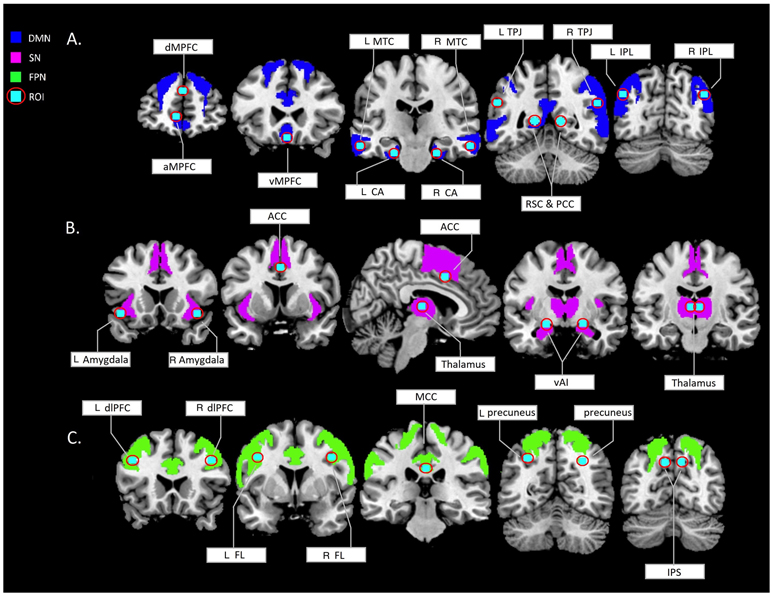
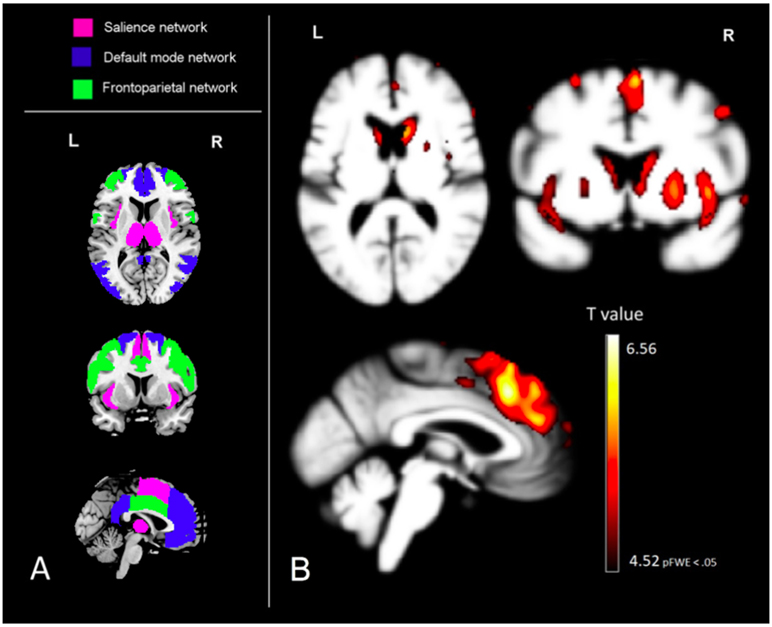
Interpreting others' beliefs, desires and intentions is known as "theory of mind" (ToM), and is often evaluated using simplified measurement tools, which may not correctly reflect the brain circuits that are required for real-life ToM functioning. We aimed to identify the brain structures necessary to correctly infer intentions from realistic scenarios by administering The Awareness of Social Inference Test, Enriched subtest to 47 patients with behavioural variant frontotemporal dementia, 24 patients with progressive supranuclear palsy syndrome, 31 patients with Alzheimer's syndrome, and 77 older healthy controls. Neuroimaging data was analyzed using voxel based morphometry, and participants' understanding of intentions was correlated with voxel-wise and region-of interest data. We found that structural integrity of the cinguloinsular cortex in the salience network (SN) was more pivotal for accurate ToM than previously described, emphasizing the importance of the SN for selectively recognizing and attending to social cues during ToM inferences.
解读他人的信念、欲望和意图被称为“心理理论”(ToM),并且通常使用简化的测量工具进行评估,这些工具可能无法正确反映现实生活中ToM功能所需的脑回路。我们旨在通过对47例行为变异型额颞叶痴呆患者、24例进行性核上性麻痹综合征患者、31例阿尔茨海默病综合征患者和77名健康老年人进行社会推理意识测试(丰富子测试),来确定从现实场景中正确推断意图所需的脑结构。使用基于体素的形态计量学分析神经影像数据,并将参与者对意图的理解与体素级和感兴趣区域的数据相关联。我们发现,显著网络(SN)中扣带回岛叶皮质的结构完整性对于准确的ToM比之前描述的更为关键,这强调了SN在ToM推理过程中选择性识别和关注社会线索的重要性。