Vornholt Tobias, Christoffel Fadri, Pellizzoni Michela M, Panke Sven, Ward Thomas R, Jeschek Markus
Department of Biosystems Science and Engineering, ETH Zurich, CH-4058 Basel, Switzerland.
National Centre of Competence in Research (NCCR) Molecular Systems Engineering, Basel, Switzerland.
Sci Adv. 2021 Jan 22;7(4). doi: 10.1126/sciadv.abe4208. Print 2021 Jan.
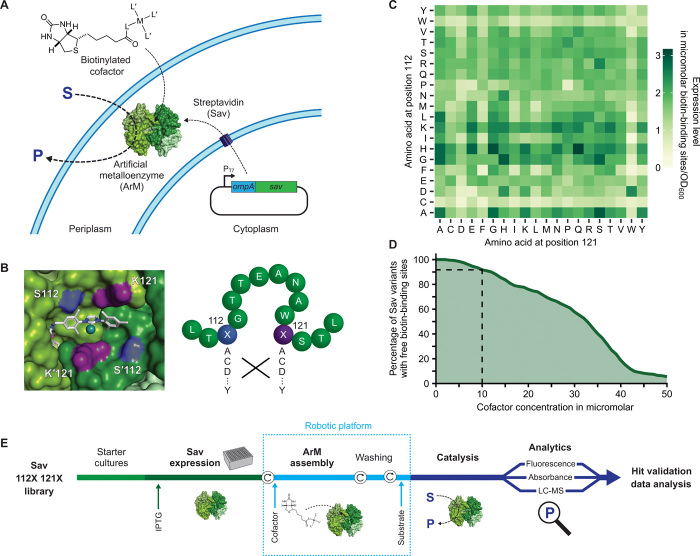
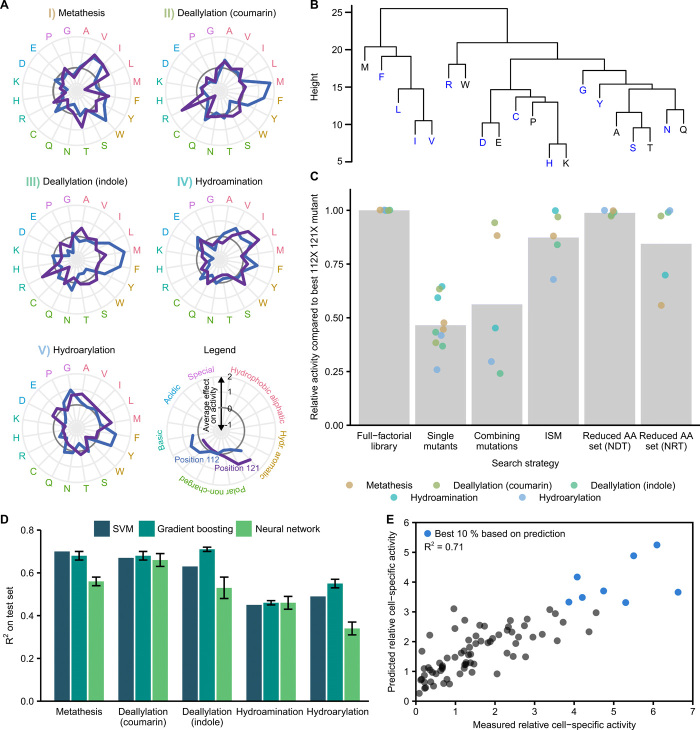
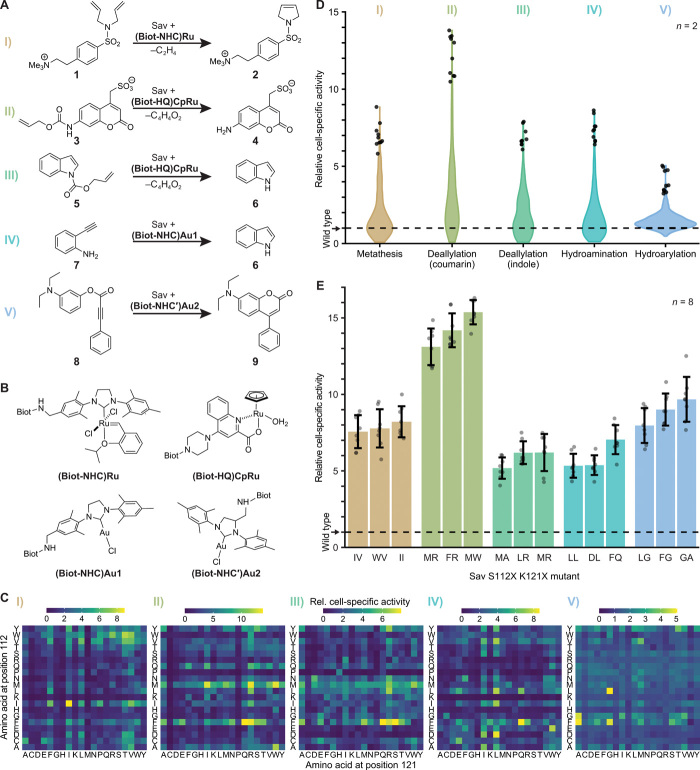
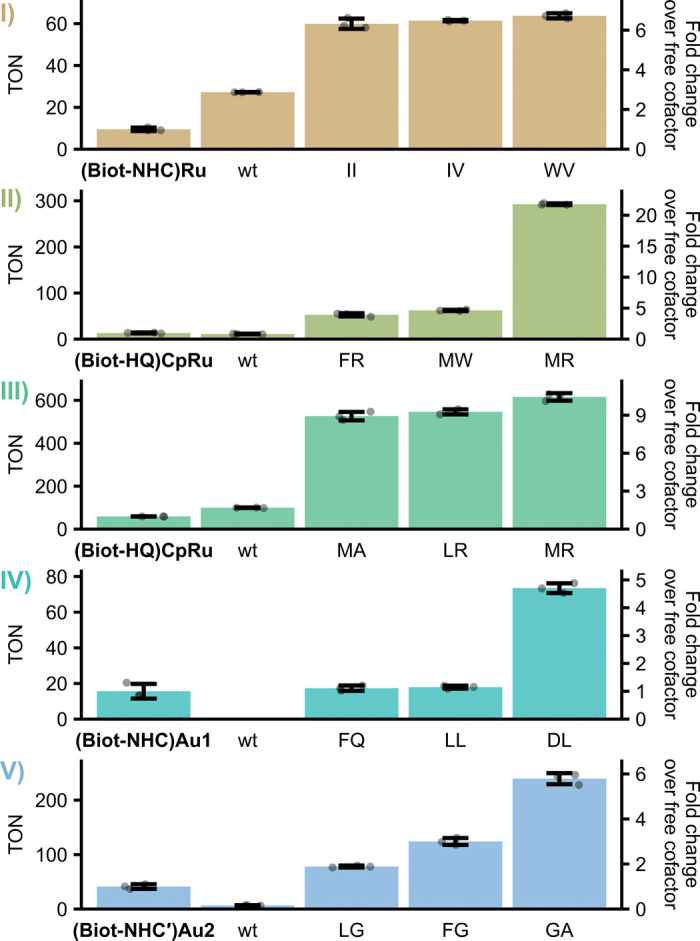
Artificial metalloenzymes (ArMs) catalyzing new-to-nature reactions could play an important role in transitioning toward a sustainable economy. While ArMs have been created for various transformations, attempts at their genetic optimization have been case specific and resulted mostly in modest improvements. To realize their full potential, methods to rapidly discover active ArM variants for ideally any reaction of interest are required. Here, we introduce a reaction-independent, automation-compatible platform, which relies on periplasmic compartmentalization in to rapidly and reliably engineer ArMs based on the biotin-streptavidin technology. We systematically assess 400 ArM mutants for five bioorthogonal transformations involving different metals, reaction mechanisms, and reactants, which include novel ArMs for gold-catalyzed hydroamination and hydroarylation. Activity enhancements up to 15-fold highlight the potential of the systematic approach. Furthermore, we suggest smart screening strategies and build machine learning models that accurately predict ArM activity from sequence, which has crucial implications for future ArM development.
催化自然界中未曾出现过的反应的人工金属酶(ArMs)在向可持续经济转型过程中可能发挥重要作用。虽然已经制备出了用于各种转化反应的ArMs,但对其进行基因优化的尝试都是针对具体情况的,并且大多只带来了适度的改进。为了充分发挥其潜力,需要有能够快速发现适用于任何感兴趣反应的活性ArM变体的方法。在此,我们引入了一个与反应无关且兼容自动化的平台,该平台基于生物素 - 链霉亲和素技术,依靠周质区室化来快速且可靠地改造ArMs。我们系统地评估了400个ArM突变体用于涉及不同金属、反应机制和反应物的五种生物正交转化反应,其中包括用于金催化的氢胺化和氢芳基化反应的新型ArMs。高达15倍的活性增强凸显了这种系统方法的潜力。此外,我们提出了智能筛选策略并构建了机器学习模型,该模型能够根据序列准确预测ArM活性,这对未来ArM的开发具有至关重要的意义。