Kalinski Jarmo-Charles J, Krause Rui W M, Parker-Nance Shirley, Waterworth Samantha C, Dorrington Rosemary A
Department of Biochemistry and Microbiology, Rhodes University, Makhanda 6140, South Africa.
Department of Chemistry, Rhodes University, Makhanda 6140, South Africa.
Mar Drugs. 2021 Jan 28;19(2):68. doi: 10.3390/md19020068.
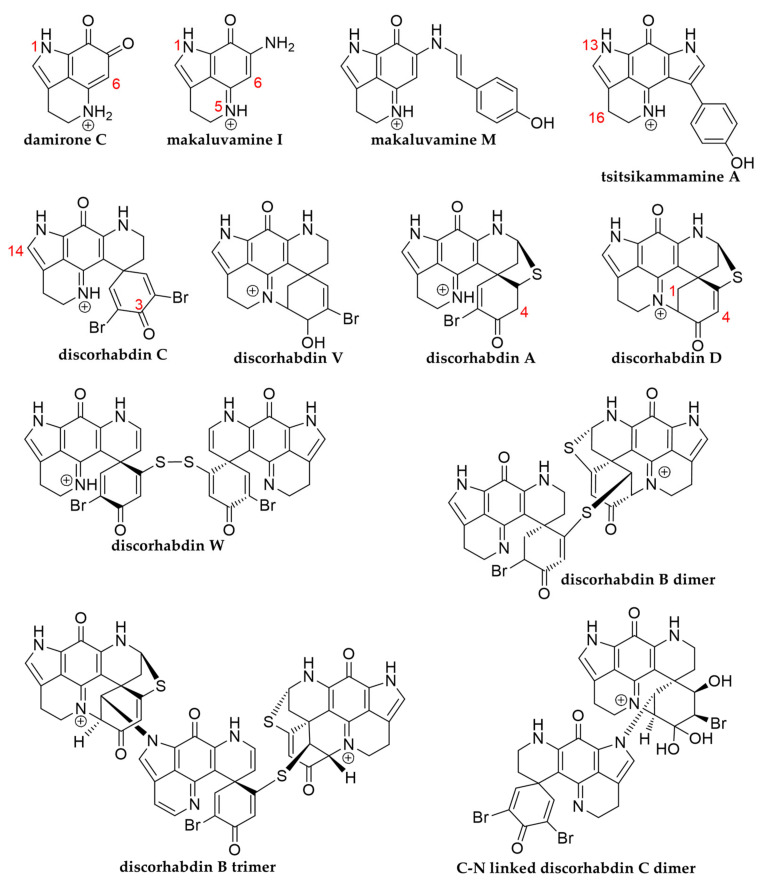
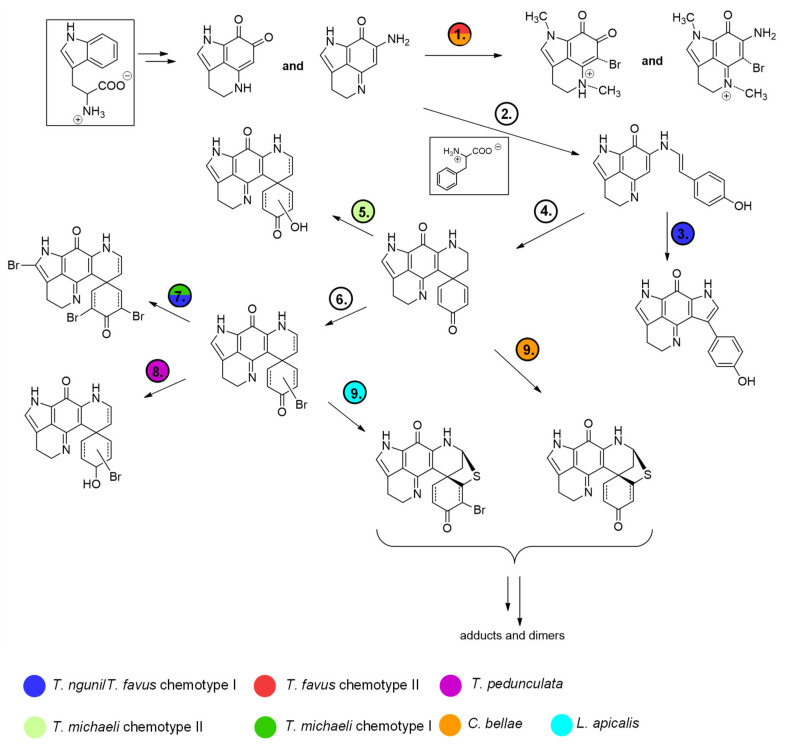
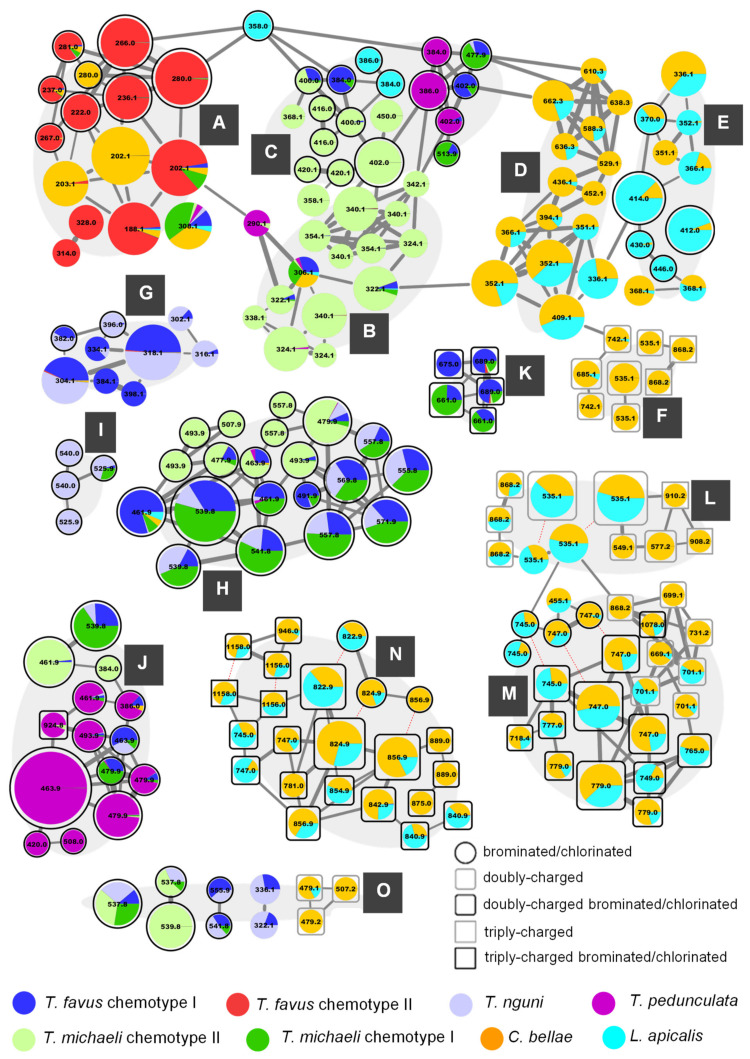
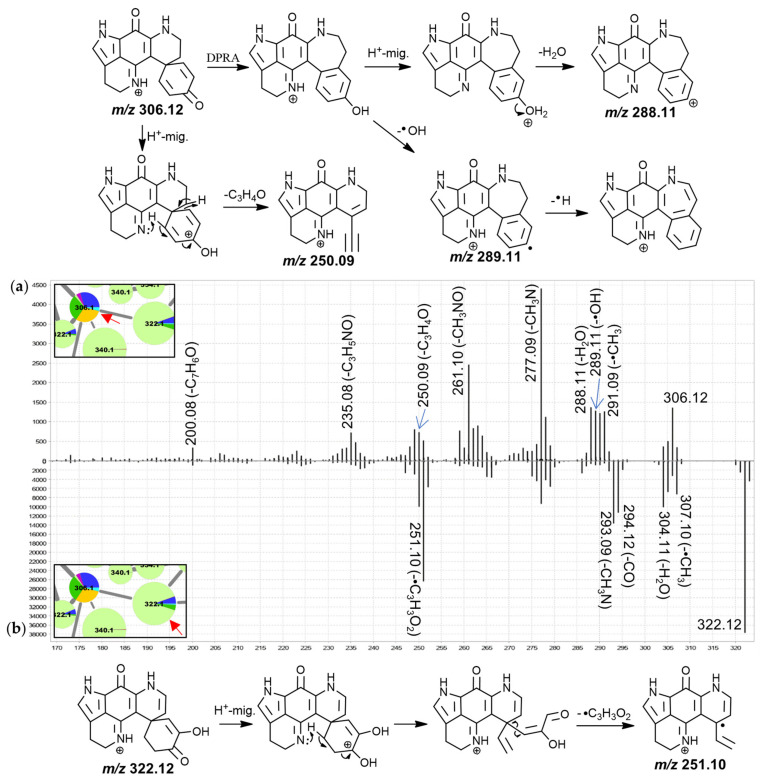
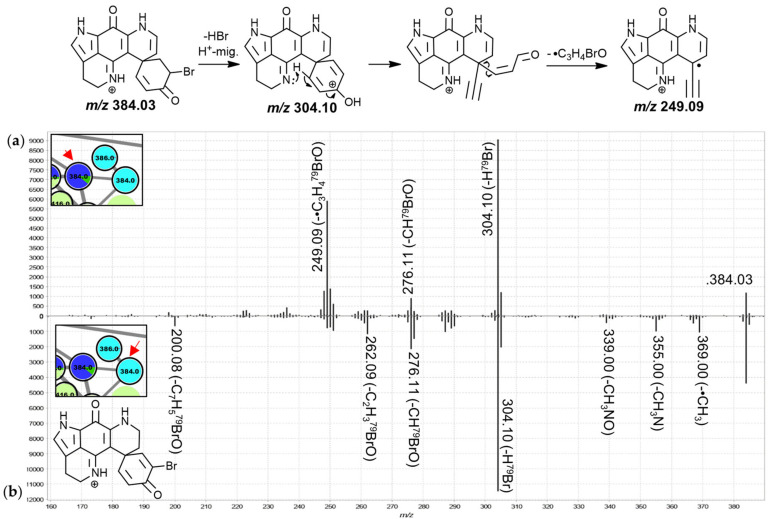
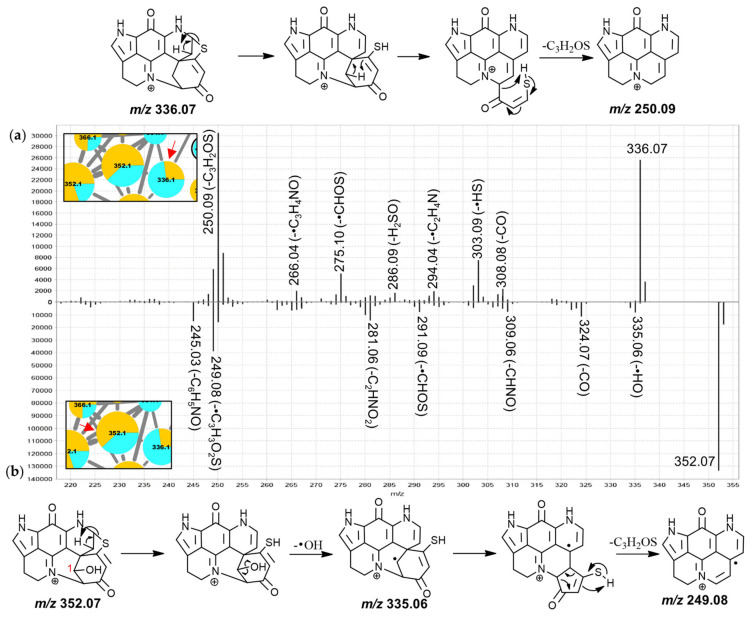
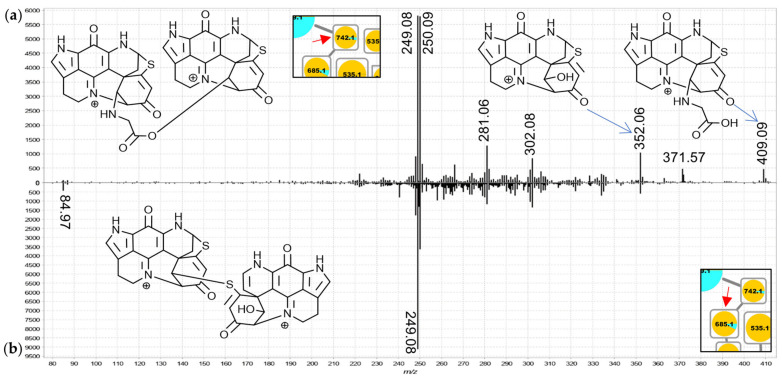
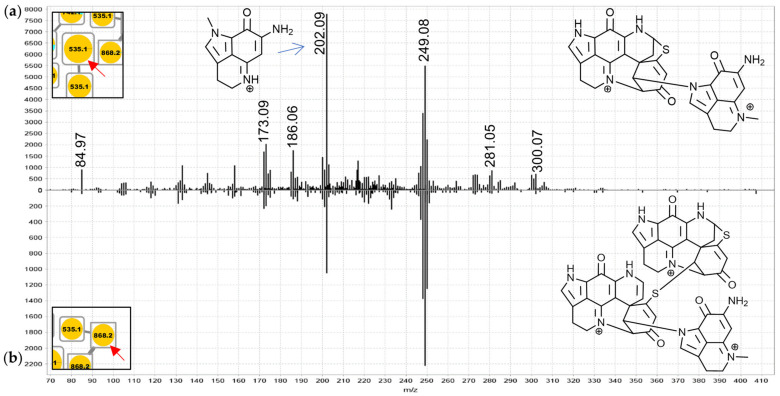
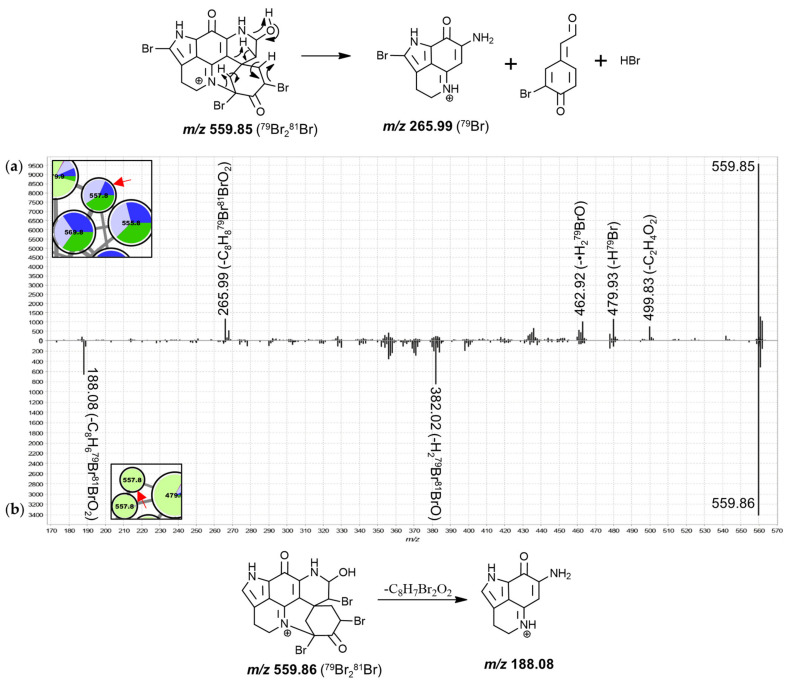
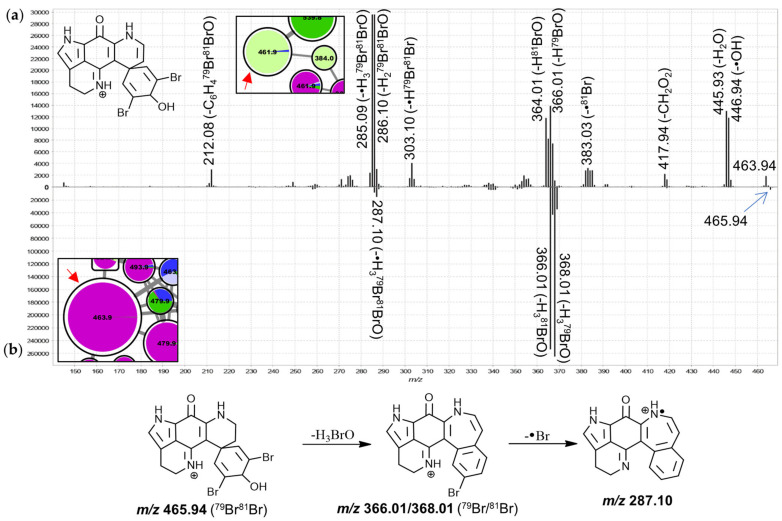
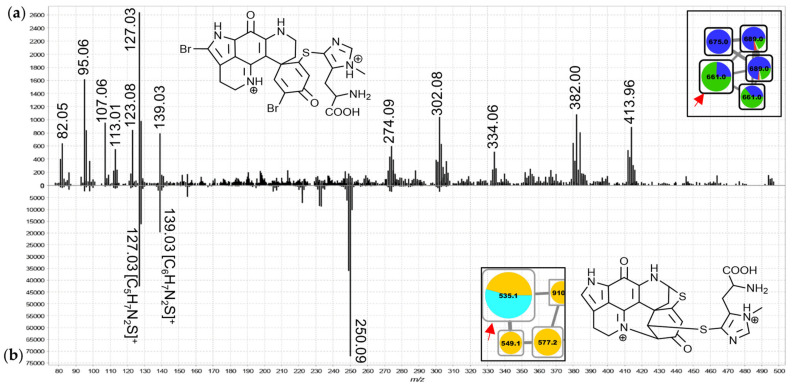
Sponges of the Latrunculiidae family produce bioactive pyrroloiminoquinone alkaloids including makaluvamines, discorhabdins, and tsitsikammamines. The aim of this study was to use LC-ESI-MS/MS-driven molecular networking to characterize the pyrroloiminoquinone secondary metabolites produced by six latrunculid species. These are , , and as well as the recently discovered species, and . Organic extracts of 43 sponges were analyzed, revealing distinct species-specific chemical profiles. More than 200 known and unknown putative pyrroloiminoquinones and related compounds were detected, including unprecedented makaluvamine-discorhabdin adducts and hydroxylated discorhabdin I derivatives. The chemical profiles of the new species closely resembled those of the known (chemotype I), but with a higher abundance of tsitsikammamines vs. discorhabdins. sponges displayed two distinct chemical profiles, either producing mostly the same discorhabdins as (chemotype I) or non- or monobrominated, hydroxylated discorhabdins. and produced similar pyrroloiminoquinone chemistry to one another, characterized by sulfur-containing discorhabdins and related adducts and oligomers. This study highlights the variability of pyrroloiminoquinone production by latrunculid species, identifies novel isolation targets, and offers fundamental insights into the collision-induced dissociation of pyrroloiminoquinones.
扁海绵科的海绵产生具有生物活性的吡咯并咪唑醌生物碱,包括马卡鲁胺、盘海绵素和齐茨卡马胺。本研究的目的是利用液相色谱 - 电喷雾串联质谱驱动的分子网络来表征六种扁海绵属物种产生的吡咯并咪唑醌次生代谢产物。这些物种分别是[此处原文缺失具体物种名]、[此处原文缺失具体物种名]以及最近发现的[此处原文缺失具体物种名]和[此处原文缺失具体物种名]。对43种海绵的有机提取物进行了分析,揭示了不同的物种特异性化学图谱。检测到200多种已知和未知的推定吡咯并咪唑醌及相关化合物,包括前所未有的马卡鲁胺 - 盘海绵素加合物和羟基化盘海绵素I衍生物。新物种[此处原文缺失具体物种名]的化学图谱与已知的[此处原文缺失具体物种名](化学型I)非常相似,但齐茨卡马胺的丰度高于盘海绵素。[此处原文缺失具体物种名]海绵呈现出两种不同的化学图谱,要么产生与[此处原文缺失具体物种名](化学型I)大致相同的盘海绵素,要么产生非溴化、单溴化或羟基化的盘海绵素。[此处原文缺失具体物种名]和[此处原文缺失具体物种名]产生彼此相似的吡咯并咪唑醌化学物质,其特征是含硫的盘海绵素及相关加合物和低聚物。本研究突出了扁海绵属物种产生吡咯并咪唑醌的变异性,确定了新的分离目标,并为吡咯并咪唑醌的碰撞诱导解离提供了基本见解。