Foreman Brandon, Lissak India A, Kamireddi Neha, Moberg Dick, Rosenthal Eric S
University of Cincinnati, 231 Albert Sabin Way, Cincinnati, OH, 45267, USA.
Massachusetts General Hospital, Lunder 6 Neurosciences ICU, 55 Fruit St, Boston, MA, 02114, USA.
Curr Neurol Neurosci Rep. 2021 Feb 2;21(3):6. doi: 10.1007/s11910-021-01098-y.
Increasingly sophisticated systems for monitoring the brain have led to an increase in the use of multimodality monitoring (MMM) to detect secondary brain injuries before irreversible damage occurs after brain trauma. This review examines the challenges and opportunities associated with MMM in this population.
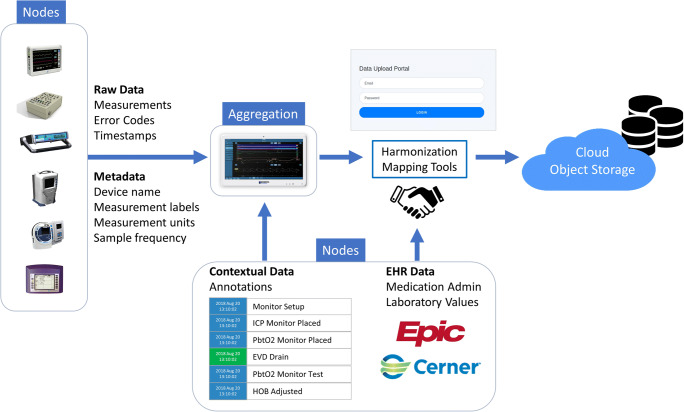
Locally and internationally, the use of MMM varies. Practical challenges include difficulties with data acquisition, curation, and harmonization with other data sources limiting collaboration. However, efforts toward integration of MMM data, advancements in data science, and the availability of cloud-based infrastructures are now affording the opportunity for MMM to advance the care of patients with brain trauma. MMM provides data to guide the precision management of patients with traumatic brain injury in real time. While challenges exist, there are exciting opportunities for MMM to live up to this promise and to drive new insights into the physiology of the brain and beyond.
日益复杂的脑监测系统使得多模态监测(MMM)的应用增加,以在脑外伤后不可逆损伤发生之前检测继发性脑损伤。本综述探讨了该人群中与MMM相关的挑战和机遇。
在本地和国际上,MMM的使用情况各不相同。实际挑战包括数据采集、管理以及与其他数据源协调方面的困难,这限制了合作。然而,目前在整合MMM数据方面所做的努力、数据科学的进步以及基于云的基础设施的可用性,为MMM推动脑外伤患者的护理提供了机遇。MMM提供数据以实时指导创伤性脑损伤患者的精准管理。虽然存在挑战,但MMM有令人兴奋的机会实现这一承诺,并推动对脑生理学及其他方面的新见解。