Center for Personalized Cancer Therapy and Moores Cancer Center, University of California San Diego, La Jolla, California, USA.
Integrative Biology Laboratory, Salk Institute for Biological Studies, La Jolla, California, USA.
Oncologist. 2021 Apr;26(4):e530-e536. doi: 10.1002/onco.13702. Epub 2021 Mar 2.
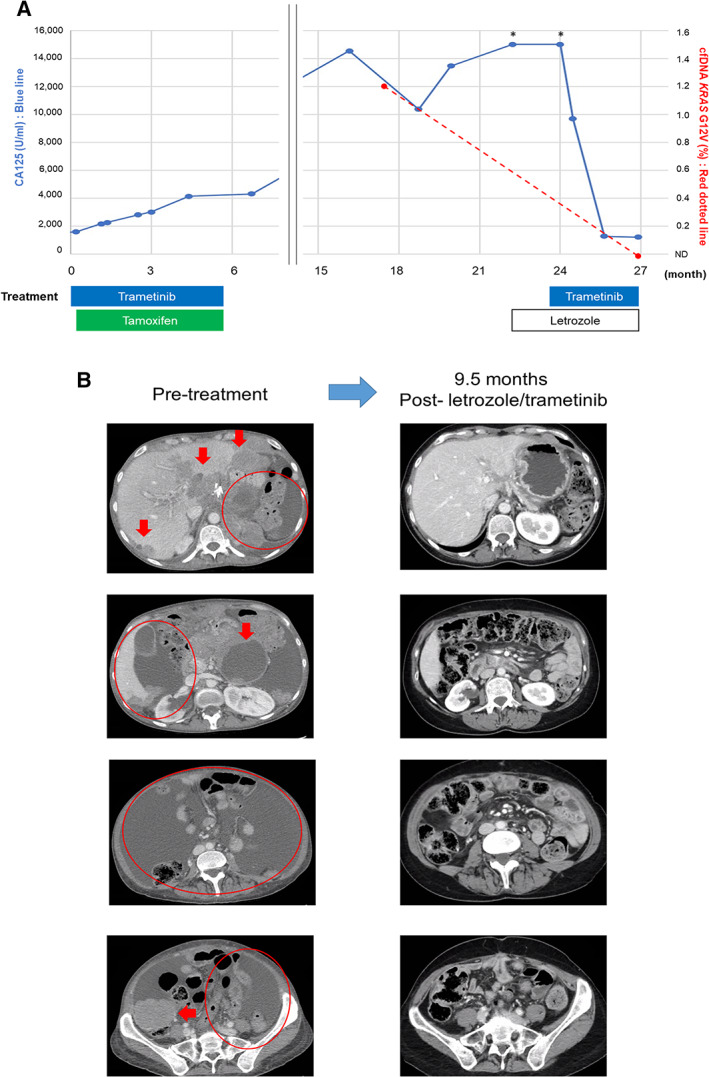
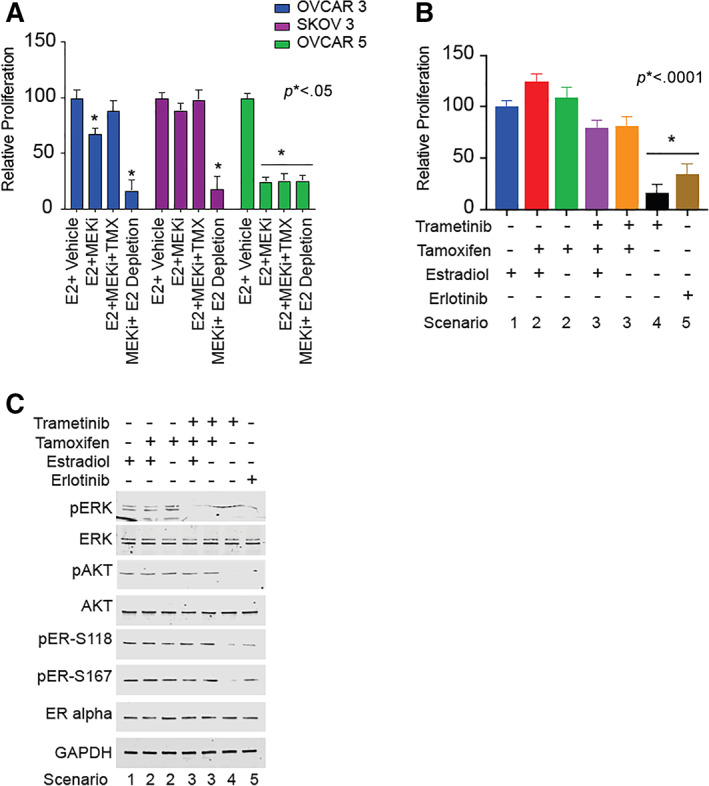
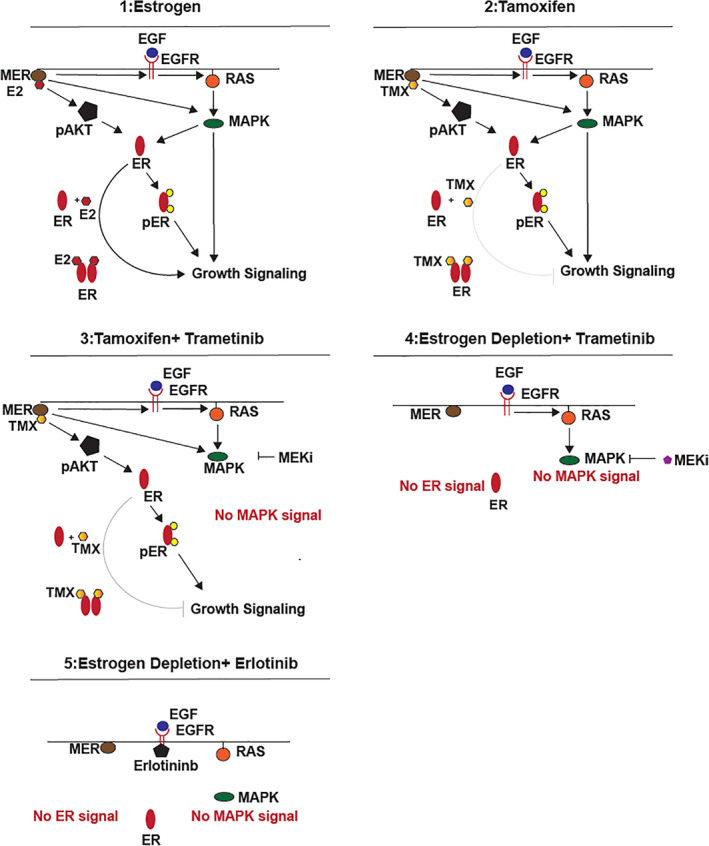
We report on a woman with aggressive estrogen receptor-positive, KRAS-mutated ovarian cancer who achieved a remarkable response to combination therapy with the MEK inhibitor (trametinib) and the aromatase inhibitor (letrozole), even though the disease had failed to respond to a combination of a PI3K inhibitor and different MEK inhibitor, as well as to trametinib and the estrogen modulator, tamoxifen, and to letrozole by itself. The mechanism of action for exceptional response was elucidated by in vitro experiments that demonstrated that the fact that tamoxifen can have an agonistic effect in addition to antagonist activity, whereas letrozole results only in estrogen depletion was crucial to the response achieved when letrozole was combined with an MEK inhibitor. Our current observations indicate that subtle variations in mechanisms of action of outwardly similar regimens may have a major impact on outcome and that such translational knowledge is critical for optimizing a precision medicine strategy. KEY POINTS: This report describes the remarkable response of a patient with KRAS-mutated, estrogen receptor-positive low-grade serous ovarian cancer treated with trametinib (MEK inhibitor) and letrozole (aromatase inhibitor), despite prior progression on similar agents including tamoxifen (estrogen modulator). In vitro investigation revealed that tamoxifen can have agonistic in addition to antagonistic effects, which could be the reason for the patient not responding to the combination of trametinib and tamoxifen. The current observations suggest that drugs with different mechanisms of action targeting the same receptor may have markedly different anticancer activity when used in combinations.
我们报告了一例侵袭性雌激素受体阳性、KRAS 突变型卵巢癌患者,尽管该患者对 PI3K 抑制剂和不同 MEK 抑制剂联合用药、MEK 抑制剂联合雌激素调节剂他莫昔芬以及单独使用来曲唑治疗均无反应,但联合使用 MEK 抑制剂曲美替尼和芳香酶抑制剂来曲唑治疗后,患者获得了显著的缓解。体外实验阐明了这种异常反应的作用机制,表明他莫昔芬除了具有拮抗活性外,还具有激动作用,而来曲唑仅能耗尽雌激素,这对于来曲唑与 MEK 抑制剂联合使用时所取得的疗效至关重要。我们目前的观察结果表明,尽管治疗方案在表面上相似,但作用机制的细微差异可能对结果产生重大影响,这种转化知识对于优化精准医疗策略至关重要。
本报告描述了一例 KRAS 突变、雌激素受体阳性低级别浆液性卵巢癌患者使用曲美替尼(MEK 抑制剂)和来曲唑(芳香酶抑制剂)治疗后获得显著缓解,尽管之前使用过类似药物包括他莫昔芬(雌激素调节剂)治疗后病情进展。体外研究表明,他莫昔芬除了具有拮抗作用外,还具有激动作用,这可能是该患者对曲美替尼和他莫昔芬联合用药无反应的原因。目前的观察结果表明,针对同一受体的作用机制不同的药物在联合使用时可能具有明显不同的抗癌活性。