Mamkulathil Devasia Rajesh, Altaf Mohammad, Fahad Alrefaei Abdulwahed, Manoharadas Salim
SCMS Institute of Bioscience and Biotechnology, South Kalamassery, Kochi, Kerala 682033, India.
King Saud University, Central Laboratory, Department of Chemistry, College of Science, P.O. Box. 2454, Riyadh 11451, Saudi Arabia.
J King Saud Univ Sci. 2021 Mar;33(2):101344. doi: 10.1016/j.jksus.2021.101344. Epub 2021 Jan 21.
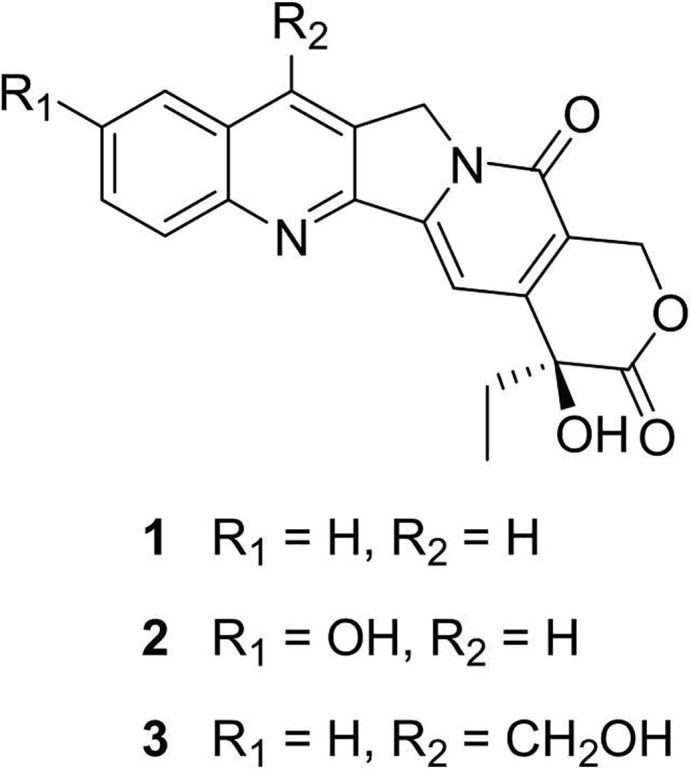
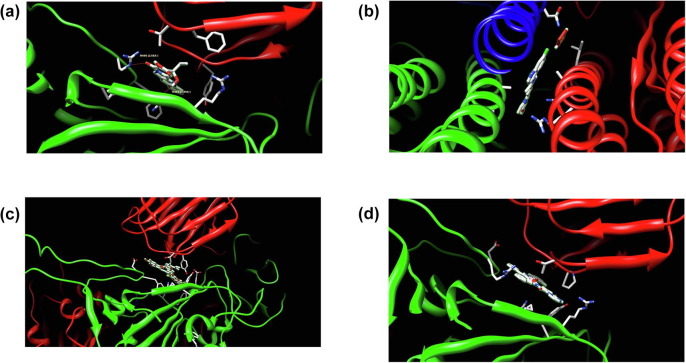
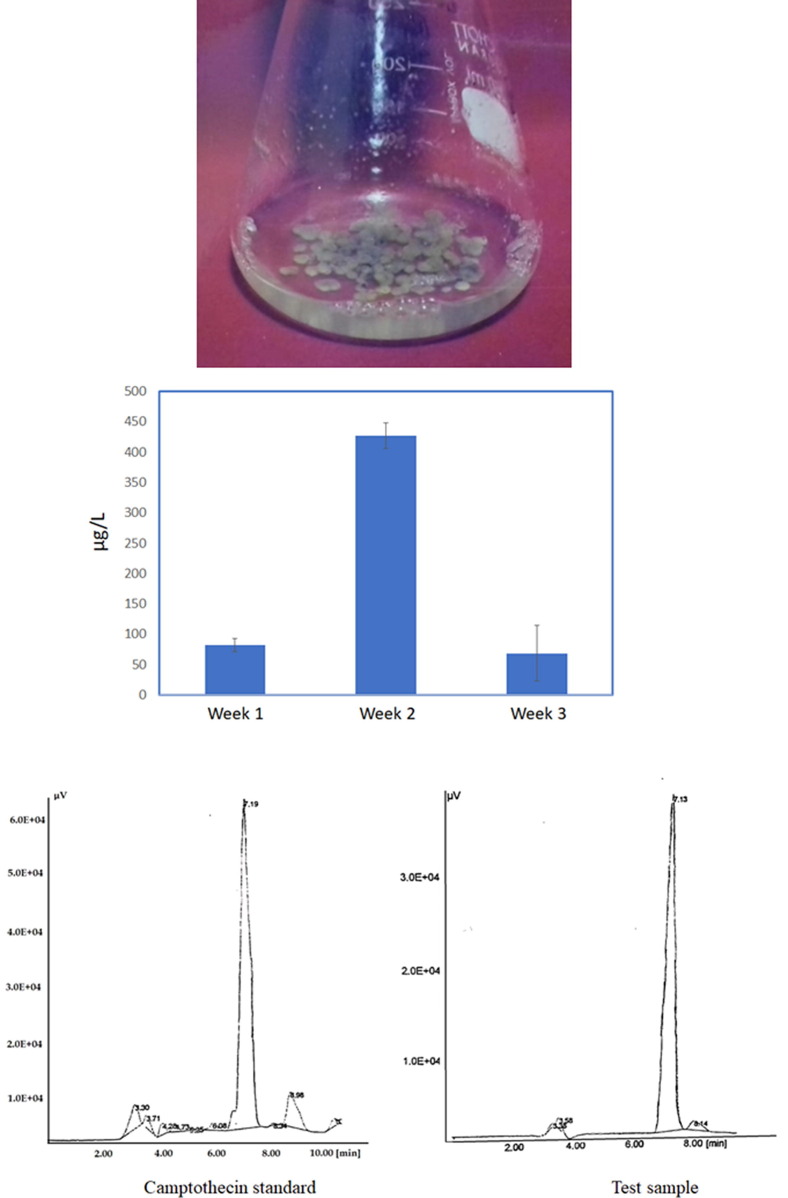
Camptothetin (CPT) is a quinoline alkaloid originally isolated from the Chinese tree, . CPT was found to have anticancerous and antiviral properties. Derivatives of natural CPT, including topothecan and irinotecan are used clinically to treat a variety of cancers. Apart from CPT production was also found in the perennial plant In this study we attempted the immobilization of the tissue culture grown callus of for the continuous production of a higher concentration of CPT. As evident from previous studies about the antiviral effects of CPT, we wanted to bioinformatically analyze the binding potential of CPT towards two important proteins of SARS-CoV-2, protease (M) and RNA dependent RNA polymerase (RdRp). Further docking analysis of the CPT against the exterior spike glycoprotein of SARS-CoV-2 was also done to determine their potential interaction. The immobilized callus of produced CPT at a concentration of 420 µg/l by the end of 12 days of growth. The HPLC analysis was done to determine the purity of the CPT synthesized by the immobilization technique. The bioinformatic analysis revealed a higher binding efficiency of CPT and its derivatives, toptecan and irinotecan against M and RdRp. The docking analysis of CPT against the spike glycoprotein of SARS-CoV-2 showed hydrogen bonding with the amino acids at K466 with a bond distance of 2.56A° and K355 with a bond distance of 2.40A°. This finding was of particular importance that other compounds including hydroxychloroquine sulphate, lopinavir and ivermectin could bind with the spike protein only by weak Vander wall bonds and no hydrogen bond formation was noticed. Our studies hence evaluate the efficiency of CPT against SARS-CoV-2, by potentially blocking the interaction of the spike glycoprotein with the angiotensin-converting enzyme 2 (ACE2) receptor found on host cells.
喜树碱(CPT)是一种喹啉生物碱,最初从中国的一种树中分离出来。人们发现CPT具有抗癌和抗病毒特性。天然CPT的衍生物,包括拓扑替康和伊立替康,在临床上用于治疗多种癌症。除了[未提及的某种植物]外,还在多年生植物[未提及的某种植物]中发现了CPT的产生。在本研究中,我们尝试固定生长在组织培养中的[未提及的某种植物]愈伤组织,以持续生产更高浓度的CPT。从先前关于CPT抗病毒作用的研究中可以明显看出,我们希望通过生物信息学分析CPT与严重急性呼吸综合征冠状病毒2(SARS-CoV-2)的两种重要蛋白质,即蛋白酶(M)和RNA依赖性RNA聚合酶(RdRp)的结合潜力。还对CPT与SARS-CoV-2的外部刺突糖蛋白进行了进一步的对接分析,以确定它们潜在的相互作用。在生长12天结束时,固定化的[未提及的某种植物]愈伤组织产生的CPT浓度为420μg/l。通过高效液相色谱(HPLC)分析来确定通过固定化技术合成的CPT的纯度。生物信息学分析显示CPT及其衍生物拓扑替康和伊立替康对M和RdRp具有更高的结合效率。CPT与SARS-CoV-2刺突糖蛋白的对接分析显示,与K466处的氨基酸形成氢键,键距为2.56Å,与K355处的氨基酸形成氢键,键距为2.40Å。这一发现尤为重要,因为包括硫酸羟氯喹、洛匹那韦和伊维菌素在内的其他化合物仅通过弱范德华键与刺突蛋白结合,未观察到氢键形成。因此,我们的研究通过潜在地阻断刺突糖蛋白与宿主细胞上发现的血管紧张素转换酶2(ACE2)受体的相互作用,评估了CPT对SARS-CoV-2的作用效率。