Ragab G H, Halfaya F M, Ahmed O M, Abou El-Kheir W, Mahdi E A, Ali T M, Almehmadi M M, Hagag U
Anesthesiology and Radiology Department, Faculty of Veterinary Medicine, Beni-Suef University, Beni-Suef, Egypt.
Physiology Division, Zoology Department, Faculty of Science, Beni-Suef University, P.O. Box 62521, Beni-Suef, Egypt.
Evid Based Complement Alternat Med. 2021 Jan 18;2021:6692432. doi: 10.1155/2021/6692432. eCollection 2021.
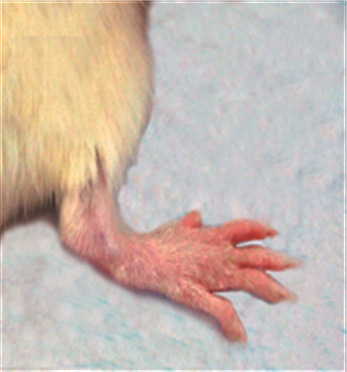
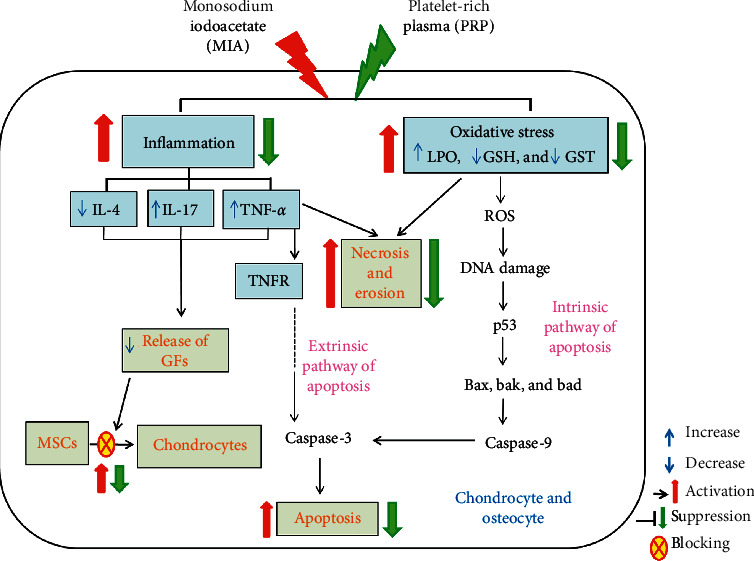
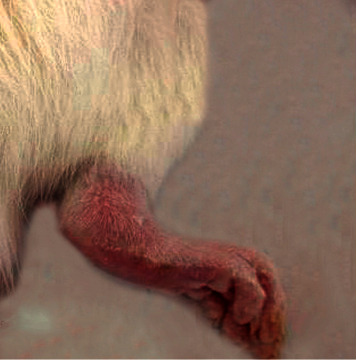
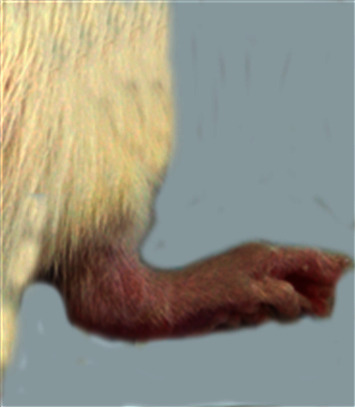
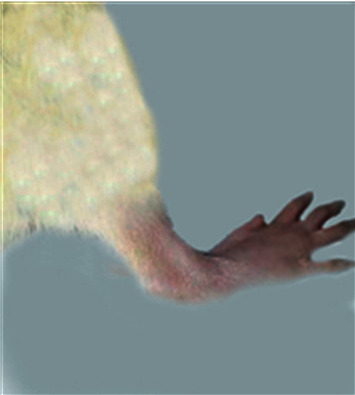
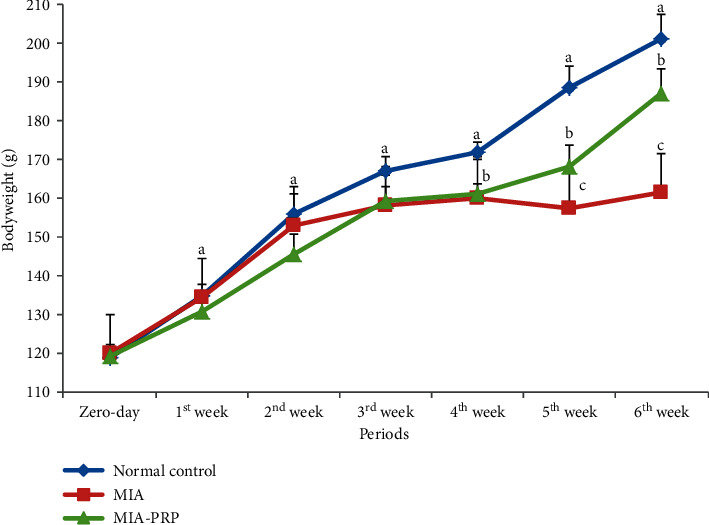
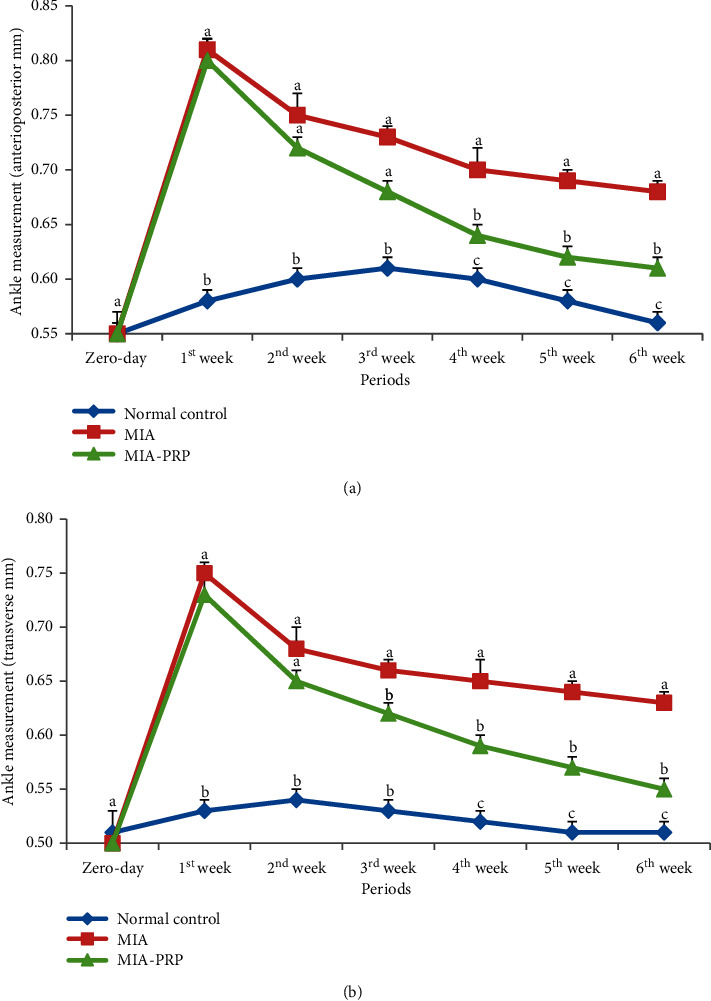
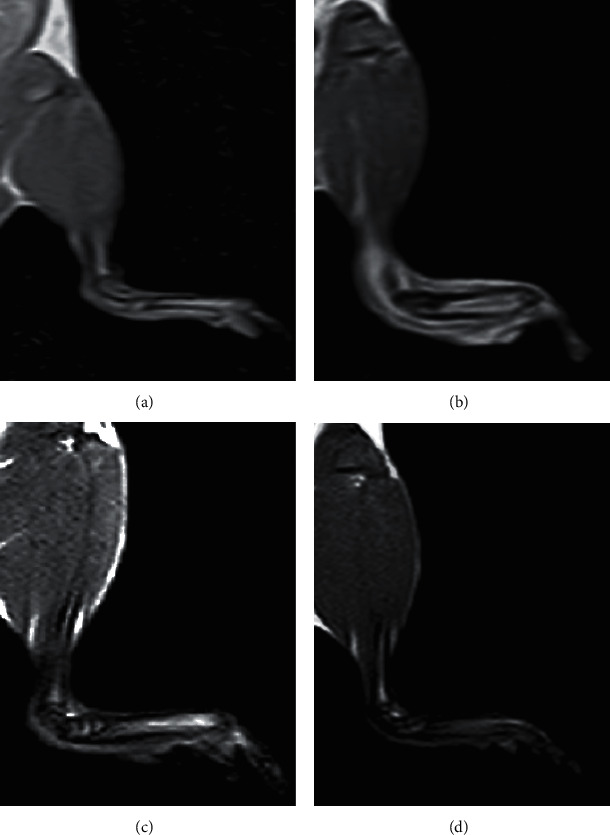
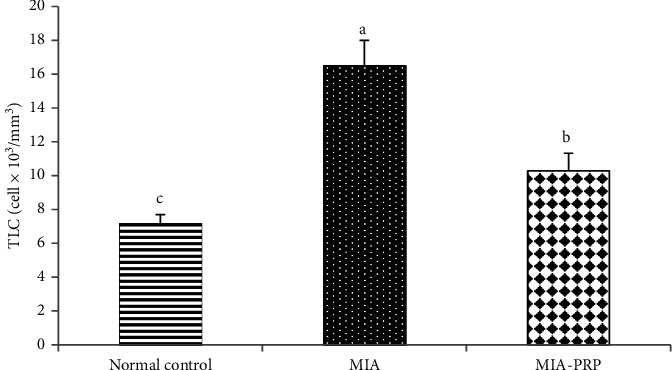
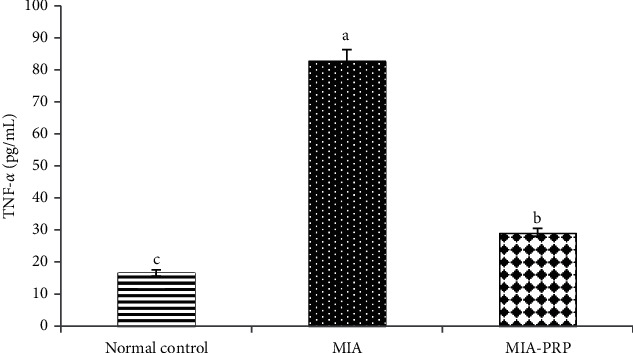
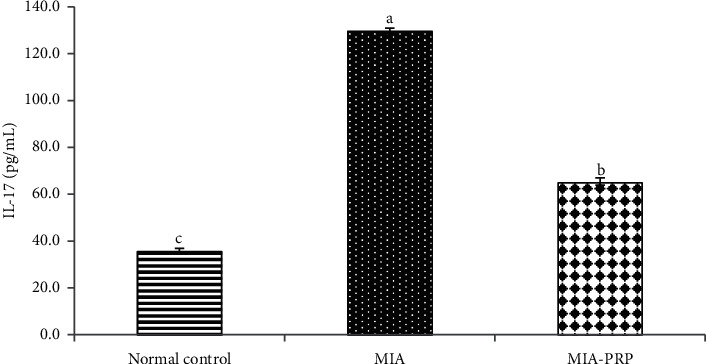
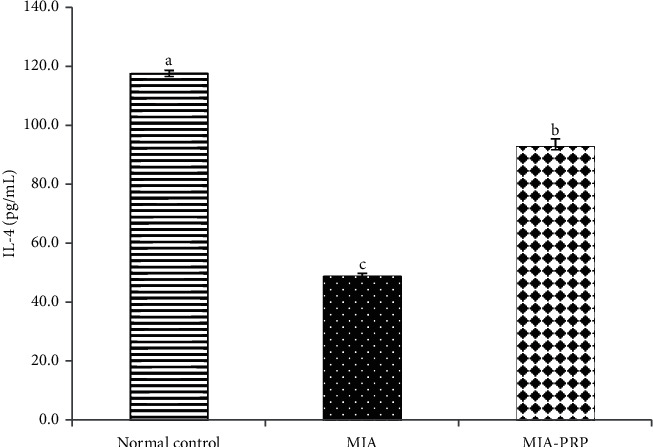
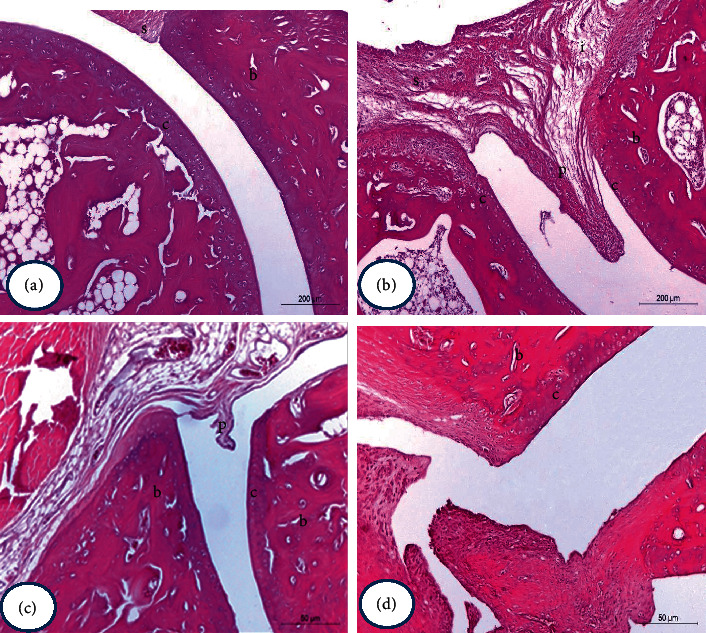
Until now, there is no treatment that cause complete cure of the chronic inflammatory and degenerative disease, osteoarthritis (OA). Moreover, the underlying mechanisms of OA development and progress are not fully elucidated, and the present pharmacological treatment alternatives are restricted and associated with adverse side effects. Thus, the present study was conducted to evaluate the role of platelet-rich plasma (PRP) in the remedy of OA in the rat model in terms of inflammation, ankle histopathological alterations, and oxidative stress. OA was induced in male Wistar rats by injection of MIA (2 mg)/50 L isotonic saline in the right ankle joint for two successive days in each rat. After the 2 MIA injection, the osteoarthritic rats were allocated into two groups such as the MIA group (group 2) and MIA + PRP group (group 3). The MIA + PRP group was treated with PRP (50 L) by injection into the ankle joint of the right hind limb of each rat at days 14, 21, and 28 after the 2 injection of MIA. The same equivalent volume of saline, as a substitute of PRP, was injected into the ankle joint of each rat of the normal control group (group 1) and MIA group (group 2) at the same tested periods. Swelling of joint, bodyweight, total leucocytes count (TLC), and morphological as well as histological changes of ankle joints were evaluated. Serum lipid peroxides (LPO), glutathione (GSH), and glutathione S-transferase (GST) levels were examined as biomarkers of oxidative stress. Serum tumor necrosis factor- (TNF-), interleukin-17 (IL-17), and interleukin-4 (IL-4) were investigated by ELISA as biomarkers of inflammation. In addition, magnetic resonance imaging (MRI) was carried out to investigate the soft tissues in joints. The obtained results revealed that PRP reduced LPO and increased GSH and GST levels in osteoarthritic rats. Also, PRP significantly diminished serum TNF- and IL-17 levels, while it increased IL-4 serum levels in rats with MIA-induced OA. Morphological observations, histological analysis, and MRI revealed a gradual diminishing in joint inflammation and destruction of cartilage in PRP-injected osteoarthritic rats. Based on these results, it can be suggested that PRP has antiarthritic potential in MIA-induced OA, which may be mediated via suppression of inflammation and oxidative stress.
到目前为止,尚无能够完全治愈慢性炎症和退行性疾病骨关节炎(OA)的治疗方法。此外,OA发生和发展的潜在机制尚未完全阐明,目前的药物治疗选择有限且伴有不良副作用。因此,本研究旨在从炎症、踝关节组织病理学改变和氧化应激方面评估富血小板血浆(PRP)在大鼠OA模型治疗中的作用。通过向每只雄性Wistar大鼠的右踝关节注射2毫克/50微升的单碘乙酸(MIA)/等渗盐水,连续两天,诱导大鼠发生OA。在注射2次MIA后,将骨关节炎大鼠分为两组,即MIA组(第2组)和MIA + PRP组(第3组)。在第2次注射MIA后的第14、21和28天,通过向MIA + PRP组每只大鼠右后肢的踝关节注射PRP(50微升)进行治疗。在相同的测试时间段,将相同体积的生理盐水作为PRP的替代品,注射到正常对照组(第1组)和MIA组(第2组)每只大鼠的踝关节中。评估关节肿胀、体重、白细胞总数(TLC)以及踝关节的形态和组织学变化。检测血清脂质过氧化物(LPO)、谷胱甘肽(GSH)和谷胱甘肽S转移酶(GST)水平,作为氧化应激的生物标志物。通过酶联免疫吸附测定(ELISA)检测血清肿瘤坏死因子-α(TNF-α)、白细胞介素-17(IL-17)和白细胞介素-4(IL-4),作为炎症的生物标志物。此外,进行磁共振成像(MRI)以研究关节中的软组织。所得结果显示,PRP降低了骨关节炎大鼠的LPO水平,提高了GSH和GST水平。此外,PRP显著降低了血清TNF-α和IL-17水平,同时提高了MIA诱导的OA大鼠的血清IL-4水平。形态学观察、组织学分析和MRI显示,注射PRP的骨关节炎大鼠的关节炎症逐渐减轻,软骨破坏减少。基于这些结果,可以认为PRP在MIA诱导的OA中具有抗关节炎潜力,这可能是通过抑制炎症和氧化应激介导的。