Chen Xun, Yi Chen, Yang Man-Jun, Sun Xueqi, Liu Xubin, Ma Hanyu, Li Yiming, Li Hongyu, Wang Chao, He Yi, Chen Guanhui, Chen Shangwu, Yu Li, Yu Dongsheng
Guanghua School of Stomatology, Guangdong Provincial Key Laboratory of Stomatology, Sun Yat-sen University, Guangzhou 510055, People's Republic of China.
Center for Proteomics and Metabolomics, State Key Laboratory of Biocontrol, Guangdong Province Key Laboratory for Pharmaceutical Functional Genes, School of Life Sciences, Sun Yat-sen University, Guangzhou 510006, People's Republic of China.
J Cancer. 2021 Jan 10;12(5):1563-1574. doi: 10.7150/jca.54252. eCollection 2021.
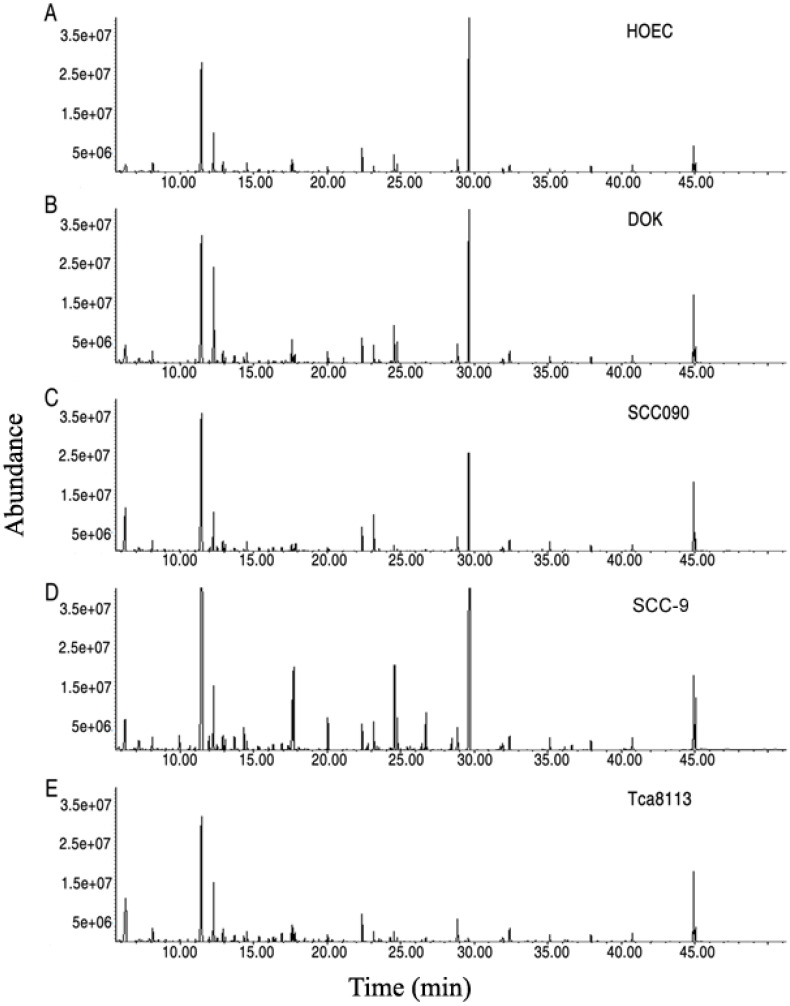
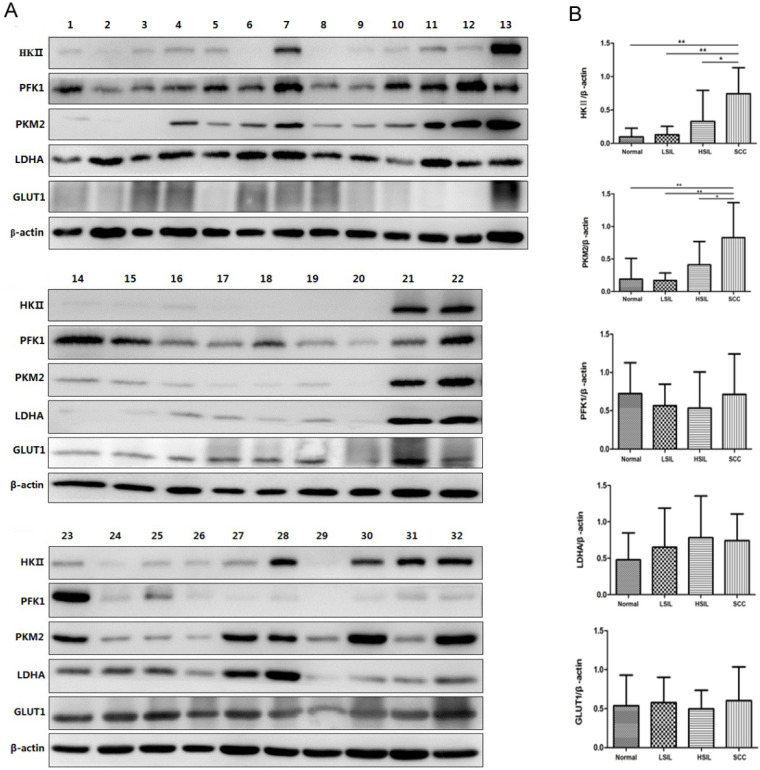
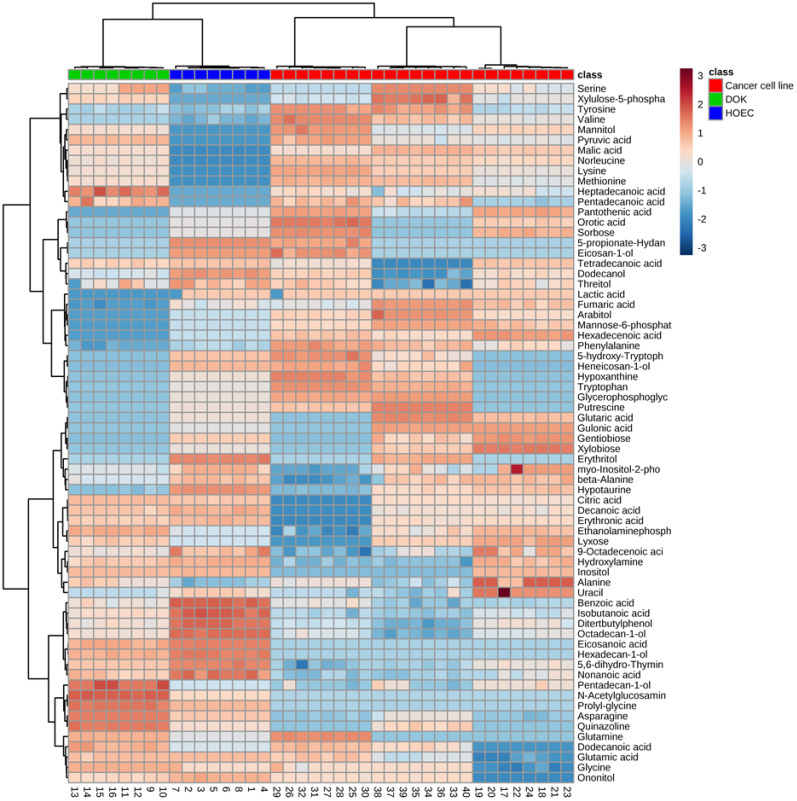
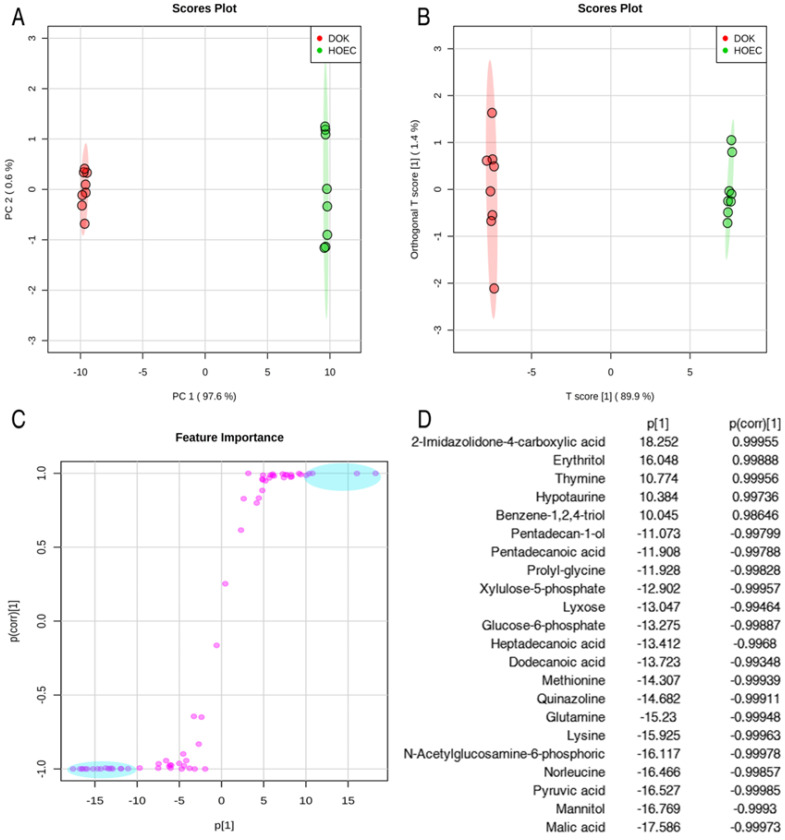
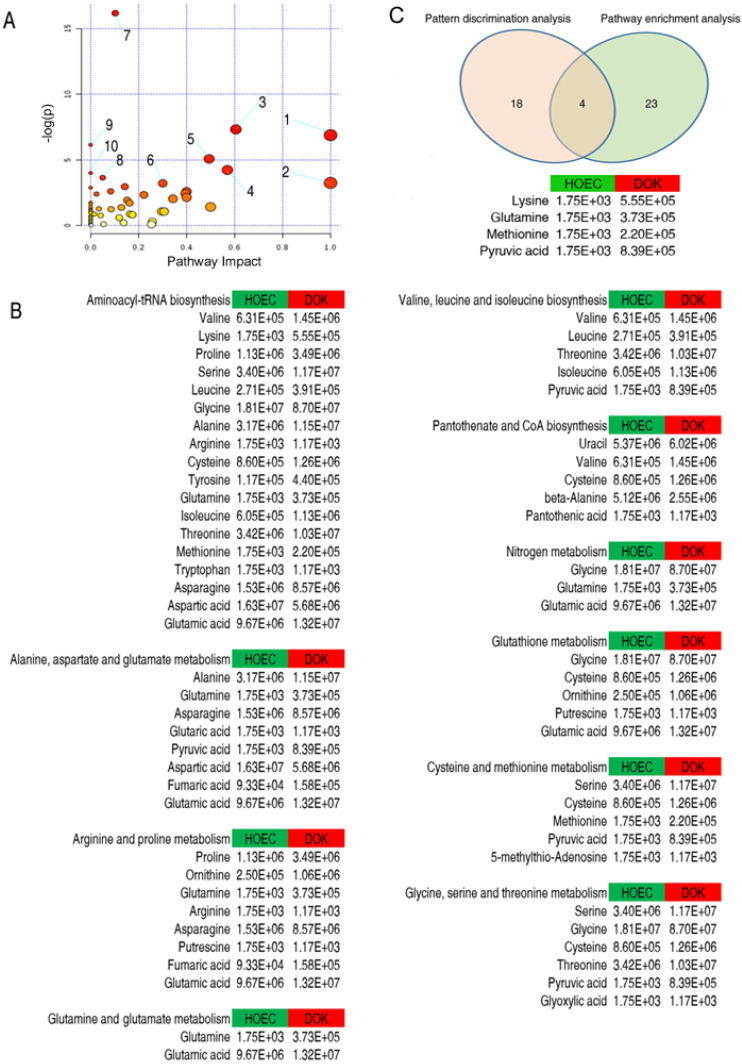
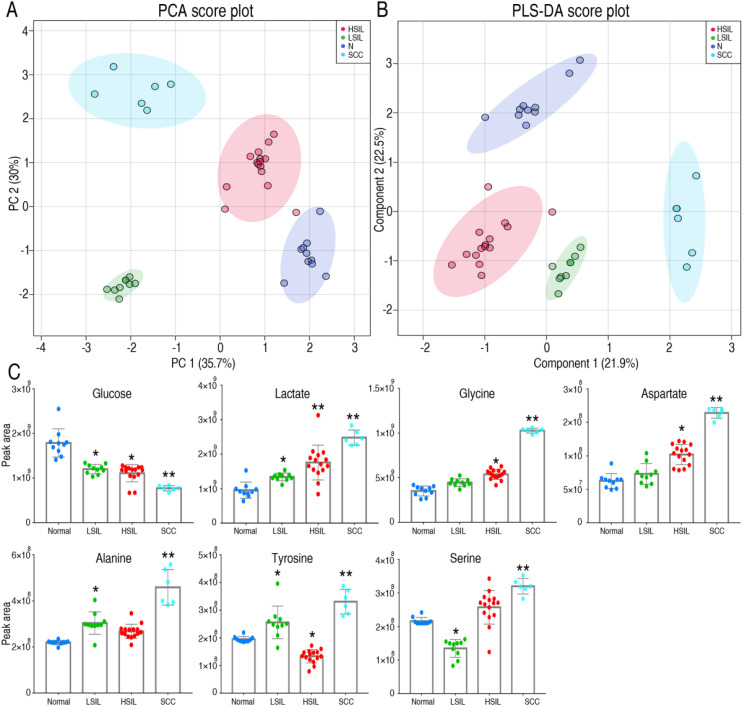
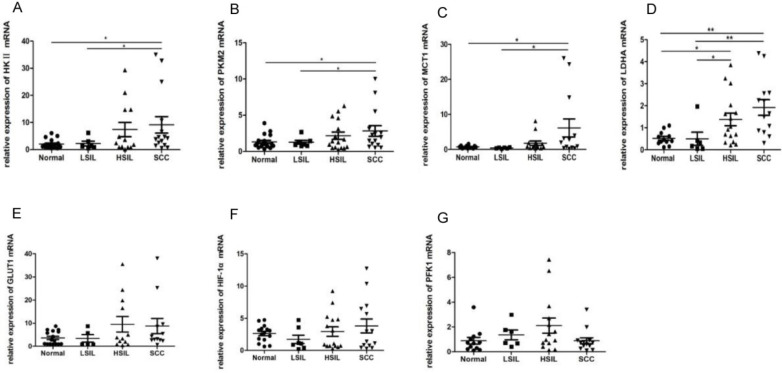
Most tumors have an enhanced glycolysis flux, even when oxygen is available, called the aerobic glycolysis or the Warburg effect. Metabolic reprogramming promotes cancer progression, and is even related to the tumorigenesis. However, it is not clear whether the observed metabolic changes act as a driver or a bystander in cancer development. In this study, the metabolic characteristics of oral precancerous cells and cervical precancerous lesions were analyzed by metabolomics, and the expression of glycolytic enzymes in cervical precancerous lesions was evaluated by RT-PCR and Western blot analysis. In total, 115 and 23 metabolites with reliable signals were identified in oral cells and cervical tissues, respectively. Based on the metabolome, oral precancerous cell DOK could be clearly separated from normal human oral epithelial cells (HOEC) and oral cancer cells. Four critical differential metabolites (pyruvate, glutamine, methionine and lysine) were identified between DOK and HOEC. Metabolic profiles could clearly distinguish cervical precancerous lesions from normal cervical epithelium and cervical cancer. Compared with normal cervical epithelium, the glucose consumption and lactate production increased in cervical precancerous lesions. The expression of glycolytic enzymes LDHA, HK II and PKM2 showed an increased tendency in cervical precancerous lesions compared with normal cervical epithelium. Our findings suggest that cell metabolism may be reprogrammed at the early stage of tumorigenesis, implying the contribution of metabolic reprogramming to the development of tumor.
大多数肿瘤即使在有氧条件下也具有增强的糖酵解通量,这被称为有氧糖酵解或瓦伯格效应。代谢重编程促进癌症进展,甚至与肿瘤发生相关。然而,尚不清楚所观察到的代谢变化在癌症发展中是起驱动作用还是旁观者作用。在本研究中,通过代谢组学分析了口腔癌前细胞和宫颈病变的代谢特征,并通过RT-PCR和蛋白质印迹分析评估了宫颈病变中糖酵解酶的表达。总共在口腔细胞和宫颈组织中分别鉴定出115种和23种具有可靠信号的代谢物。基于代谢组,口腔癌前细胞DOK可以与正常人口腔上皮细胞(HOEC)和口腔癌细胞清楚地分离。在DOK和HOEC之间鉴定出四种关键差异代谢物(丙酮酸、谷氨酰胺、蛋氨酸和赖氨酸)。代谢谱可以清楚地区分宫颈病变与正常宫颈上皮和宫颈癌。与正常宫颈上皮相比,宫颈病变中的葡萄糖消耗和乳酸产生增加。与正常宫颈上皮相比,宫颈病变中糖酵解酶LDHA、HK II和PKM2的表达呈增加趋势。我们的研究结果表明,细胞代谢可能在肿瘤发生的早期就被重编程,这意味着代谢重编程对肿瘤发展有贡献。