Koch Clarissa M, Prigge Andrew D, Anekalla Kishore R, Shukla Avani, Do-Umehara Hanh Chi, Setar Leah, Chavez Jairo, Abdala-Valencia Hiam, Politanska Yuliya, Markov Nikolay S, Hahn Grant R, Heald-Sargent Taylor, Sanchez-Pinto L Nelson, Muller William J, Misharin Alexander V, Ridge Karen M, Coates Bria M
Department of Medicine, Northwestern University.
Department of Pediatrics, Northwestern University.
medRxiv. 2021 Jan 28:2021.01.26.21250269. doi: 10.1101/2021.01.26.21250269.
Despite similar viral load and infectivity rates between children and adults infected with SARS-CoV-2, children rarely develop severe illness. Differences in the host response to the virus at the primary infection site are among the proposed mechanisms.
To investigate the host response to SARS-CoV-2, respiratory syncytial virus (RSV), and influenza virus (IV) in the nasal mucosa in children and adults.
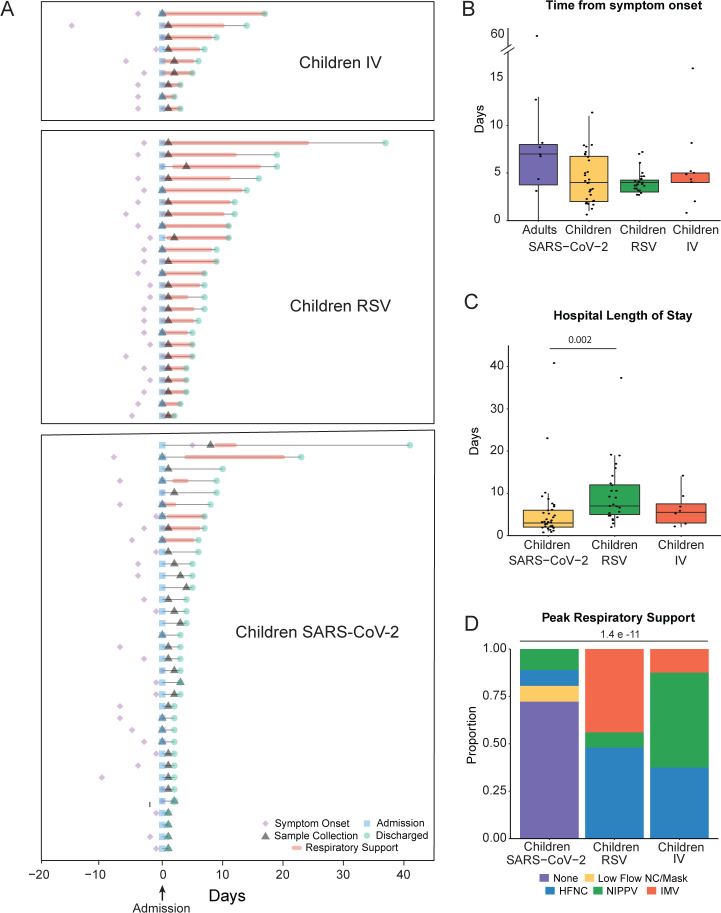
Clinical outcomes and gene expression in the nasal mucosa were analyzed in 36 children hospitalized with SARS-CoV-2 infection, 24 children with RSV infection, 9 children with IV infection, 16 adults with mild to moderate SARS-CoV-2 infection, and 7 healthy pediatric and 13 healthy adult controls.
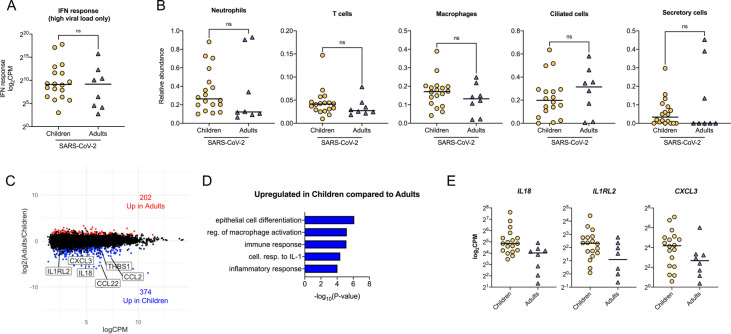
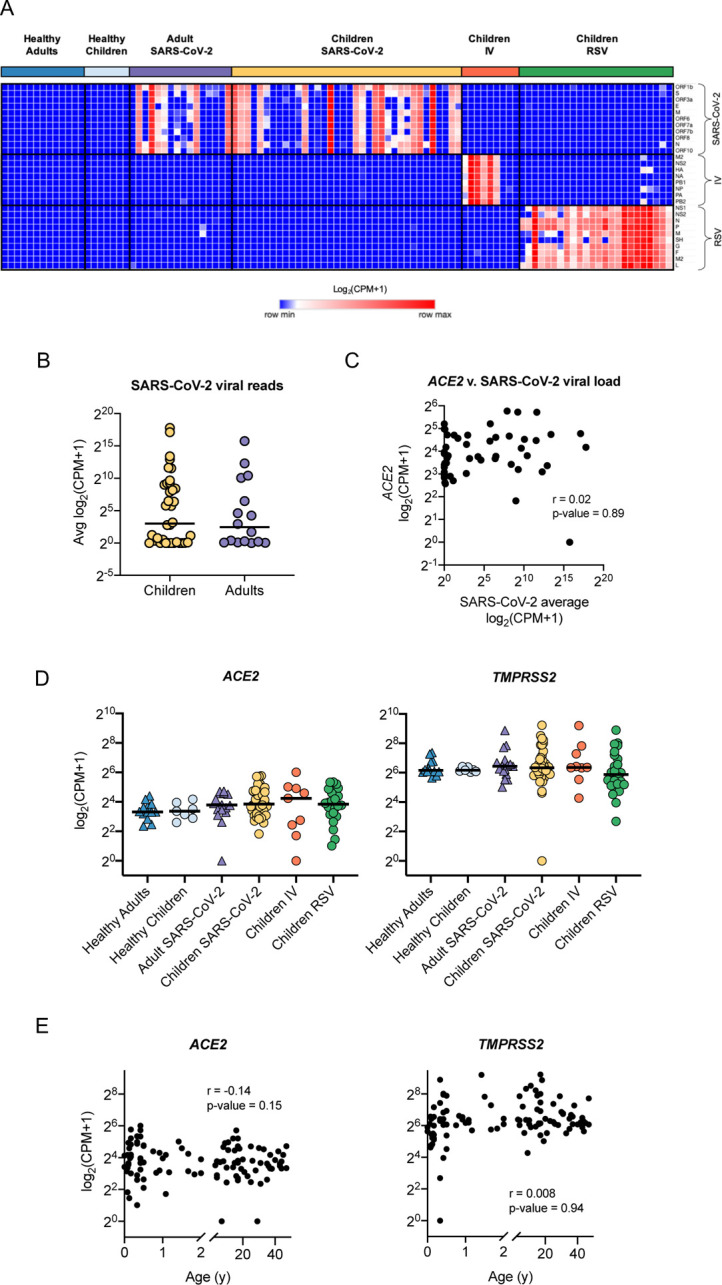
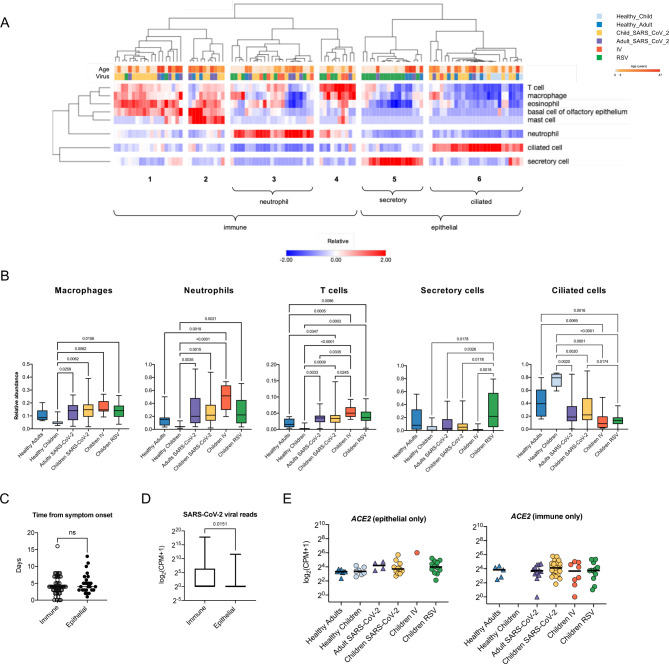
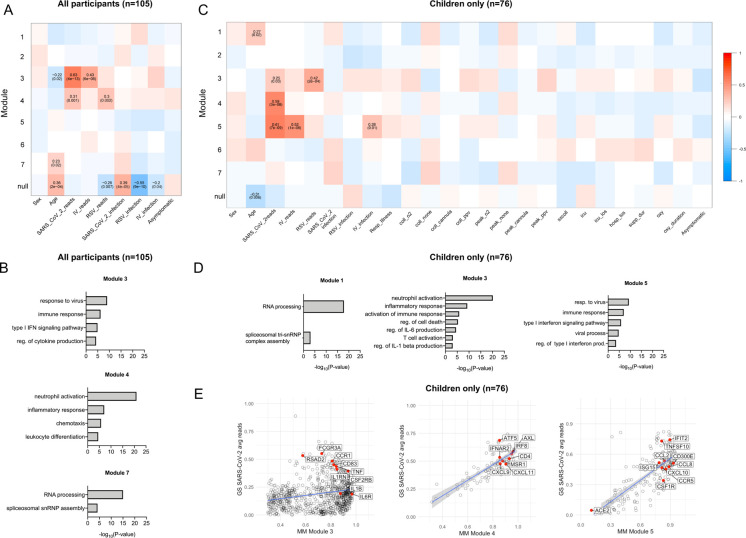
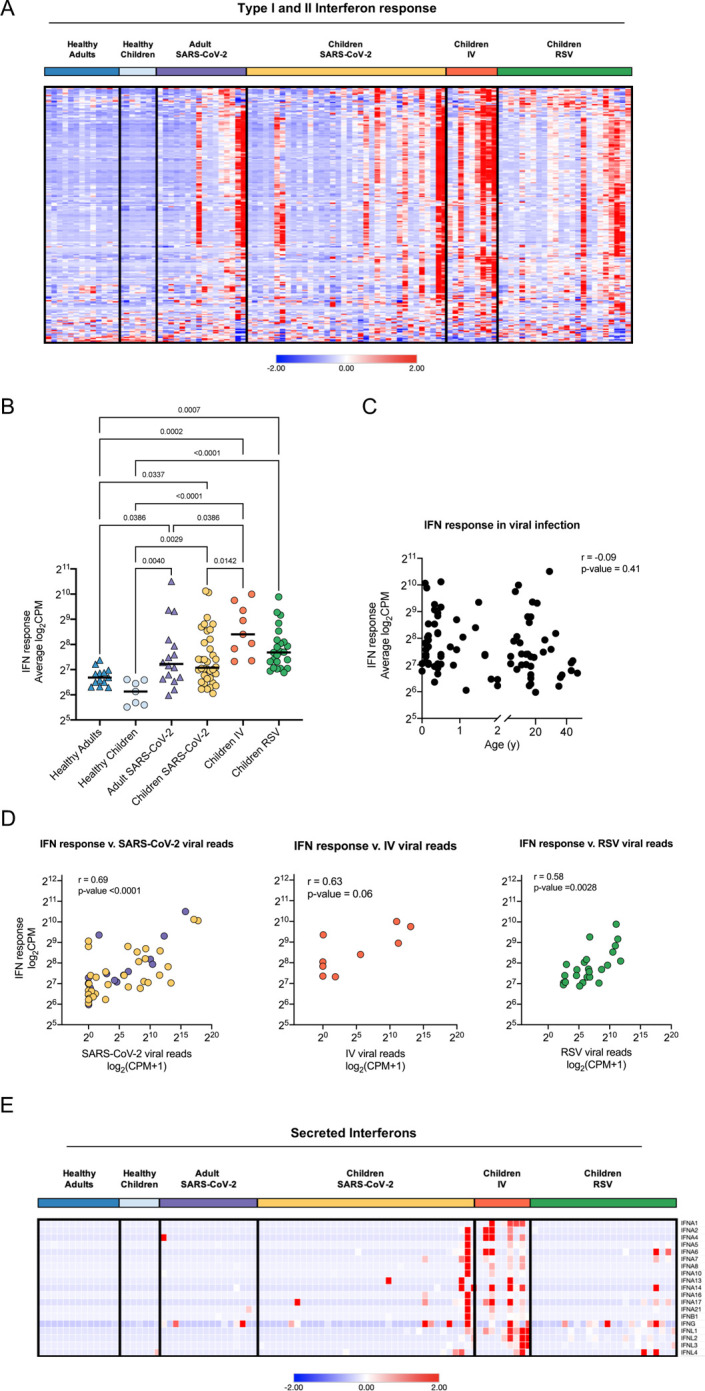
In both children and adults, infection with SARS-CoV-2 leads to an interferon response in the nasal mucosa. The magnitude of the interferon response correlated with the abundance of viral reads and was comparable between symptomatic children and adults infected with SARS-CoV-2 and symptomatic children infected with RSV and IV. Cell type deconvolution identified an increased abundance of immune cells in the samples from children and adults with a viral infection. Expression of and - key entry factors for SARS-CoV-2 - did not correlate with age or presence or absence of viral infection.
Our findings support the hypothesis that differences in the immune response to SARS-CoV-2 determine disease severity, independent of viral load and interferon response at the primary infection primary site.
尽管感染严重急性呼吸综合征冠状病毒2(SARS-CoV-2)的儿童和成人之间病毒载量和感染率相似,但儿童很少发展为重症。宿主对病毒在初次感染部位的反应差异是提出的机制之一。
研究儿童和成人鼻黏膜对SARS-CoV-2、呼吸道合胞病毒(RSV)和流感病毒(IV)的宿主反应。
分析了36例因SARS-CoV-2感染住院的儿童、24例RSV感染儿童、9例IV感染儿童、16例轻度至中度SARS-CoV-2感染成人以及7名健康儿童和13名健康成人对照的临床结局和鼻黏膜中的基因表达。
在儿童和成人中,SARS-CoV-2感染均导致鼻黏膜出现干扰素反应。干扰素反应的强度与病毒读数的丰度相关,并且在有症状的感染SARS-CoV-2的儿童和成人以及感染RSV和IV的有症状儿童之间相当。细胞类型反卷积确定在病毒感染的儿童和成人样本中免疫细胞丰度增加。SARS-CoV-2的关键进入因子和的表达与年龄或病毒感染的有无无关。
我们的研究结果支持以下假设,即对SARS-CoV-2免疫反应的差异决定疾病严重程度,与初次感染部位的病毒载量和干扰素反应无关。