Department of Policy Development, National Development Institute of Korean Medicine, Seoul 04554, Korea.
Division of Clinical Medicine, School of Korean Medicine, Pusan National University, Yangsan 50612, Korea.
Toxins (Basel). 2021 Feb 1;13(2):105. doi: 10.3390/toxins13020105.
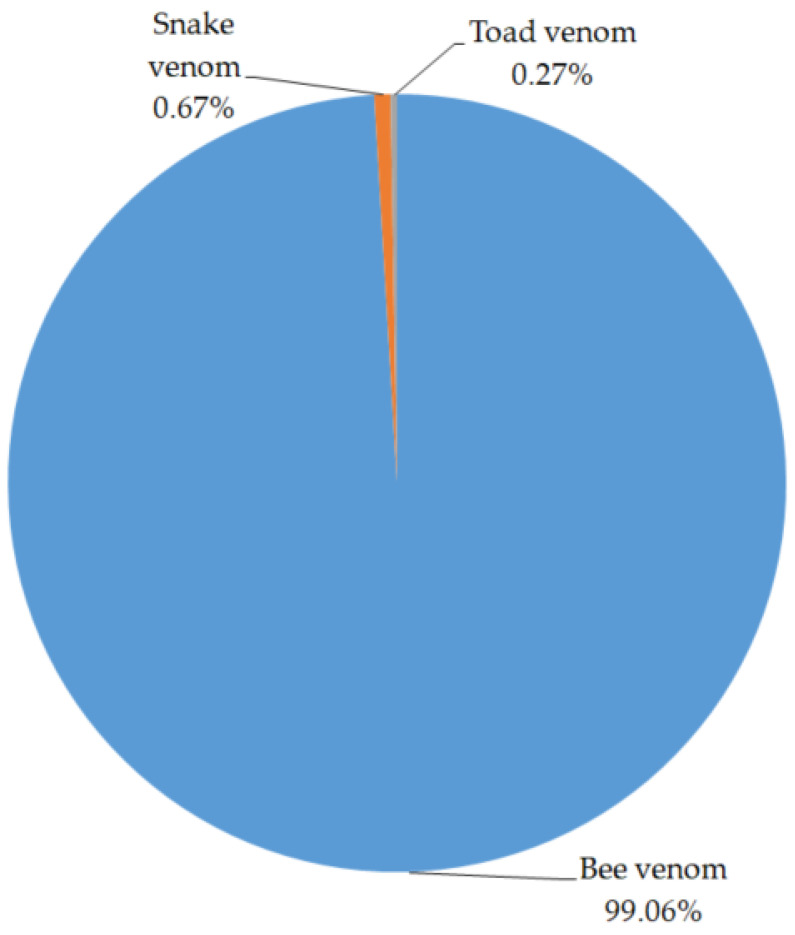
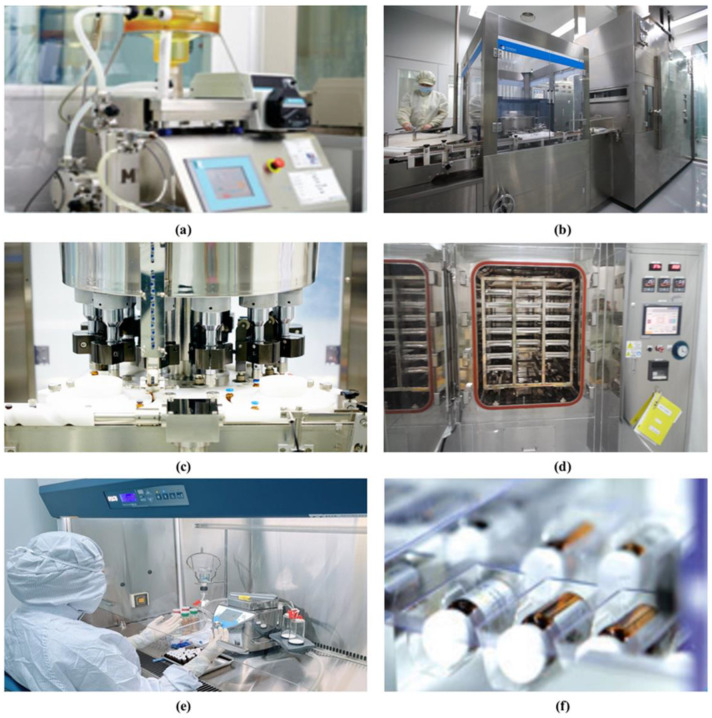
Animal venoms, widespread throughout the world, are complex mixtures, the composition of which depends on the venom-producing species. The objective of this study was to contribute to the development of animal venom-based medicines by investigating the use of animal venom pharmacopuncture in Korean medicine (KM) institutions. We surveyed 256 public health centers from 1 through 31 October 2019 as guided by the Ministry of Health and Welfare (MoHW). A questionnaire developed by an expert group was distributed and collected for statistical analysis. The survey identified three types of animal venom-based pharmacopuncture: bee, snake, and toad venoms. The medications are based on a single animal venom ingredient and produced in 11 external herbal dispensaries (EHDs). Each animal venom is processed, refined, and freeze-dried in a cleanroom to produce a powder formulation that is later measured, diluted, filtered, filled, sealed, sterilized, and packaged as pharmacopuncture injections used in KM institutions. Bee venom therapy is effective in treating musculoskeletal pain, snake venom therapy is effective in controlling bleeding during surgery, and toad venom therapy is effective in cancer treatment. The study suggests that bee, snake, and toad venoms could be used in medical institutions and have the potential for drug development.
动物毒液广泛分布于世界各地,是复杂的混合物,其成分取决于产生毒液的物种。本研究的目的是通过调查韩国医学(KM)机构中动物毒液穴位注射的应用,为开发基于动物毒液的药物做出贡献。我们按照保健福祉部(MoHW)的指导,于 2019 年 10 月 1 日至 31 日调查了 256 个公共卫生中心。一个专家组开发的问卷被分发并收集用于统计分析。调查确定了三种基于动物毒液的穴位注射:蜂毒、蛇毒和蟾毒。这些药物基于单一动物毒液成分,在 11 个外部草药药房(EHD)生产。每种动物毒液都在一个洁净室中进行加工、精制和冷冻干燥,制成粉末制剂,然后进行测量、稀释、过滤、填充、密封、消毒和包装,作为 KM 机构中使用的穴位注射剂。蜂毒疗法对治疗肌肉骨骼疼痛有效,蛇毒疗法对控制手术中的出血有效,蟾毒疗法对癌症治疗有效。研究表明,蜂、蛇和蟾毒液可用于医疗机构,并具有药物开发的潜力。