Department of Epidemiology and Statistics, Abderrahman Mami Hospital, Ariana, Tunisia.
Faculty of Medicine of Tunis, University of Tunis El Manar, Tunis, Tunisia.
BMC Infect Dis. 2021 Feb 3;21(1):140. doi: 10.1186/s12879-021-05844-y.
The outbreak of coronavirus disease (COVID-19) continues to constitute an international public health concern. Few data are available on the duration and prognostic factors of the disease. We aimed to study the recovery time among a Tunisian cohort of COVID-19 confirmed patients and identify the prognostic factors.
A retrospective, nationwide study was conducted from March 2 to May 8, 2020, recruiting all patients who were diagnosed with COVID-19, by RT-PCR methods, in Tunisia. Data were collected via phone call interview. Kaplan-Meir Methods and Cox proportional hazards regression models were, respectively, used to study the recovery time and estimate its prognostic factors.
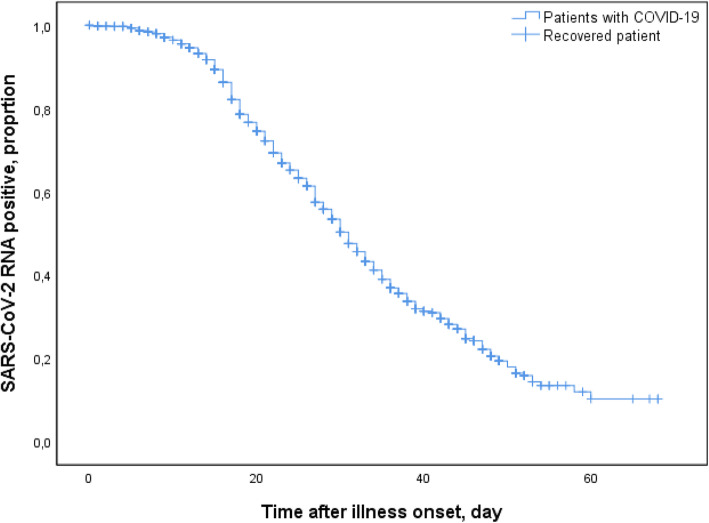
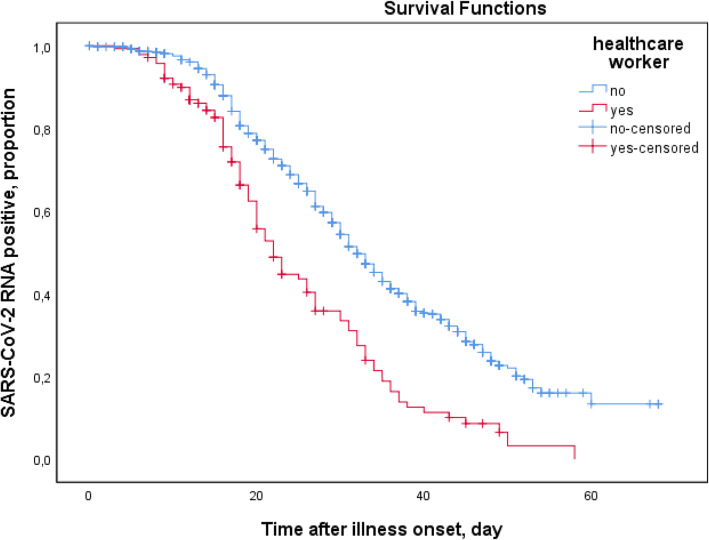
One thousand and thirty patients with COVID-19 (aged 43.2 ± 18.2 years, 526 female (51.1%)) were enrolled. Among them 141 (14.8%) were healthcare professionals. Out of 173 patients (17.8%) admitted to the hospital, 47 were admitted in an intensive care unit. Among 827 patients who didn't require specialized care, 55.5% were self-isolated at home, while the rest were in specialized centers. Six hundred and two patients were symptomatic. A total of 634 (61.6%) patients have recovered and 45 (4.4%) patients died. The median duration of illness was estimated to be 31 days (95% CI: [29-32]). Older age (HR = 0.66, CI:[0.46-0.96], P = 0.031) and symptoms (HR = 0.61, CI:[0.43-0.81], P = 0.021) were independently associated with a delay in recovery time. Being a healthcare professional (HR = 1.52, CI: [1.10-2.08], P = 0.011) and patients in home isolation compared to isolation centers (HR = 2.99, CI: [1.85-4.83], P < 10¯) were independently associated with faster recovery time.
The duration of illness was estimated to be 1 month. However, this long estimated duration of illness may not equate to infectiousness. A particular attention must to be paid to elderly and symptomatic patients with closer monitoring.
冠状病毒病(COVID-19)的爆发继续构成国际公共卫生关注。关于该病的持续时间和预后因素的数据很少。我们旨在研究突尼斯队列中 COVID-19 确诊患者的恢复时间,并确定预后因素。
这是一项回顾性的全国性研究,于 2020 年 3 月 2 日至 5 月 8 日进行,招募了所有在突尼斯通过 RT-PCR 方法诊断为 COVID-19 的患者。数据通过电话访谈收集。Kaplan-Meier 方法和 Cox 比例风险回归模型分别用于研究恢复时间并估计其预后因素。
共纳入 1030 名 COVID-19 患者(年龄 43.2±18.2 岁,526 名女性(51.1%))。其中 141 名(14.8%)是医护人员。173 名(17.8%)住院患者中,47 名入住重症监护病房。在 827 名无需专科护理的患者中,55.5%在家中自我隔离,其余在专科中心。602 名患者有症状。共有 634 名(61.6%)患者康复,45 名(4.4%)患者死亡。估计疾病的中位持续时间为 31 天(95%CI:[29-32])。年龄较大(HR=0.66,CI:[0.46-0.96],P=0.031)和有症状(HR=0.61,CI:[0.43-0.81],P=0.021)与恢复时间延迟独立相关。医护人员(HR=1.52,CI:[1.10-2.08],P=0.011)和与隔离中心相比在家中隔离的患者(HR=2.99,CI:[1.85-4.83],P<10¯)与更快的恢复时间独立相关。
估计疾病的持续时间为 1 个月。然而,这种对疾病持续时间的长期估计并不等同于传染性。必须特别注意密切监测老年和有症状的患者。