Smith Ellesha A, Cooper Nicola J, Sutton Alex J, Abrams Keith R, Hubbard Stephanie J
Department of Health Sciences, University of Leicester, Lancaster Road, Leicester, UK.
BMC Public Health. 2021 Feb 3;21(1):278. doi: 10.1186/s12889-021-10162-8.
The complexity of public health interventions create challenges in evaluating their effectiveness. There have been huge advancements in quantitative evidence synthesis methods development (including meta-analysis) for dealing with heterogeneity of intervention effects, inappropriate 'lumping' of interventions, adjusting for different populations and outcomes and the inclusion of various study types. Growing awareness of the importance of using all available evidence has led to the publication of guidance documents for implementing methods to improve decision making by answering policy relevant questions.
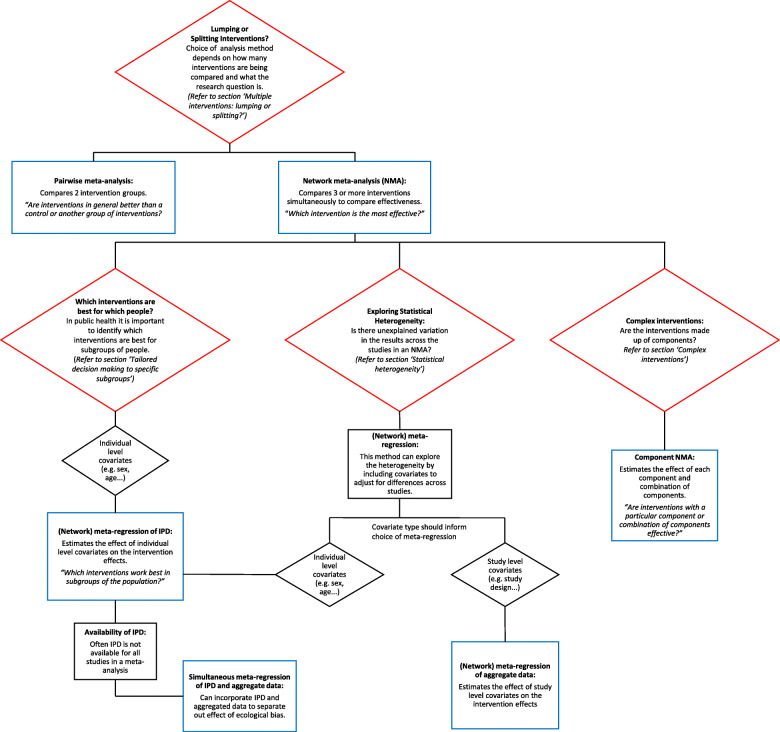
The first part of this paper reviews the methods used to synthesise quantitative effectiveness evidence in public health guidelines by the National Institute for Health and Care Excellence (NICE) that had been published or updated since the previous review in 2012 until the 19th August 2019.The second part of this paper provides an update of the statistical methods and explains how they address issues related to evaluating effectiveness evidence of public health interventions.
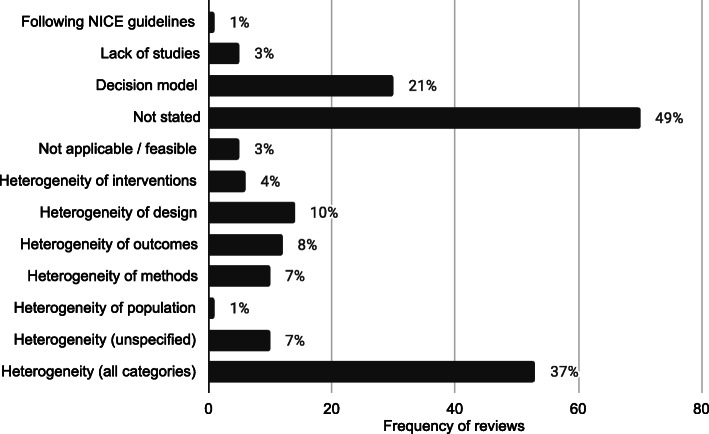
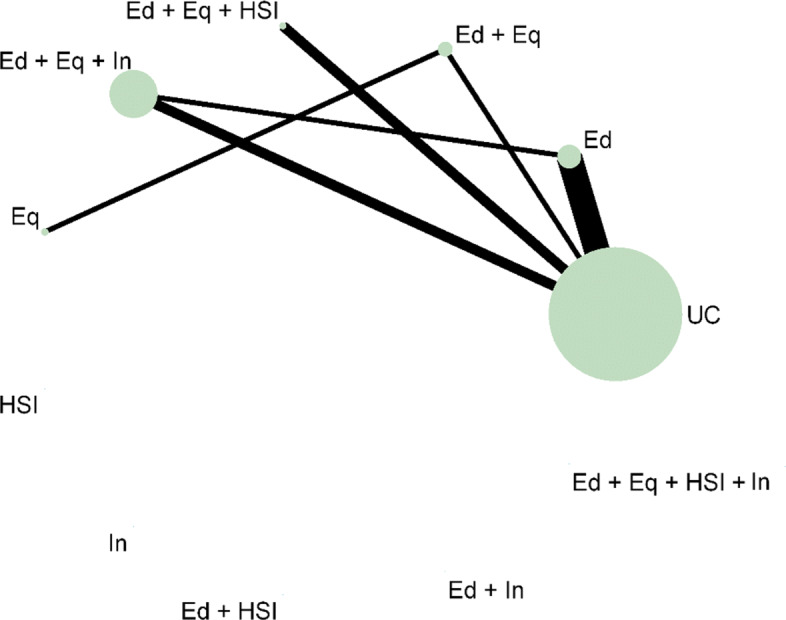
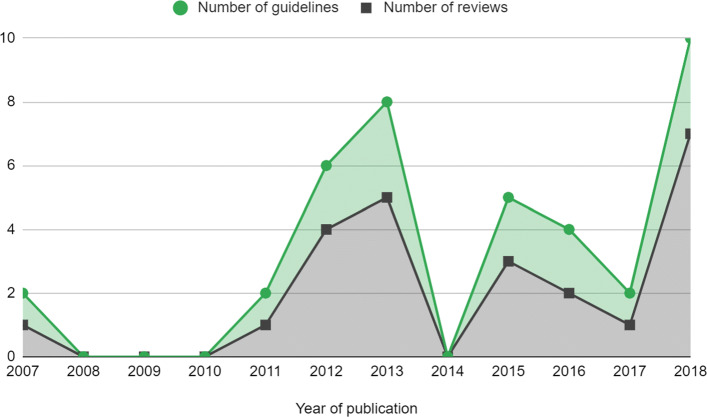
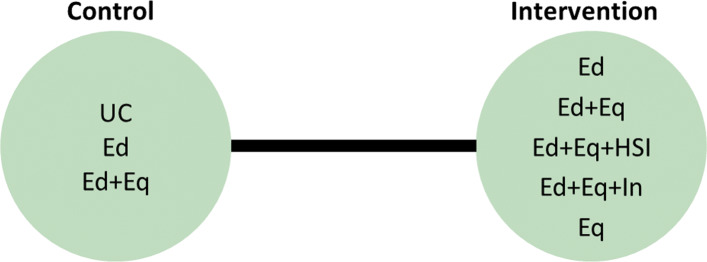
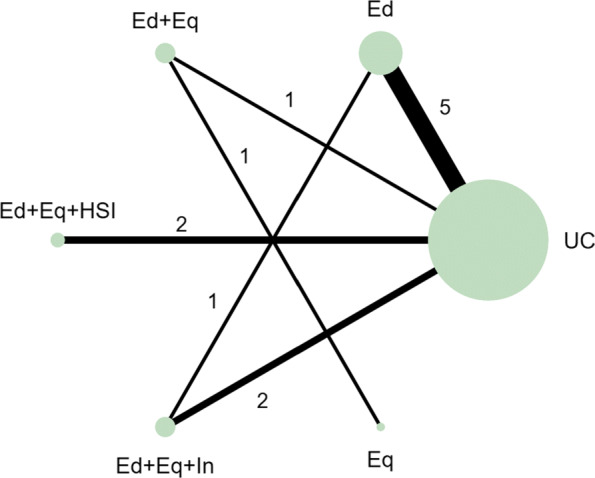
The proportion of NICE public health guidelines that used a meta-analysis as part of the synthesis of effectiveness evidence has increased since the previous review in 2012 from 23% (9 out of 39) to 31% (14 out of 45). The proportion of NICE guidelines that synthesised the evidence using only a narrative review decreased from 74% (29 out of 39) to 60% (27 out of 45).An application in the prevention of accidents in children at home illustrated how the choice of synthesis methods can enable more informed decision making by defining and estimating the effectiveness of more distinct interventions, including combinations of intervention components, and identifying subgroups in which interventions are most effective.
Despite methodology development and the publication of guidance documents to address issues in public health intervention evaluation since the original review, NICE public health guidelines are not making full use of meta-analysis and other tools that would provide decision makers with fuller information with which to develop policy. There is an evident need to facilitate the translation of the synthesis methods into a public health context and encourage the use of methods to improve decision making.
公共卫生干预措施的复杂性给评估其有效性带来了挑战。在处理干预效果的异质性、干预措施不恰当的“合并”、针对不同人群和结果进行调整以及纳入各种研究类型方面,定量证据综合方法(包括荟萃分析)有了巨大进展。对利用所有可用证据重要性的认识不断提高,促使发布了指导文件,以实施通过回答与政策相关问题来改进决策的方法。
本文第一部分回顾了英国国家卫生与临床优化研究所(NICE)在2012年上次审查至2019年8月19日期间发布或更新的公共卫生指南中用于综合定量有效性证据的方法。本文第二部分提供了统计方法的更新,并解释了这些方法如何解决与评估公共卫生干预措施有效性证据相关的问题。
自2012年上次审查以来,NICE公共卫生指南中将荟萃分析用作有效性证据综合一部分的比例从23%(39项中的9项)增至31%(45项中的14项)。仅通过叙述性综述来综合证据的NICE指南比例从74%(39项中的29项)降至60%(45项中的27项)。一项针对预防儿童在家中发生意外的应用说明了综合方法的选择如何通过定义和估计更明确干预措施(包括干预组成部分的组合)的有效性以及识别干预措施最有效的亚组,从而实现更明智的决策。
尽管自最初审查以来在方法学发展以及发布指导文件以解决公共卫生干预评估中的问题方面取得了进展,但NICE公共卫生指南并未充分利用荟萃分析和其他工具,而这些工具可为决策者提供更全面的信息以制定政策。显然需要促进将综合方法应用于公共卫生背景,并鼓励使用这些方法来改进决策。