Department of Biotechnology and Food Science, Faculty of Natural Sciences and Technology, NTNU-Norwegian University of Science and Technology, Sem Saelands v. 6/8, N-7491, Trondheim, Norway.
Department of Civil and Environmental Engineering, NTNU-Norwegian University of Science and Technology, S. P. Andersens veg 5, N-7031, Trondheim, Norway.
Sci Rep. 2021 Feb 3;11(1):2979. doi: 10.1038/s41598-021-82272-7.
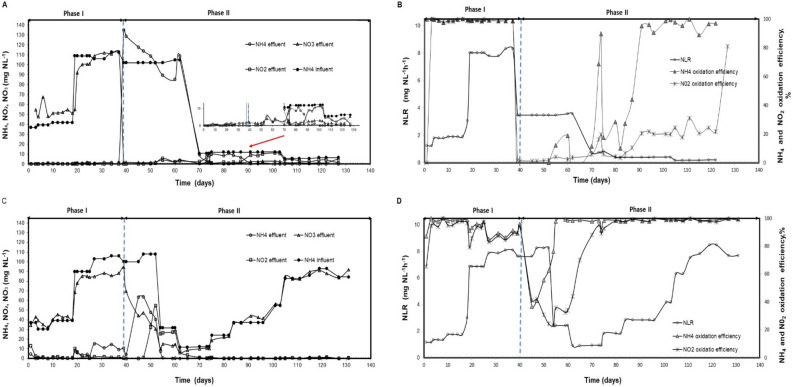
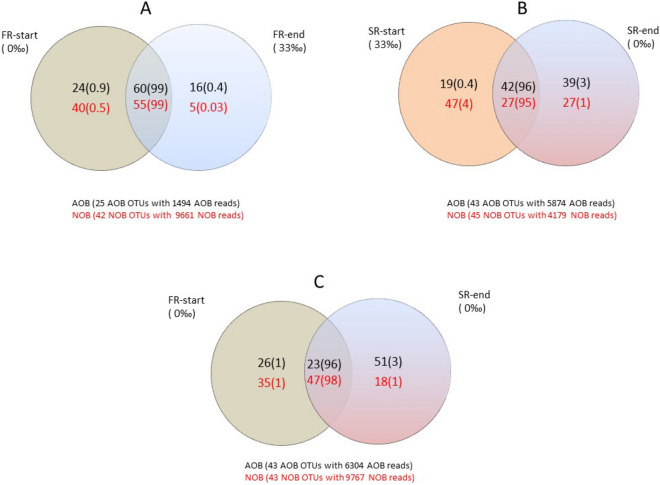
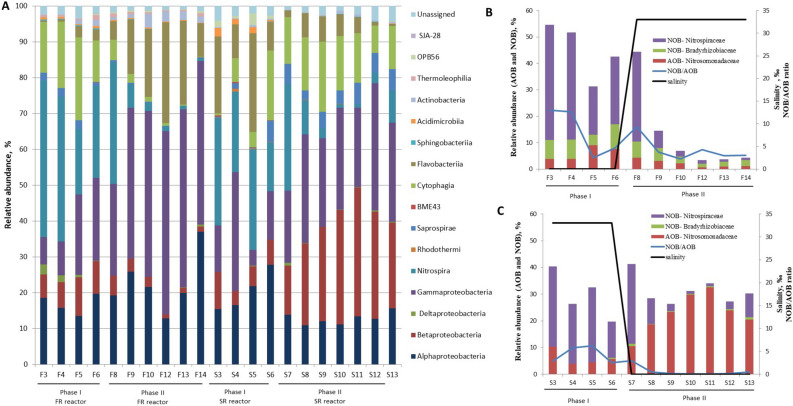
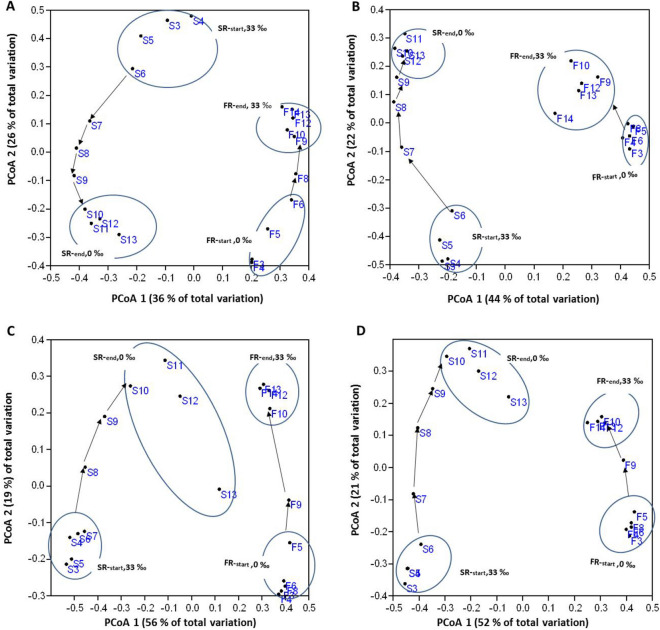
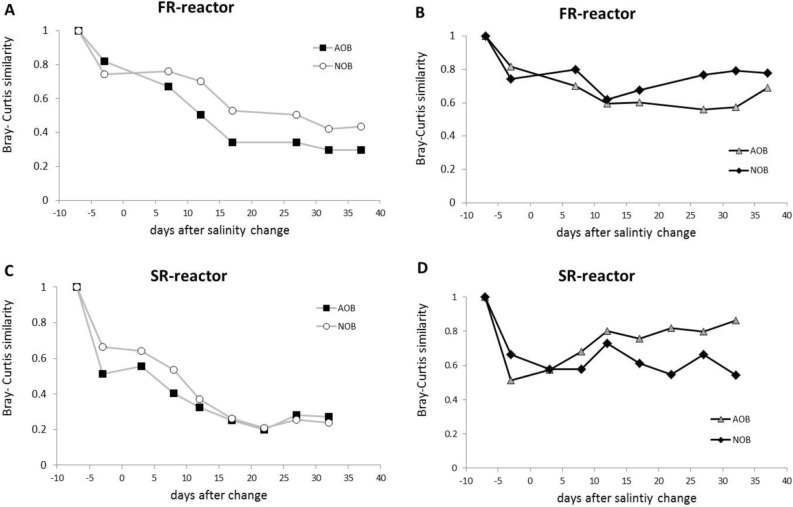
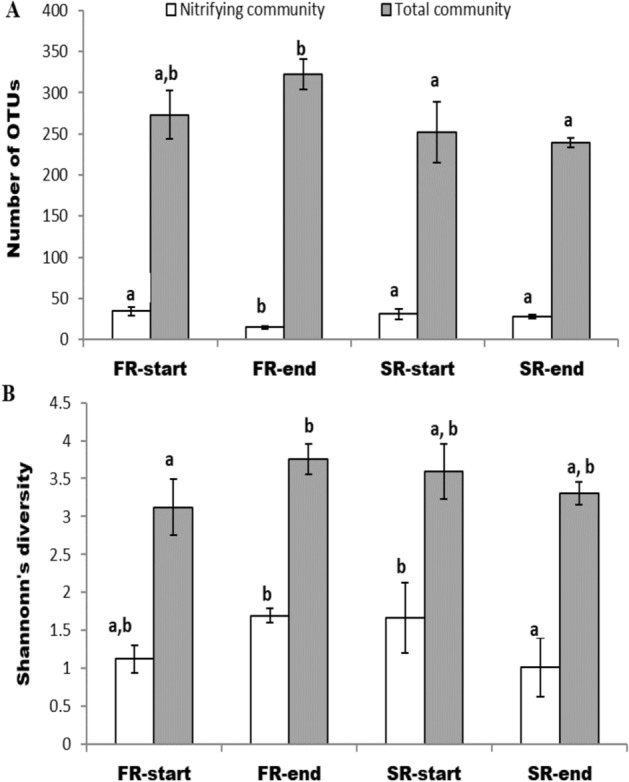
In this study, nitrification before and after abrupt cross-transfer in salinity was investigated in two moving bed biofilm reactors inoculated with nitrifying cultures that had adaptation to freshwater (FR) and seawater salinities (SR). FR and SR MBRRs were exposed to short and long term cross-transfer in salinity, and the functional capacity of nitrifying microbial communities was quantified by the estimation of ammonia and nitrite oxidation rates. Salinity induced successions were evaluated before and after salinity change by deep sequencing of 16S rRNA gene amplicons and statistical analysis. The bacterial community structure was characterized and Venn diagrams were included. The results indicated that after salinity cross-transfer, the FR was not significantly recovered at seawater salinity whereas SR showed high resistance to stress caused by low-salt. Succession and physiological plasticity were the main mechanisms of the long-term adaption of the nitrifying communities exposed to abrupt salinity changes. Independently of salinity, some nitrifiers presented high physiological plasticity towards salinity and were very successful at both zero and full seawater salinity. SR culture is robust and suitable inoculum for ammonium removal from recirculating aquaculture systems and industrial wastewaters with variable and fast salinity changes. Our findings contradict the current perspective of the significance of salinity on the structure of nitrifying communities.
在这项研究中,我们研究了在两种接种了适应淡水(FR)和海水盐度(SR)硝化培养物的移动床生物膜反应器中,盐度突然交叉转移前后的硝化作用。FR 和 SR MBRR 经历了短期和长期的盐度交叉转移,通过估计氨和亚硝酸盐氧化速率来量化硝化微生物群落的功能能力。通过对 16S rRNA 基因扩增子的深度测序和统计分析,在盐度变化前后评估盐度诱导的演替。对细菌群落结构进行了表征,并包括了 Venn 图。结果表明,盐度交叉转移后,FR 在海水盐度下没有显著恢复,而 SR 对低盐引起的应激表现出很高的抵抗力。演替和生理可塑性是硝化菌群适应突然盐度变化的主要机制。无论盐度如何,一些硝化菌对盐度具有很高的生理可塑性,在零盐度和全海水盐度下都非常成功。SR 培养物是从循环水产养殖系统和工业废水中去除氨的强大且合适的接种物,这些系统的盐度变化具有可变性和快速性。我们的研究结果与当前关于盐度对硝化菌群结构重要性的观点相矛盾。