Daims Holger, Lücker Sebastian, Wagner Michael
Department of Microbiology and Ecosystem Science, Division of Microbial Ecology, Research Network Chemistry meets Microbiology, University of Vienna, Althanstrasse 14, 1090 Vienna, Austria.
Department of Microbiology, IWWR, Radboud University, Heyendaalseweg 135, 6525 AJ Nijmegen, The Netherlands.
Trends Microbiol. 2016 Sep;24(9):699-712. doi: 10.1016/j.tim.2016.05.004. Epub 2016 Jun 6.
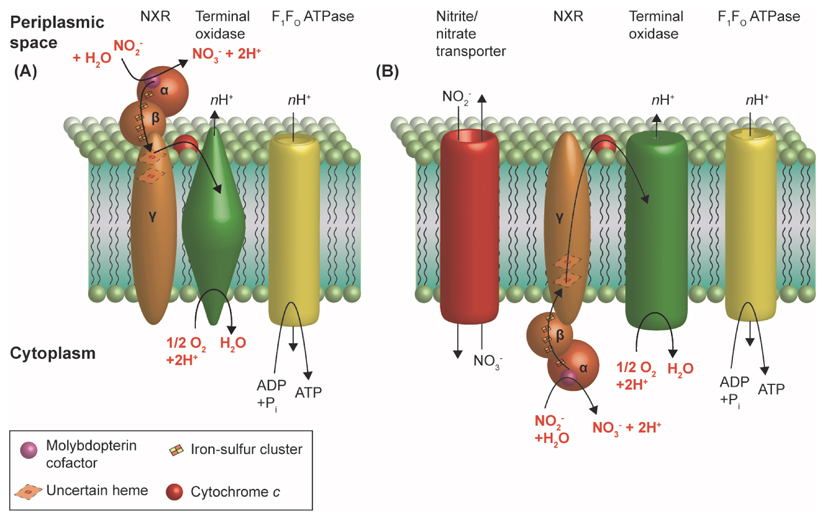
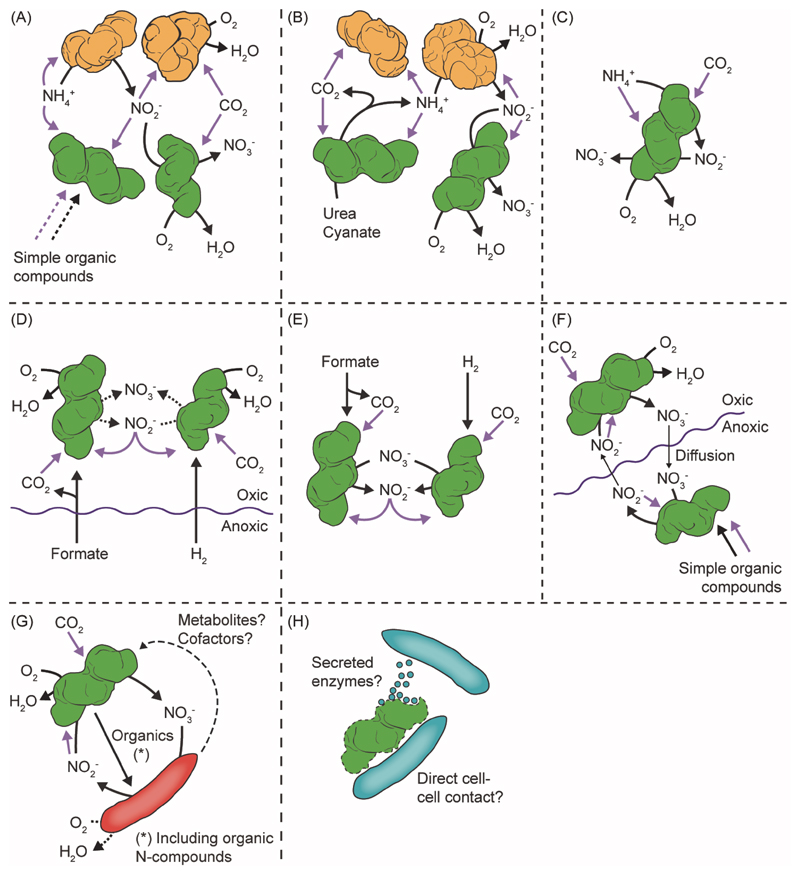
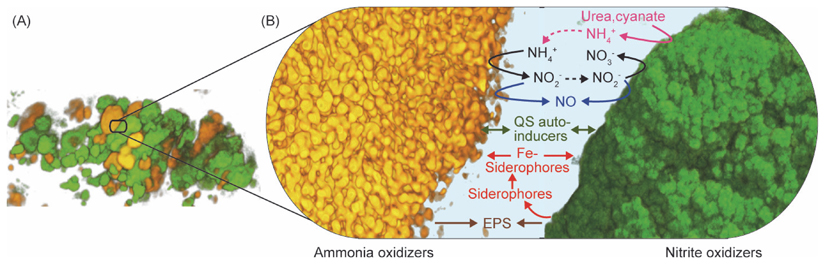
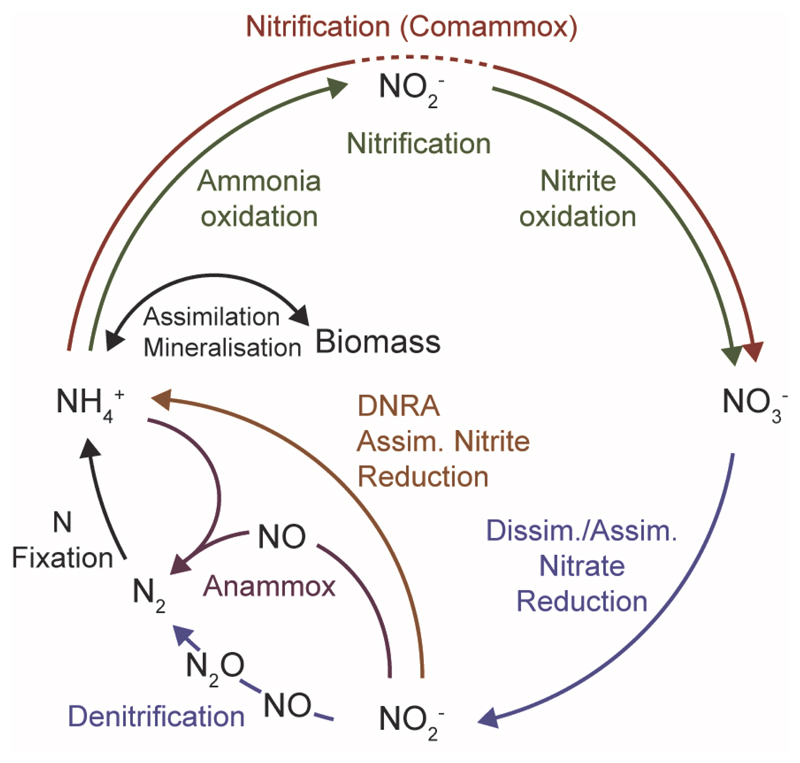
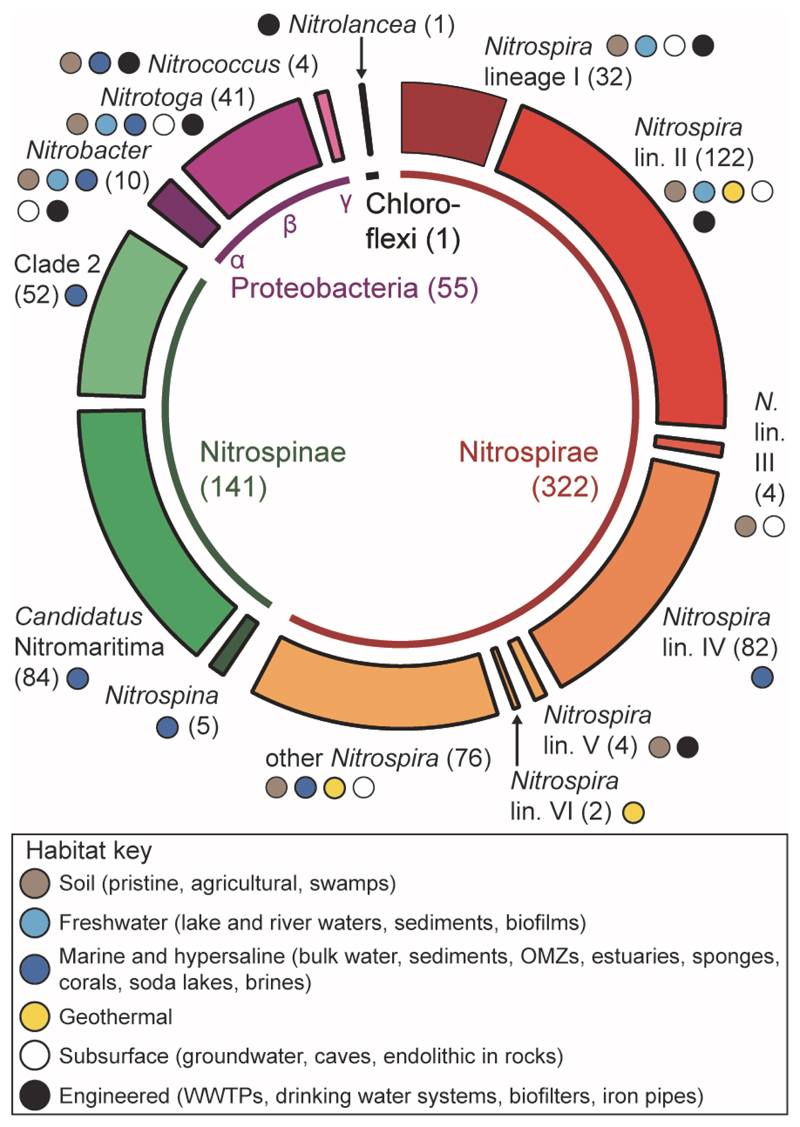
Nitrite-oxidizing bacteria (NOB) catalyze the second step of nitrification, nitrite oxidation to nitrate, which is an important process of the biogeochemical nitrogen cycle. NOB were traditionally perceived as physiologically restricted organisms and were less intensively studied than other nitrogen-cycling microorganisms. This picture is in contrast to new discoveries of an unexpected high diversity of mostly uncultured NOB and a great physiological versatility, which includes complex microbe-microbe interactions and lifestyles outside the nitrogen cycle. Most surprisingly, close relatives to NOB perform complete nitrification (ammonia oxidation to nitrate) and this finding will have far-reaching implications for nitrification research. We review recent work that has changed our perspective on NOB and provides a new basis for future studies on these enigmatic organisms.
亚硝酸盐氧化细菌(NOB)催化硝化作用的第二步,即将亚硝酸盐氧化为硝酸盐,这是生物地球化学氮循环的一个重要过程。传统上,NOB被认为是生理受限的生物体,与其他参与氮循环的微生物相比,对其研究较少。这一情况与新发现形成了对比,新发现表明,大多数未培养的NOB具有意想不到的高度多样性,并且具有很强的生理适应性,包括复杂的微生物间相互作用以及氮循环之外的生活方式。最令人惊讶的是,与NOB亲缘关系较近的微生物能够进行完全硝化作用(将氨氧化为硝酸盐),这一发现将对硝化作用研究产生深远影响。我们回顾了最近的研究工作,这些工作改变了我们对NOB的看法,并为今后对这些神秘生物体的研究提供了新的基础。