Department of Surgery, University of Pittsburgh, Pittsburgh, PA, United States.
Department of Sports Medicine and Nutrition, University of Pittsburgh, Pittsburgh, PA, United States.
Front Immunol. 2021 Jan 18;11:589304. doi: 10.3389/fimmu.2020.589304. eCollection 2020.
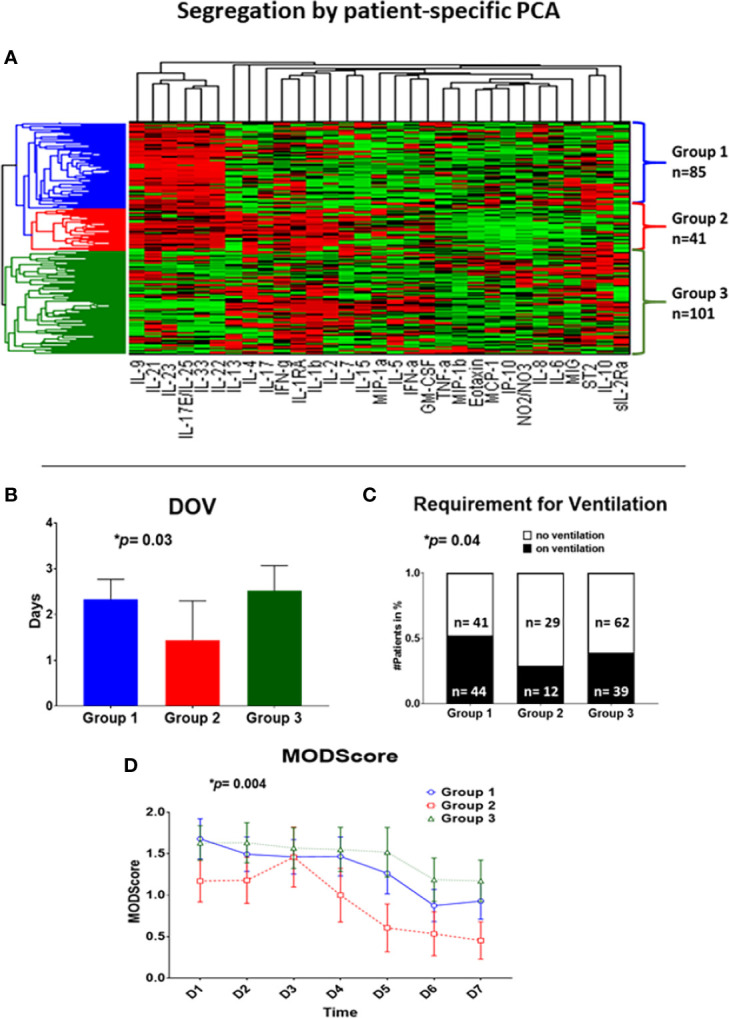
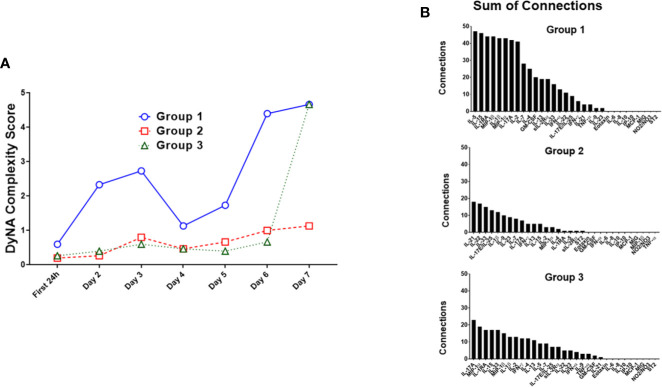
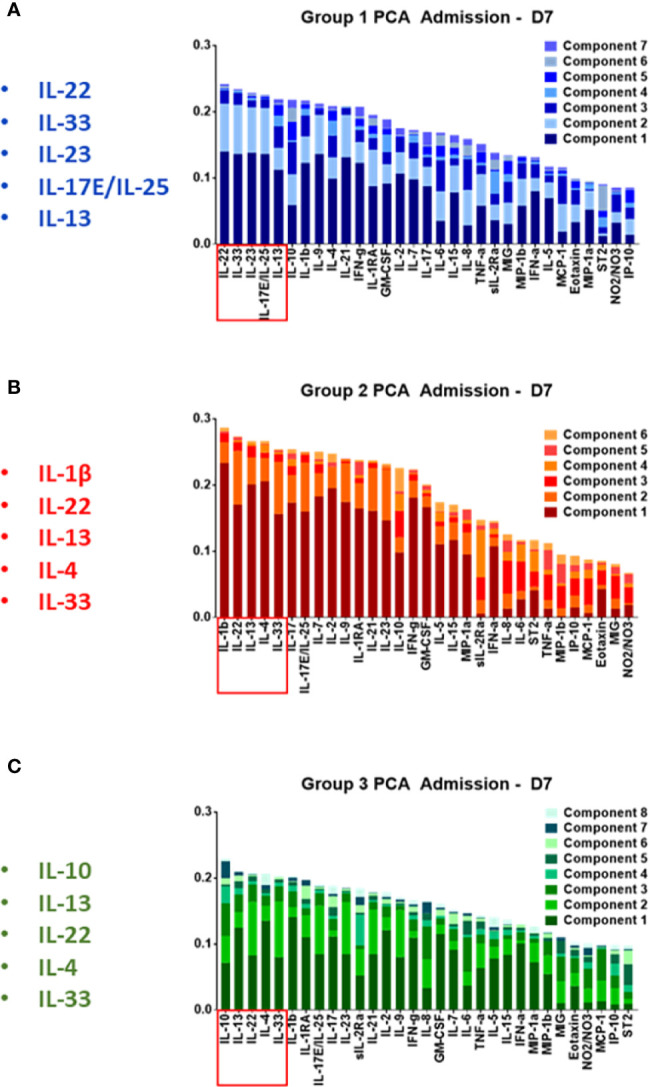
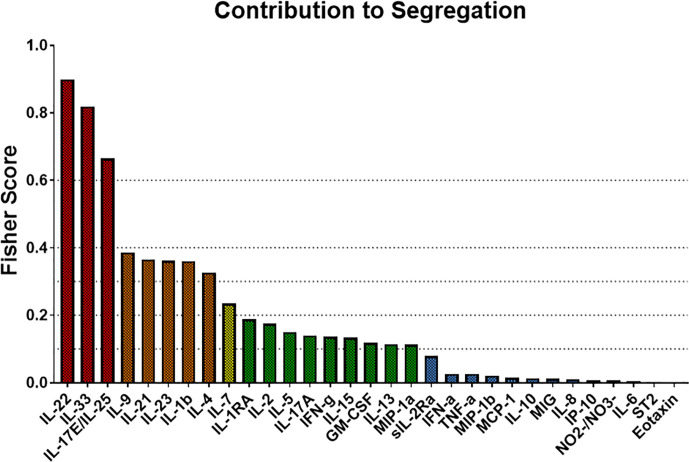
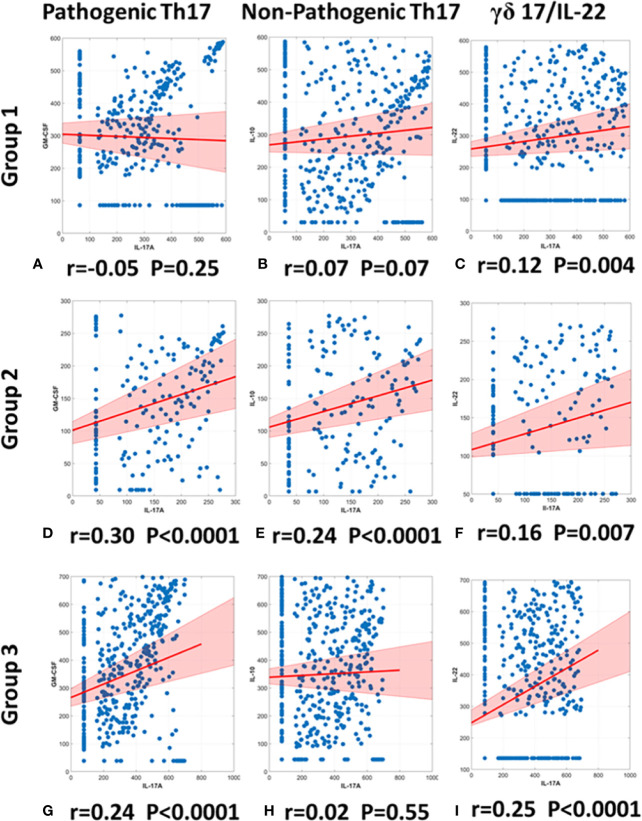
Systemic inflammation ensues following traumatic injury, driving immune dysregulation and multiple organ dysfunction (MOD). While a balanced immune/inflammatory response is ideal for promoting tissue regeneration, most trauma patients exhibit variable and either overly exuberant or overly damped responses that likely drive adverse clinical outcomes. We hypothesized that these inflammatory phenotypes occur in the context of severe injury, and therefore sought to define clinically distinct endotypes of trauma patients based on their systemic inflammatory responses. Using Patient-Specific Principal Component Analysis followed by unsupervised hierarchical clustering of circulating inflammatory mediators obtained in the first 24 h after injury, we segregated a cohort of 227 blunt trauma survivors into three core endotypes exhibiting significant differences in requirement for mechanical ventilation, duration of ventilation, and MOD over 7 days. Nine non-survivors co-segregated with survivors. Dynamic network inference, Fisher Score analysis, and correlations of IL-17A with GM-CSF, IL-10, and IL-22 in the three survivor sub-groups suggested a role for type 3 immunity, in part regulated by Th17 and γδ 17 cells, and related tissue-protective cytokines as a key feature of systemic inflammation following injury. These endotypes may represent archetypal adaptive, over-exuberant, and overly damped inflammatory responses.
创伤后会发生全身炎症,导致免疫失调和多器官功能障碍(MOD)。虽然平衡的免疫/炎症反应有利于促进组织再生,但大多数创伤患者表现出不同的、过于旺盛或过于抑制的反应,这可能导致不良的临床结果。我们假设这些炎症表型发生在严重损伤的背景下,因此试图根据创伤患者的全身炎症反应定义临床上不同的亚型。我们使用患者特异性主成分分析,然后对损伤后 24 小时内获得的循环炎症介质进行无监督层次聚类,将 227 名钝器伤幸存者分为三组核心亚型,这三组在机械通气需求、通气持续时间和 7 天内的 MOD 方面存在显著差异。9 名非幸存者与幸存者共同聚类。动态网络推断、Fisher 评分分析以及三组幸存者中 IL-17A 与 GM-CSF、IL-10 和 IL-22 的相关性表明,3 型免疫(部分受 Th17 和 γδ17 细胞调节)及其相关的组织保护细胞因子在损伤后全身炎症中发挥重要作用。这些亚型可能代表典型的适应性、过度旺盛和过度抑制的炎症反应。