Bernardi Simona, Farina Mirko
Department of Clinical and Experimental Sciences, University of Brescia, Bone Marrow Transplant Unit, ASST Spedali Civili, 25123 Brescia, Italy.
Centro di Ricerca Emato-Oncologica AIL (CREA), ASST Spedali Civili, 25123 Brescia, Italy.
Biology (Basel). 2021 Feb 2;10(2):105. doi: 10.3390/biology10020105.
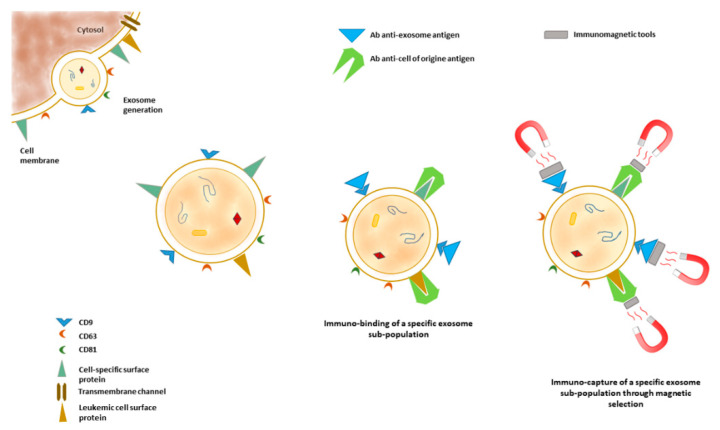
Extracellular vesicles (exosomes, in particular) are essential in multicellular organisms because they mediate cell-to-cell communication via the transfer of secreted molecules. They are able to shuttle different cargo, from nucleic acids to proteins. The role of exosomes has been widely investigated in solid tumors, which gave us surprising results about their potential involvement in pathogenesis and created an opening for liquid biopsies. Less is known about exosomes in oncohematology, particularly concerning the malignancies deriving from myeloid lineage. In this review, we aim to present an overview of immunomodulation and the microenvironment alteration mediated by exosomes released by malicious myeloid cells. Afterwards, we review the studies reporting the use of exosomes as disease biomarkers and their influence in response to treatment, together with the recent experiences that have focused on the use of exosomes as therapeutic tools. The further development of new technologies and the increased knowledge of biological (exosomes) and clinical (myeloid neoplasia) aspects are expected to change the future approaches to these malignancies.
细胞外囊泡(尤其是外泌体)在多细胞生物中至关重要,因为它们通过分泌分子的转移介导细胞间通讯。它们能够运输从核酸到蛋白质的不同货物。外泌体的作用已在实体瘤中得到广泛研究,这为我们带来了关于它们可能参与发病机制的惊人结果,并为液体活检创造了契机。关于血液肿瘤中的外泌体,尤其是源自髓系谱系的恶性肿瘤,我们了解得较少。在本综述中,我们旨在概述由恶性髓系细胞释放的外泌体介导的免疫调节和微环境改变。之后,我们回顾了报道外泌体作为疾病生物标志物的应用及其对治疗反应影响的研究,以及最近专注于将外泌体用作治疗工具的经验。新技术的进一步发展以及对生物学(外泌体)和临床(髓系肿瘤)方面认识的增加,有望改变未来针对这些恶性肿瘤的治疗方法。