Wang Haobing, You Yong, Zhu Xiaojian
Institute of Hematology, Union Hospital, Tongji Medical College, Huazhong University of Science and Technology, Wuhan, China.
Department of Hematology, Tongji Hospital, Tongji Medical College, Huazhong University of Science and Technology, Wuhan, China.
Front Oncol. 2022 May 26;12:887518. doi: 10.3389/fonc.2022.887518. eCollection 2022.
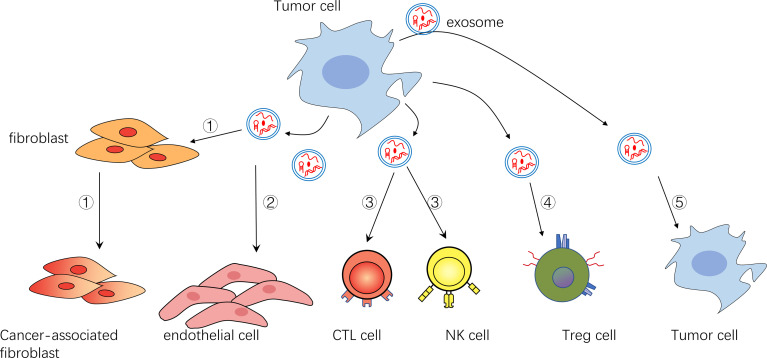
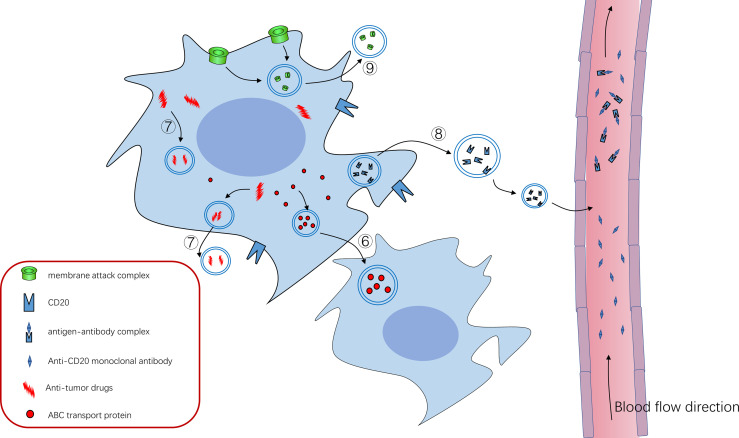
Exosomes are membrane limited structures which derive from cell membranes and cytoplasm. When released into extracellular space, they circulate through the extracellular fluid, including the peripheral blood and tissue fluid. Exosomes surface molecules mediate their targeting to specific recipient cells and deliver their contents to recipient cells by receptor-ligand interaction and/or phagocytosis and/or endocytosis or direct fusion with cell membrane. Exosomes contain many functional molecules, including nucleic acids (DNAs, mRNAs, non-coding RNAs), proteins (transcription factors, enzymes), and lipids which have biological activity. By passing these cargos, exosomes can transfer information between cells. In this way, exosomes are extensively involved in physiological and pathological processes, such as angiogenesis, matrix reprogramming, coagulation, tumor progression. In recent years, researcher have found that exosomes from malignant tumors can mediate information exchange between tumor cells or between tumor cells and non-tumor cells, thereby promoting tumor survival, progression, and resistance to therapy. In this review, we discuss the pro-tumor and anti-therapeutic effects of exosomes in hematological malignancies, hoping to contribute to the early conquest of hematological malignancy.
外泌体是源自细胞膜和细胞质的膜性受限结构。当释放到细胞外空间时,它们通过细胞外液循环,包括外周血和组织液。外泌体表面分子介导其靶向特定受体细胞,并通过受体-配体相互作用和/或吞噬作用和/或内吞作用或与细胞膜直接融合将其内容物递送至受体细胞。外泌体包含许多具有生物活性的功能分子,包括核酸(DNA、mRNA、非编码RNA)、蛋白质(转录因子、酶)和脂质。通过传递这些货物,外泌体可以在细胞之间传递信息。通过这种方式,外泌体广泛参与生理和病理过程,如血管生成、基质重编程、凝血、肿瘤进展。近年来,研究人员发现恶性肿瘤来源的外泌体可以介导肿瘤细胞之间或肿瘤细胞与非肿瘤细胞之间的信息交换,从而促进肿瘤存活、进展和对治疗的抗性。在本综述中,我们讨论外泌体在血液系统恶性肿瘤中的促肿瘤和抗治疗作用,希望有助于早日攻克血液系统恶性肿瘤。