Obesity/Diabetes Research Center, Department of Food and Nutrition, Hoseo University, Asan 31499, Korea.
Department of Bio-Convergence System, Hoseo University, Asan 31499, Korea.
Nutrients. 2021 Feb 3;13(2):495. doi: 10.3390/nu13020495.
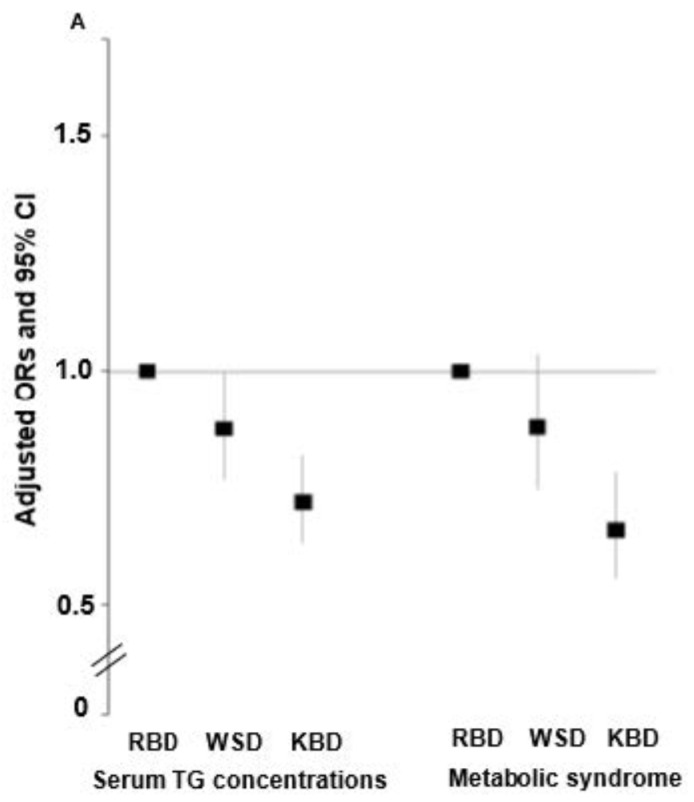
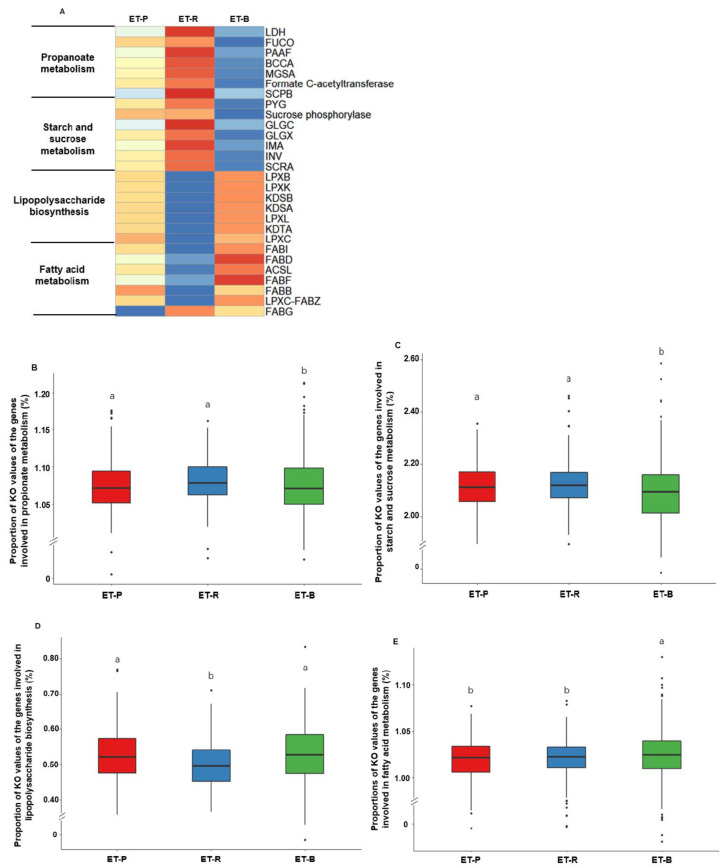
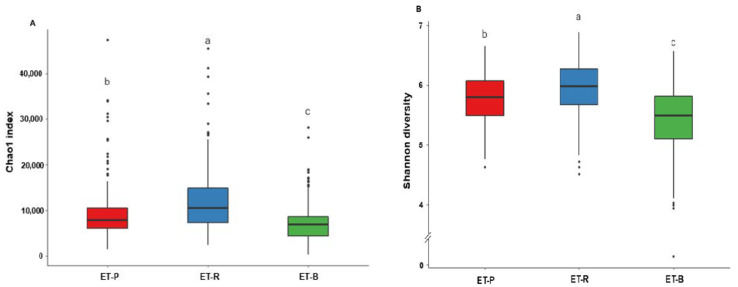
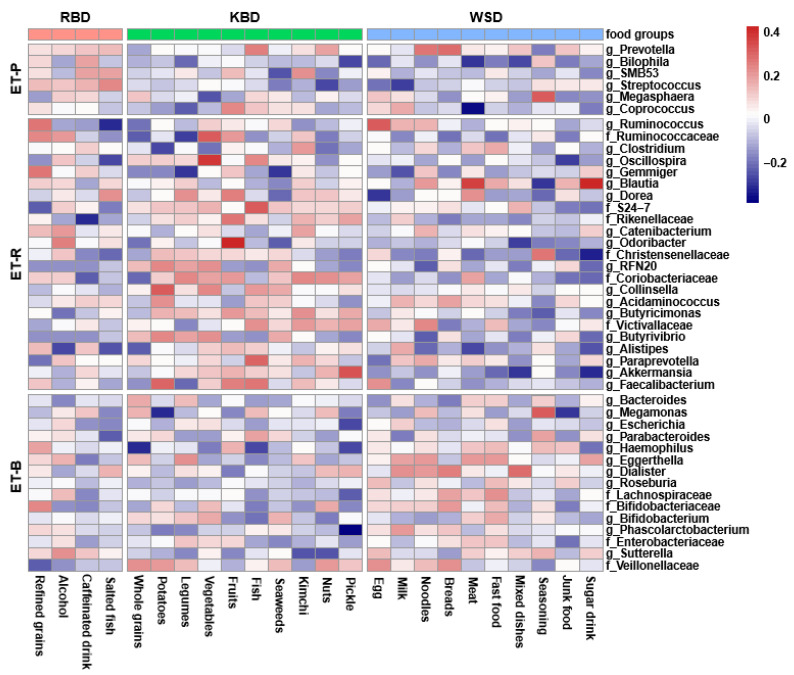
Metabolic syndrome is associated with usual dietary patterns that may be involved in enterotypes. We aimed to understand the potential relationship of enterotypes and dietary patterns to influence metabolic syndrome in the Koreans. Using the Korea National Health and Nutrition Examination Survey (KNHANES)-VI in 2014, metabolic parameters were also analyzed among the dietary patterns classified by principal component analysis in Korean adults. The fecal microbiota data of 1199 Korean adults collected in 2014 were obtained from the Korea Centers for Disease Control and Prevention. Enterotypes were classified based on Dirichlet multinomial mixtures (DMM) by Mothur v.1.36. The functional abundance of fecal bacteria was analyzed using the PICRUSt2 pipeline. Korean adults were clustered into three dietary patterns including Korean-style balanced diets (KBD, 20.4%), rice-based diets (RBD, 17.2%), and Western-style diets (WSD, 62.4%) in KNHANES. The incidence of metabolic syndrome was lowered in the order of RBD, WSD, and KBD. The participants having a KBD had lower serum C-reactive protein and triglyceride concentrations than those with RBD and WSD ( < 0.05). Three types of fecal bacteria were classified as type (ET-R, 28.7%), type (ET-P, 52.2%), and type (ET-B, 42.1%; < 0.05). ET-P had a higher abundance of while ET-R contained a higher abundance of , , , and . ET-B had a higher abundance of the order ( < 0.05). Metabolism of propanoate, starch, and sucrose in fecal microbiome was higher in ET-P and ET-R, whereas fatty acid metabolism was enhanced in ET-B. Fecal microbiota in ET-P and ET-B had higher lipopolysaccharide biosynthesis activity than that in ET-R. The metabolic results of KBD and RBD were consistent with ET-R and ET-P's gut microbiota metabolism, respectively. In conclusion, Korean enterotypes of ET-P, ET-B, and ET-R were associated with RBD, WSD, and KBD, respectively. This study suggests a potential link between dietary patterns, metabolic syndrome, and enterotypes among Korean adults.
代谢综合征与可能与肠型有关的常见饮食模式有关。我们旨在了解肠型和饮食模式对影响韩国人代谢综合征的潜在关系。使用 2014 年韩国国家健康和营养检查调查(KNHANES)-VI,还对通过主成分分析分类的韩国成年人饮食模式中的代谢参数进行了分析。2014 年从韩国疾病控制和预防中心获得了 1199 名韩国成年人的粪便微生物组数据。基于 Mothur v.1.36 利用 Dirichlet 多项混合(DMM)对粪便微生物进行分类。使用 PICRUSt2 管道分析粪便细菌的功能丰度。在 KNHANES 中,韩国成年人分为三种饮食模式,包括韩国式均衡饮食(KBD,20.4%)、以米饭为基础的饮食(RBD,17.2%)和西式饮食(WSD,62.4%)。代谢综合征的发生率依次降低为 RBD、WSD 和 KBD。与 RBD 和 WSD 相比,KBD 组的血清 C 反应蛋白和甘油三酯浓度较低(<0.05)。将三种粪便细菌分为 型(ET-R,28.7%)、 型(ET-P,52.2%)和 型(ET-B,42.1%;<0.05)。ET-P 中 丰度较高,而 ET-R 中 、 、 、 丰度较高。ET-B 中 丰度依次较高(<0.05)。粪便微生物中丙酸、淀粉和蔗糖代谢在 ET-P 和 ET-R 中较高,而脂肪酸代谢在 ET-B 中增强。ET-P 和 ET-B 的粪便微生物中脂多糖生物合成活性高于 ET-R。KBD 和 RBD 的代谢结果分别与 ET-R 和 ET-P 的肠道微生物代谢结果一致。总之,韩国 ET-P、ET-B 和 ET-R 肠型分别与 RBD、WSD 和 KBD 相关。本研究提示韩国成年人的饮食模式、代谢综合征与肠型之间存在潜在联系。