Al-Jighefee Hadeel T, Yassine Hadi M, Nasrallah Gheyath K
Biomedical Research Center, Qatar University, Doha 2713, Qatar.
Department of Biomedical Science, College of Health Sciences, Member of QU Health, Qatar University, Doha 2713, Qatar.
Pathogens. 2021 Feb 3;10(2):161. doi: 10.3390/pathogens10020161.
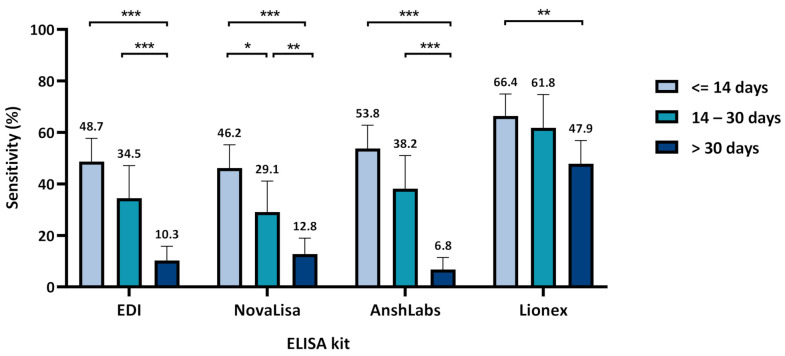
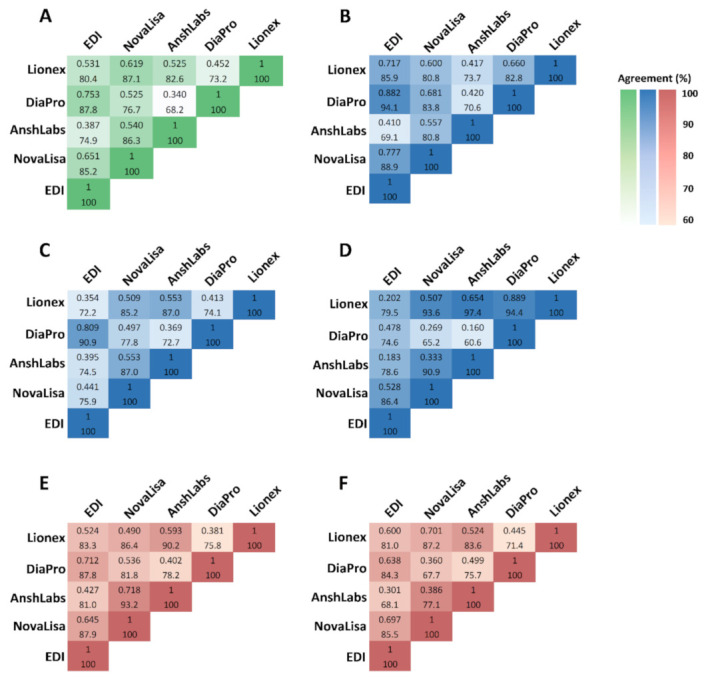
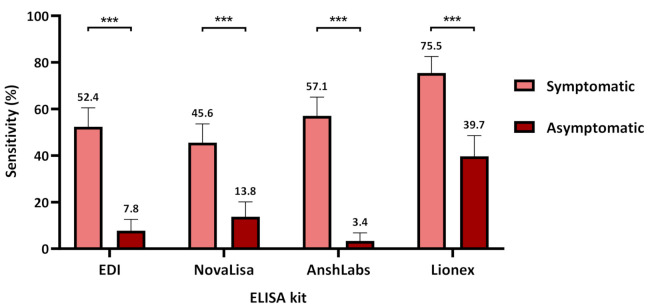
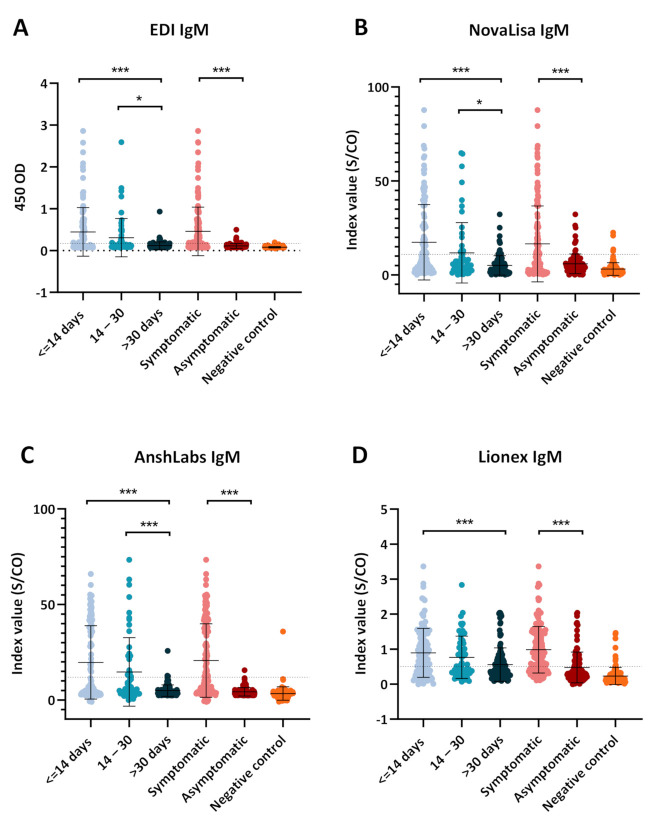
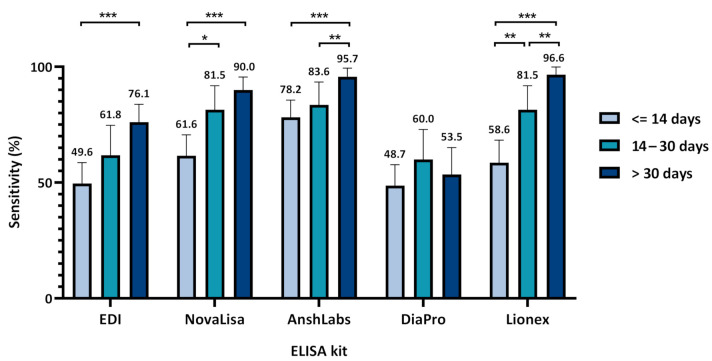
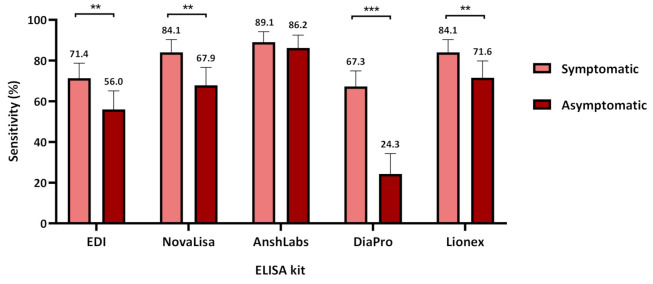
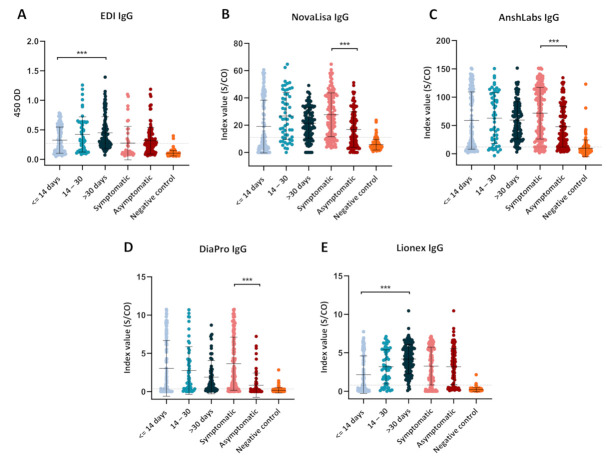
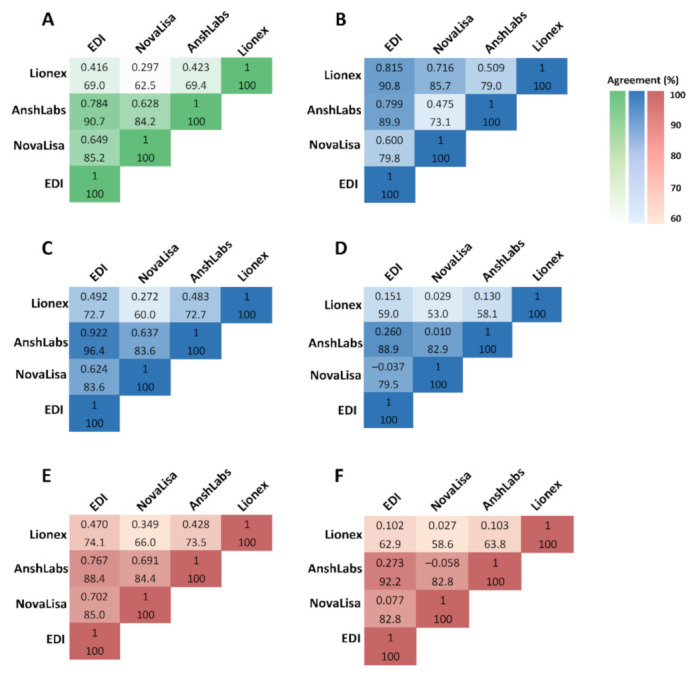
This study aims to study the immune response and evaluate the performances of four new IgM and five IgG enzyme-linked immunosorbent assay (ELISA) kits for detecting anti-severe acute respiratory syndrome coronavirus 2 (SARS-CoV-2) antibodies against different antigens in symptomatic and asymptomatic coronavirus disease 2019 (COVID-19) patients. A total of 291 samples collected from symptomatic and asymptomatic RT-PCR-confirmed patients were used to evaluate the ELISA kits' performance (EDI, AnshLabs, DiaPro, NovaLisa, and Lionex). The sensitivity was measured at three different time-intervals post symptoms onset or positive SARS-CoV-2 RT-PCR test (≤14, 14-30, >30 days). The specificity was investigated using 119 pre-pandemic serum samples. The sensitivity of all IgM kits gradually decreased with time, ranging from 48.7% (EDI)-66.4% (Lionex) at ≤14 days, 29.1% (NovaLisa)-61.8% (Lionex) at 14-30 days, and 6.0% (AnshLabs)-47.9% (Lionex) at >30 days. The sensitivity of IgG kits increased with time, peaking in the latest interval (>30 days) at 96.6% (Lionex). Specificity of IgM ranged from 88.2% (Lionex)-99.2% (EDI), while IgG ranged from 75.6% (DiaPro)-98.3% (Lionex). Among all RT-PCR-positive patients, 23 samples (7.9%) were seronegative by all IgG kits, of which only seven samples (30.4%) had detectable IgM antibodies. IgM assays have variable and low sensitivity, thus considered a poor marker for COVID-19 diagnosis. IgG assays can miss at least 8% of RT-PCR-positive cases.
本研究旨在研究免疫反应,并评估四种新型IgM和五种IgG酶联免疫吸附测定(ELISA)试剂盒在检测2019冠状病毒病(COVID-19)有症状和无症状患者中针对不同抗原的抗严重急性呼吸综合征冠状病毒2(SARS-CoV-2)抗体方面的性能。从有症状和无症状且经逆转录聚合酶链反应(RT-PCR)确诊的患者中收集了总共291份样本,用于评估ELISA试剂盒(EDI、AnshLabs、DiaPro、NovaLisa和Lionex)的性能。在症状出现后或SARS-CoV-2 RT-PCR检测呈阳性后的三个不同时间间隔(≤14天、14 - 30天、>30天)测量敏感性。使用119份大流行前血清样本研究特异性。所有IgM试剂盒的敏感性随时间逐渐降低,在≤14天时为48.7%(EDI)-66.4%(Lionex),在14 - 30天时为29.1%(NovaLisa)-61.8%(Lionex),在>30天时为6.0%(AnshLabs)-47.9%(Lionex)。IgG试剂盒的敏感性随时间增加,在最晚的时间间隔(>30天)达到峰值,为96.6%(Lionex)。IgM的特异性范围为88.2%(Lionex)-99.2%(EDI),而IgG的特异性范围为75.6%(DiaPro)-98.3%(Lionex)。在所有RT-PCR阳性患者中,有23份样本(7.9%)所有IgG试剂盒检测均为血清阴性,其中只有7份样本(30.4%)可检测到IgM抗体。IgM检测的敏感性变化不定且较低,因此被认为是COVID-19诊断的不良标志物。IgG检测可能会遗漏至少8%的RT-PCR阳性病例。