Brandão Lucas André Cavalcanti, Tricarico Paola Maura, Gratton Rossella, Agrelli Almerinda, Zupin Luisa, Abou-Saleh Haissam, Moura Ronald, Crovella Sergio
Department of Advanced Diagnostics, Institute for Maternal and Child Health IRCCS Burlo Garofolo, 34137 Trieste, Italy.
Department of Pathology, Federal University of Pernambuco (UFPE), Recife 1235, Brazil.
Int J Mol Sci. 2021 Feb 3;22(4):1523. doi: 10.3390/ijms22041523.
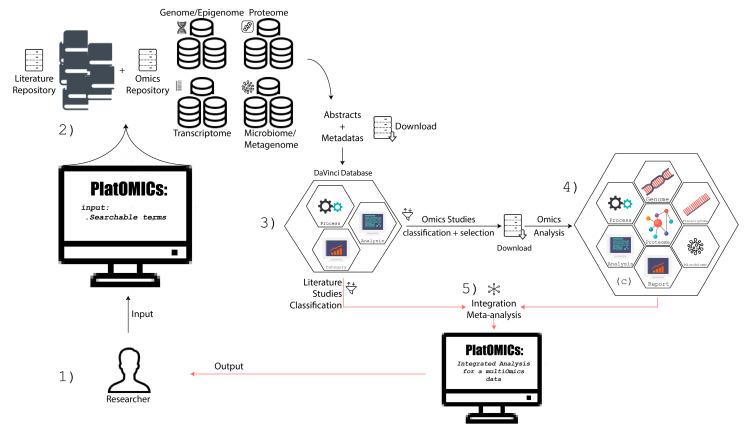
The high volume of information produced in the age of omics was and still is an important step to understanding several pathological processes, providing the enlightenment of complex molecular networks and the identification of molecular targets associated with many diseases. Despite these remarkable scientific advances, the majority of the results are disconnected and divergent, making their use limited. Skin diseases with alterations in the Notch signaling pathway were extensively studied during the omics era. In the GWAS Catalog, considering only studies on genomics association (GWAS), several works were deposited, some of which with divergent results. In addition, there are thousands of scientific articles available about these skin diseases. In our study, we focused our attention on skin diseases characterized by the impairment of Notch signaling, this pathway being of pivotal importance in the context of epithelial disorders. We considered the pathologies of five human skin diseases, Hidradenitis Suppurativa, Dowling Degos Disease, Adams-Oliver Syndrome, Psoriasis, and Atopic Dermatitis, in which the molecular alterations in the Notch signaling pathway have been reported. To this end, we started developing a new multiomics platform, PlatOMICs, to integrate and re-analyze omics information, searching for the molecular interactions involved in the pathogenesis of skin diseases with alterations in the Notch signaling pathway.
组学时代产生的大量信息过去是、现在仍然是理解多种病理过程的重要一步,它为复杂分子网络提供了启示,并有助于识别与许多疾病相关的分子靶点。尽管取得了这些显著的科学进展,但大多数结果相互脱节且存在分歧,限制了它们的应用。在组学时代,对Notch信号通路发生改变的皮肤病进行了广泛研究。在GWAS目录中,仅考虑基因组关联研究(GWAS),就有多项研究成果被收录,其中一些结果存在分歧。此外,关于这些皮肤病的科学文章有数千篇。在我们的研究中,我们将注意力集中在以Notch信号受损为特征的皮肤病上,该信号通路在上皮疾病中至关重要。我们考虑了五种人类皮肤病的病理情况,即化脓性汗腺炎、多林格-迪戈斯病、亚当斯-奥利弗综合征、银屑病和特应性皮炎,其中已报道了Notch信号通路的分子改变。为此,我们开始开发一个新的多组学平台PlatOMICs,以整合和重新分析组学信息,寻找Notch信号通路改变的皮肤病发病机制中涉及的分子相互作用。