Sivapalan Pradeesh, Bikov András, Jensen Jens-Ulrik
Department of Internal Medicine, Respiratory Medicine Section, Herlev-Gentofte Hospital, 2900 Hellerup, Denmark.
Department of Internal Medicine, Zealand University Hospital, 4000 Roskilde, Denmark.
Diagnostics (Basel). 2021 Feb 3;11(2):236. doi: 10.3390/diagnostics11020236.
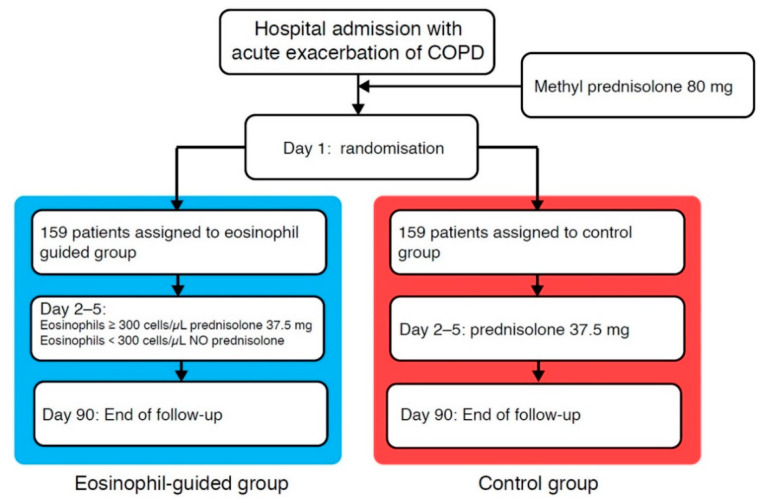
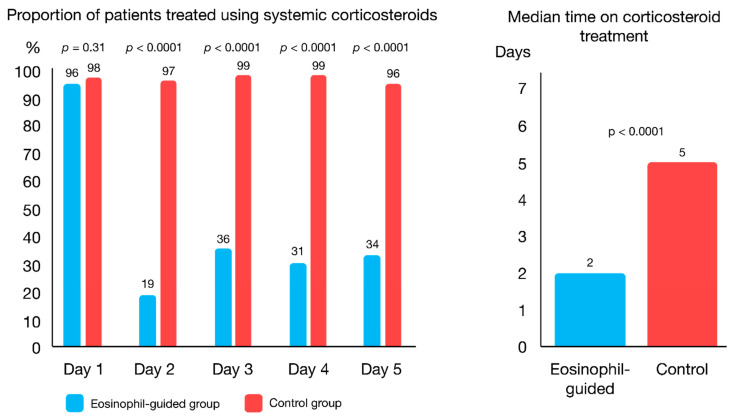
Treating patients hospitalised with acute exacerbations of chronic obstructive pulmonary disease (COPD) usually involves administering systemic corticosteroids. The many unwanted side effects associated with this treatment have led to increased interest in minimising the accumulated corticosteroid dose necessary to treat exacerbations. Studies have shown that short-term treatment with corticosteroids is preferred, and recent trials have shown that biomarkers can be used to further reduce exposure to corticosteroids. Interestingly, high eosinophil counts in patients with acute exacerbations of COPD are indicative of an eosinophilic phenotype with a distinct response to treatment with corticosteroids. In addition, post-hoc analysis of randomised control trials have shown that higher blood eosinophil counts at the start of the study predict a greater response to inhaled corticosteroids in stable COPD. In this review, we examine the studies on this topic, describe how blood eosinophil cell count may be used as a biomarker to guide treatment with corticosteroids, and identify some relevant challenges.
治疗因慢性阻塞性肺疾病(COPD)急性加重而住院的患者通常需要使用全身性皮质类固醇。这种治疗方法伴随的诸多不良副作用使得人们越来越关注尽量减少治疗急性加重所需的累积皮质类固醇剂量。研究表明,皮质类固醇的短期治疗更为可取,并且最近的试验表明生物标志物可用于进一步减少皮质类固醇的暴露。有趣的是,COPD急性加重患者中嗜酸性粒细胞计数较高表明其具有嗜酸性粒细胞表型,对皮质类固醇治疗有独特反应。此外,随机对照试验的事后分析表明,研究开始时较高的血液嗜酸性粒细胞计数预示着稳定期COPD患者对吸入性皮质类固醇的反应更大。在这篇综述中,我们审视了关于该主题的研究,描述了血液嗜酸性粒细胞计数如何用作生物标志物来指导皮质类固醇治疗,并确定了一些相关挑战。