Core Metabolomics and Lipidomics Laboratory, Wellcome Trust-MRL Institute of Metabolic Science, University of Cambridge, Cambridge, UK.
Metabolic Disease Unit, Wellcome Trust-MRL Institute of Metabolic Science, University of Cambridge, Cambridge, UK.
Commun Biol. 2021 Feb 5;4(1):163. doi: 10.1038/s42003-021-01686-1.
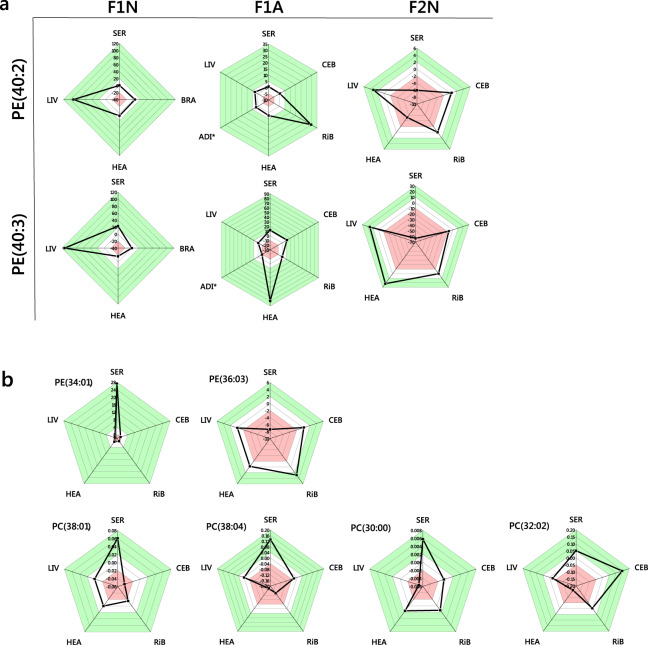
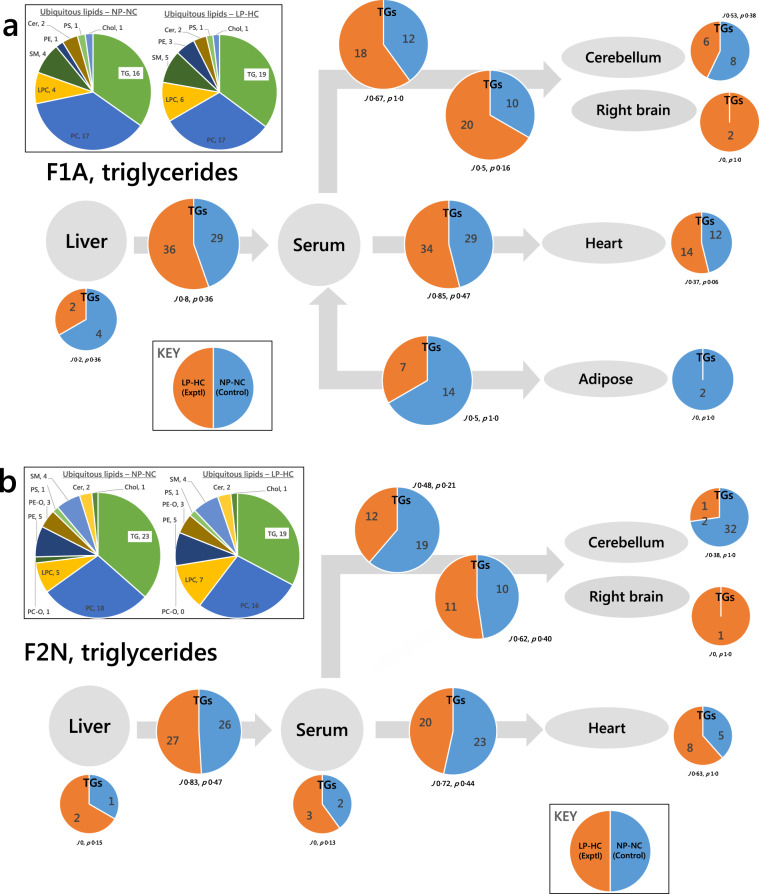
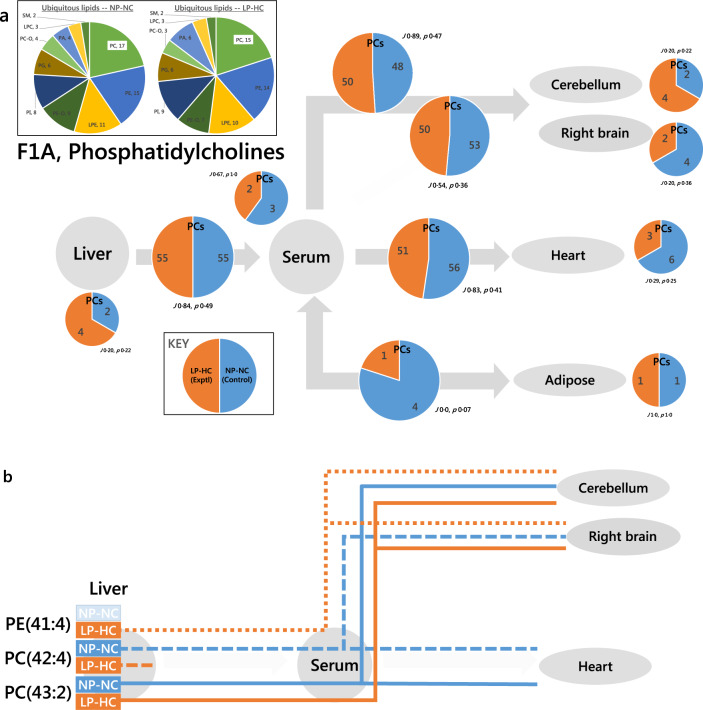
In this paper we present an investigation of parental-diet-driven metabolic programming in offspring using a novel computational network analysis tool. The impact of high paternal carbohydrate intake on offsprings' phospholipid and triglyceride metabolism in F1 and F2 generations is described. Detailed lipid profiles were acquired from F1 neonate (3 weeks), F1 adult (16 weeks) and F2 neonate offspring in serum, liver, brain, heart and abdominal adipose tissues by MS and NMR. Using a purpose-built computational tool for analysing both phospholipid and fat metabolism as a network, we characterised the number, type and abundance of lipid variables in and between tissues (Lipid Traffic Analysis), finding a variety of reprogrammings associated with paternal diet. These results are important because they describe the long-term metabolic result of dietary intake by fathers. This analytical approach is important because it offers unparalleled insight into possible mechanisms for alterations in lipid metabolism throughout organisms.
本文利用一种新颖的计算网络分析工具,研究了父母饮食驱动的后代代谢编程。描述了高父代碳水化合物摄入对 F1 和 F2 代后代磷脂和甘油三酯代谢的影响。通过 MS 和 NMR 从 F1 新生儿(3 周)、F1 成年(16 周)和 F2 新生儿后代的血清、肝脏、大脑、心脏和腹部脂肪组织中获得详细的脂质谱。我们使用专门构建的用于分析磷脂和脂肪代谢的计算工具作为网络,描述了组织内和组织间的脂质变量的数量、类型和丰度(脂质流量分析),发现了与父代饮食相关的多种重编程。这些结果很重要,因为它们描述了父亲饮食摄入的长期代谢结果。这种分析方法很重要,因为它提供了对整个生物体脂质代谢变化的可能机制的无与伦比的深入了解。