Institute of Sport Science, Seoul National University, Seoul, Korea.
Well Aging Research Center, DGIST, Daegu, South Korea.
Physiol Rep. 2021 Feb;9(3):e14497. doi: 10.14814/phy2.14497.
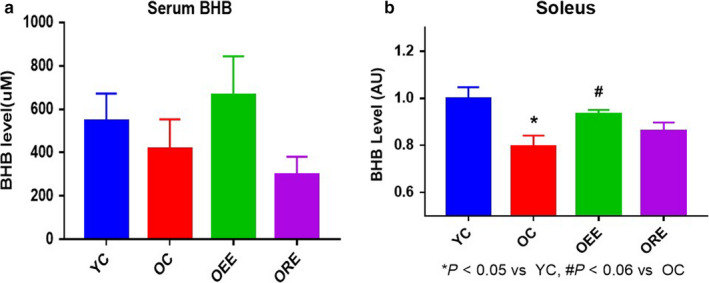
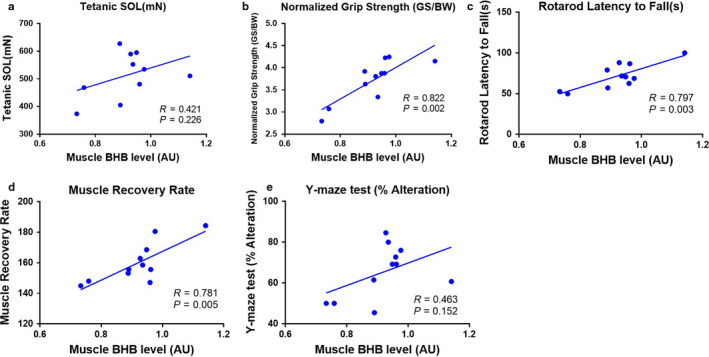
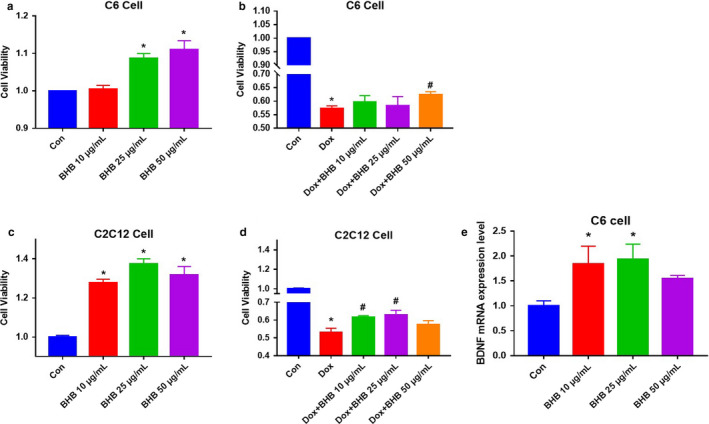
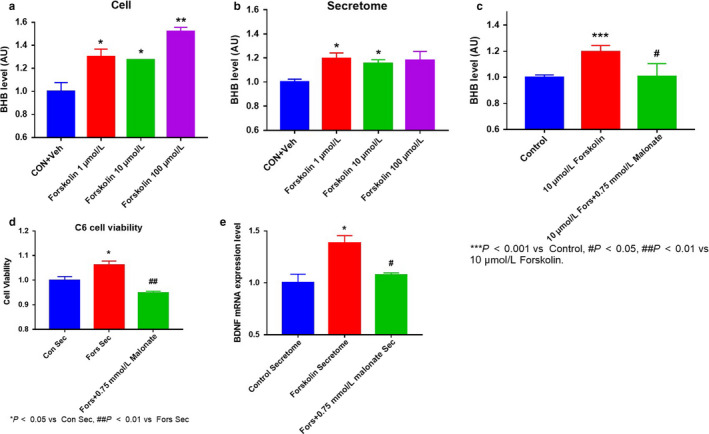
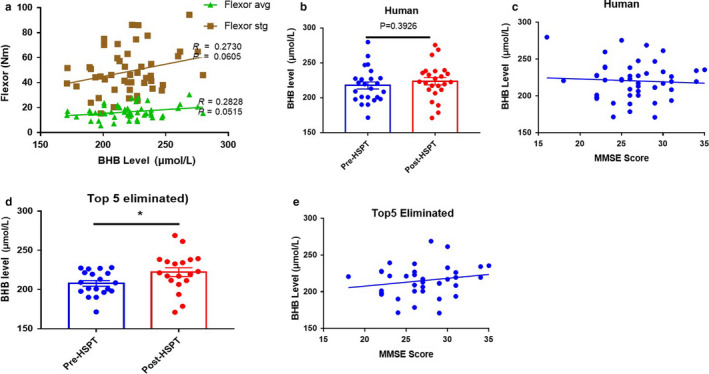
Recent studies have shown that exercise improves skeletal muscle and cognitive function by stimulating the secretion of numerous molecules. In particular, previous studies have suggested that exercise-induced beta-hydroxybutyrate (BHB) release might improve skeletal muscle and cognitive function, but to date these studies have been limited to cell and animal models. Therefore, we aimed to determine how an exercise-induced increase in BHB affects skeletal muscle and cognitive function at a cellular level, in an animal model, and in humans. The effects of BHB on skeletal muscle and cognitive function were determined by treating C2C12 and C6 cell lines with BHB, and by measuring the skeletal muscle and serum BHB concentrations in aged mice after endurance or resistance exercise. In addition, serum BHB concentration was measured before and after high-speed band exercise in elderly people, and its relationships with muscle and cognitive function were analyzed. We found that BHB increased cell viability and brain-derived neurotrophic factor expression level in C6 cells, and endurance exercise, but not resistance exercise, increased the muscle BHB concentration in aged mice. Furthermore, the BHB concentration was positively related to skeletal muscle and cognitive function. Exercise did not increase the serum BHB concentration in the elderly people and BHB did not correlate with cognitive function, but after excluding the five people with the highest preexisting serum concentrations of BHB, the BHB concentrations of the remaining participants were increased by exercise, and the concentration showed a tendency toward a positive correlation with cognitive function. Thus, the BHB released by skeletal muscle following endurance exercise may improve muscle and cognitive function in animals and humans.
最近的研究表明,运动通过刺激大量分子的分泌来改善骨骼肌和认知功能。特别是,以前的研究表明,运动诱导的β-羟基丁酸(BHB)释放可能改善骨骼肌和认知功能,但迄今为止,这些研究仅限于细胞和动物模型。因此,我们旨在确定运动诱导的 BHB 增加如何在细胞水平、动物模型和人类中影响骨骼肌和认知功能。通过用 BHB 处理 C2C12 和 C6 细胞系,以及测量耐力或抗阻运动后老年小鼠骨骼肌和血清 BHB 浓度,来确定 BHB 对骨骼肌和认知功能的影响。此外,在老年人进行高速带运动前后测量血清 BHB 浓度,并分析其与肌肉和认知功能的关系。我们发现 BHB 增加了 C6 细胞的细胞活力和脑源性神经营养因子表达水平,以及耐力运动,但不是抗阻运动,增加了老年小鼠的骨骼肌 BHB 浓度。此外,BHB 浓度与骨骼肌和认知功能呈正相关。运动并没有增加老年人的血清 BHB 浓度,BHB 与认知功能也没有相关性,但排除了 5 名血清 BHB 浓度最高的老年人后,其余参与者的血清 BHB 浓度在运动后增加,且浓度与认知功能呈正相关趋势。因此,骨骼肌在耐力运动后释放的 BHB 可能会改善动物和人类的肌肉和认知功能。