Department of Laboratory Medicine, State Key Laboratory of Biotherapy, West China Hospital, Sichuan University and Collaborative Innovation Center for Biotherapy, Chengdu, Sichuan 610041, China; Department of Laboratory Medicine and Department of Pediatric Infectious Diseases, Key Laboratory of Birth Defects and Related Diseases of Women and Children of MOE, West China Second University Hospital, Sichuan University, Chengdu 610041, China.
Department of Laboratory Medicine, State Key Laboratory of Biotherapy, West China Hospital, Sichuan University and Collaborative Innovation Center for Biotherapy, Chengdu, Sichuan 610041, China; Department of Laboratory Medicine and Department of Pediatric Infectious Diseases, Key Laboratory of Birth Defects and Related Diseases of Women and Children of MOE, West China Second University Hospital, Sichuan University, Chengdu 610041, China.
Cell Host Microbe. 2021 Mar 10;29(3):489-502.e8. doi: 10.1016/j.chom.2021.01.015. Epub 2021 Jan 29.
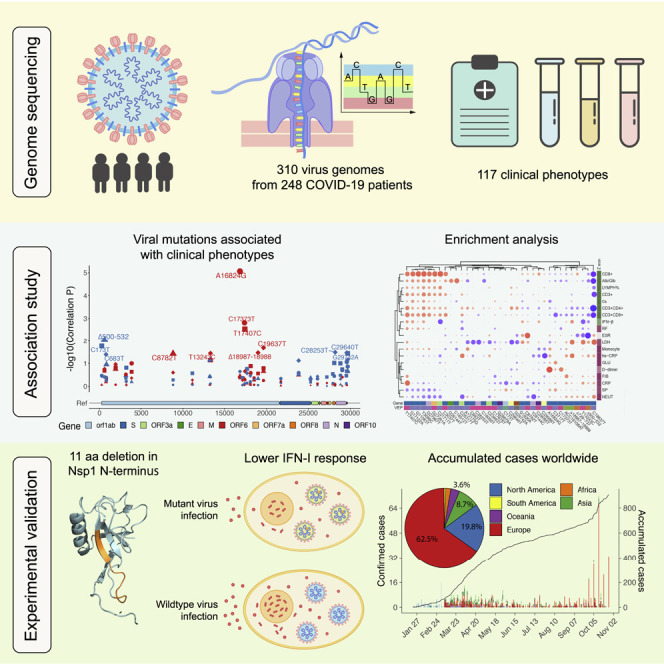
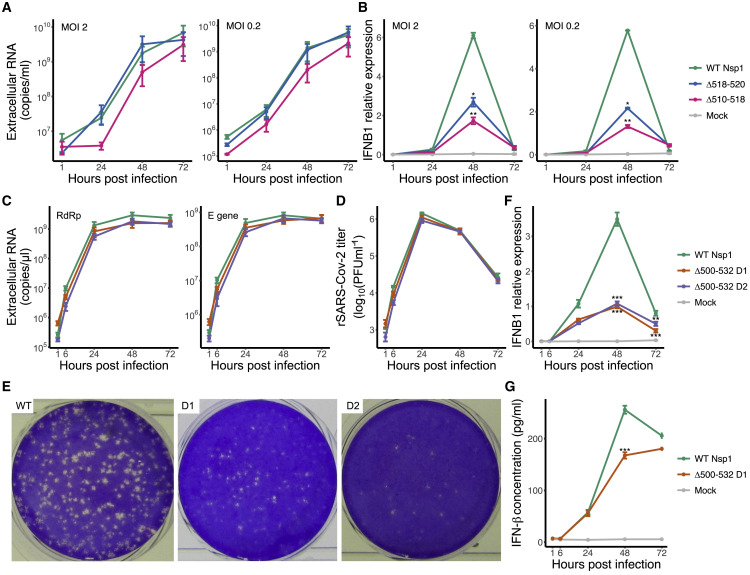
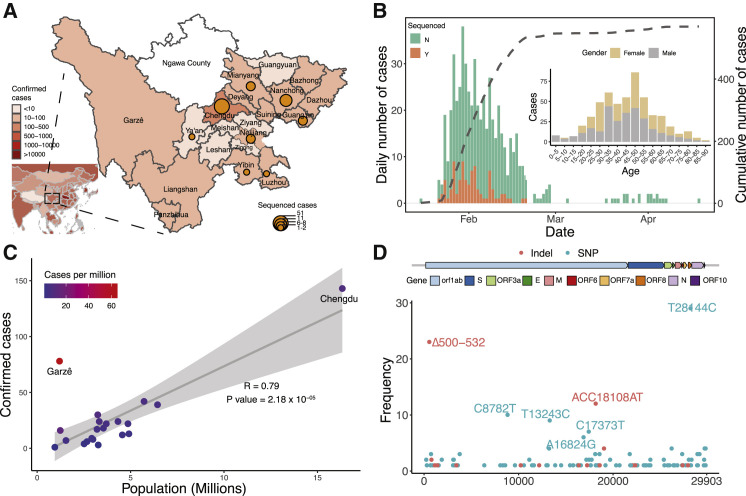
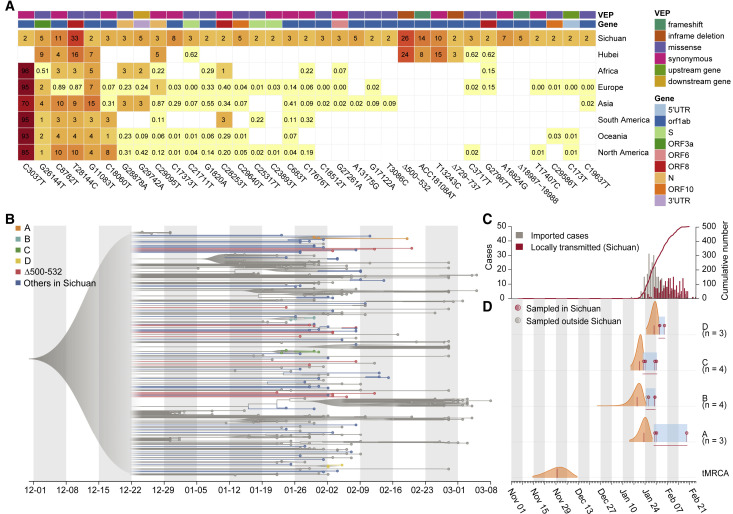
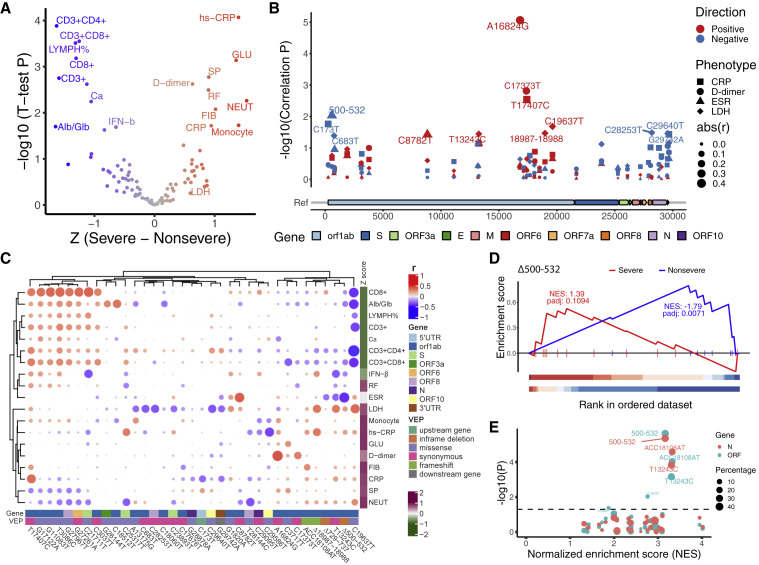
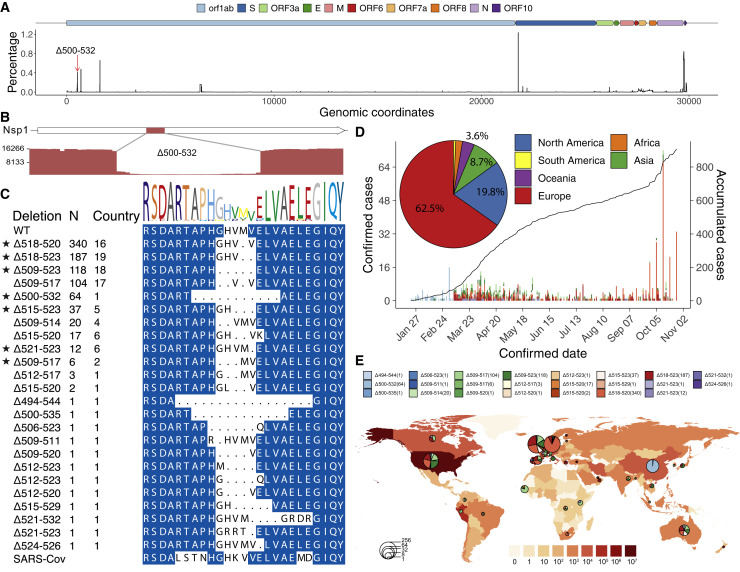
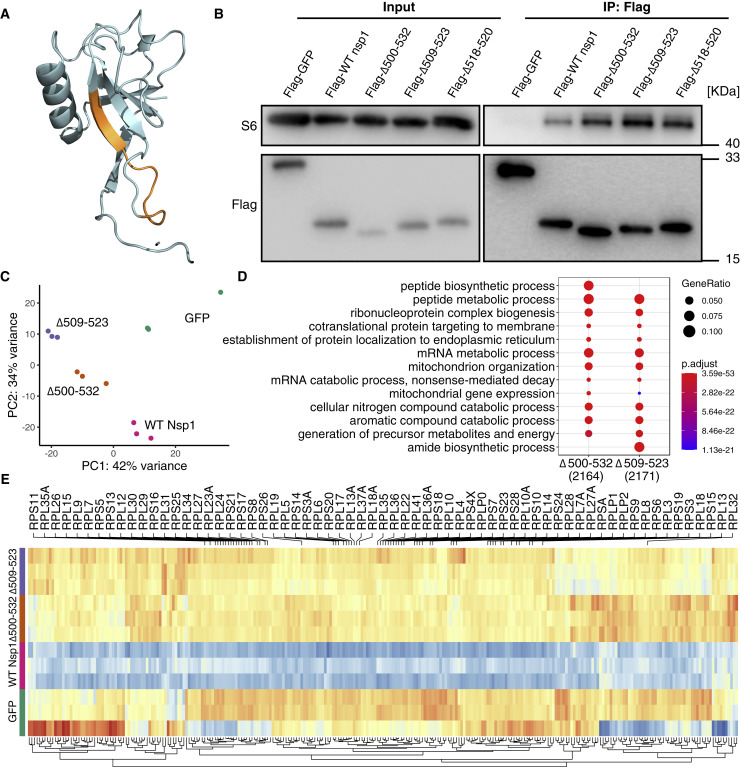
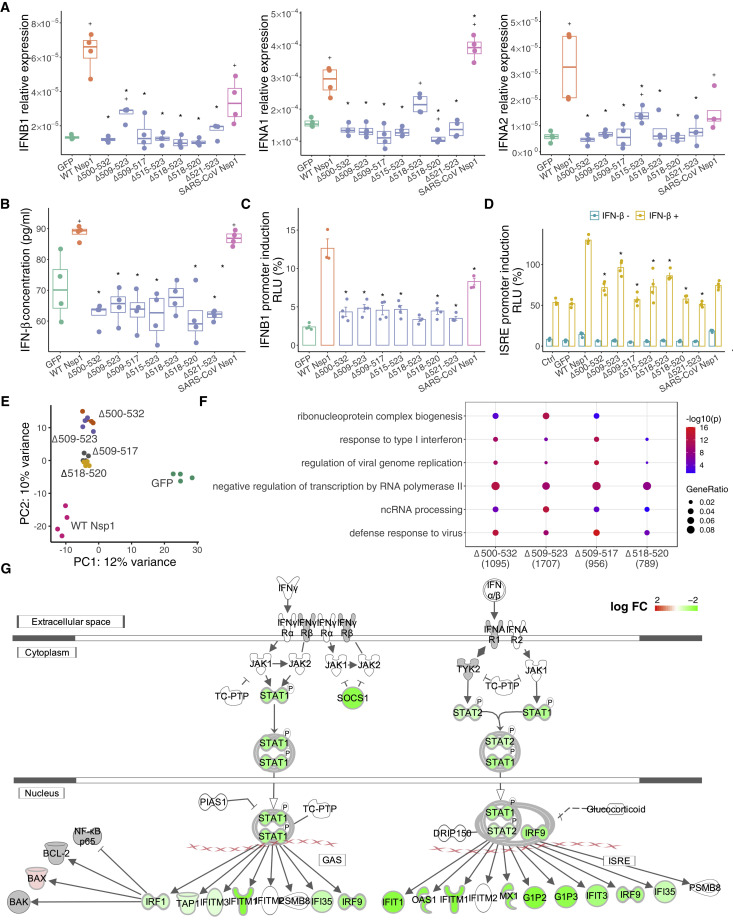
The SARS-CoV-2 virus, the causative agent of COVID-19, is undergoing constant mutation. Here, we utilized an integrative approach combining epidemiology, virus genome sequencing, clinical phenotyping, and experimental validation to locate mutations of clinical importance. We identified 35 recurrent variants, some of which are associated with clinical phenotypes related to severity. One variant, containing a deletion in the Nsp1-coding region (Δ500-532), was found in more than 20% of our sequenced samples and associates with higher RT-PCR cycle thresholds and lower serum IFN-β levels of infected patients. Deletion variants in this locus were found in 37 countries worldwide, and viruses isolated from clinical samples or engineered by reverse genetics with related deletions in Nsp1 also induce lower IFN-β responses in infected Calu-3 cells. Taken together, our virologic surveillance characterizes recurrent genetic diversity and identified mutations in Nsp1 of biological and clinical importance, which collectively may aid molecular diagnostics and drug design.
SARS-CoV-2 病毒是 COVID-19 的致病因子,它在不断发生突变。在这里,我们利用整合的方法,结合流行病学、病毒基因组测序、临床表型和实验验证,定位具有临床重要性的突变。我们发现了 35 个反复出现的变异株,其中一些与严重程度相关的临床表型有关。一个变异株在 Nsp1 编码区含有缺失(Δ500-532),在我们测序的样本中超过 20%存在,与感染患者的 RT-PCR 循环阈值更高和血清 IFN-β 水平更低有关。该基因座的缺失变异株在全球 37 个国家均有发现,从临床样本中分离出的病毒或通过反向遗传学构建的具有相关 Nsp1 缺失的工程病毒,也会导致感染的 Calu-3 细胞中 IFN-β 反应降低。总之,我们的病毒学监测描述了反复出现的遗传多样性,并确定了 Nsp1 中具有生物学和临床重要性的突变,这些突变可能有助于分子诊断和药物设计。