Hu Jingjing, Qing Zhao, Liu Renyuan, Zhang Xin, Lv Pin, Wang Maoxue, Wang Yang, He Kelei, Gao Yang, Zhang Bing
National Institute of Healthcare Data Science at Nanjing University, Nanjing, China.
State Key Laboratory for Novel Software Technology, Nanjing University, Nanjing, China.
Front Neurosci. 2021 Jan 21;14:626154. doi: 10.3389/fnins.2020.626154. eCollection 2020.
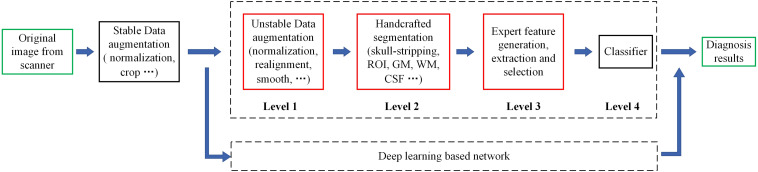
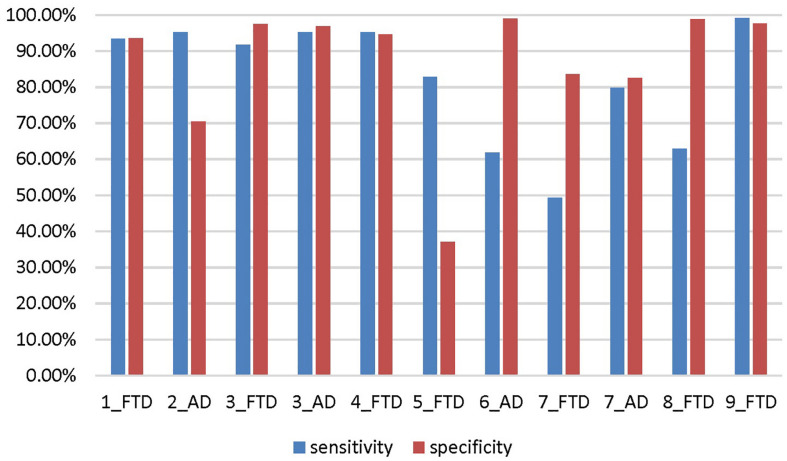
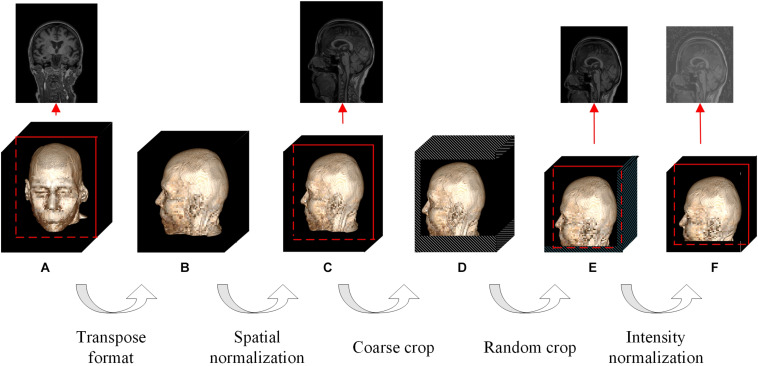
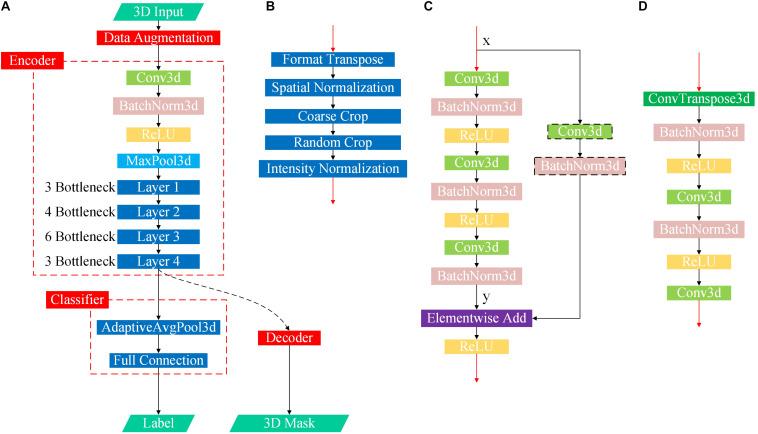
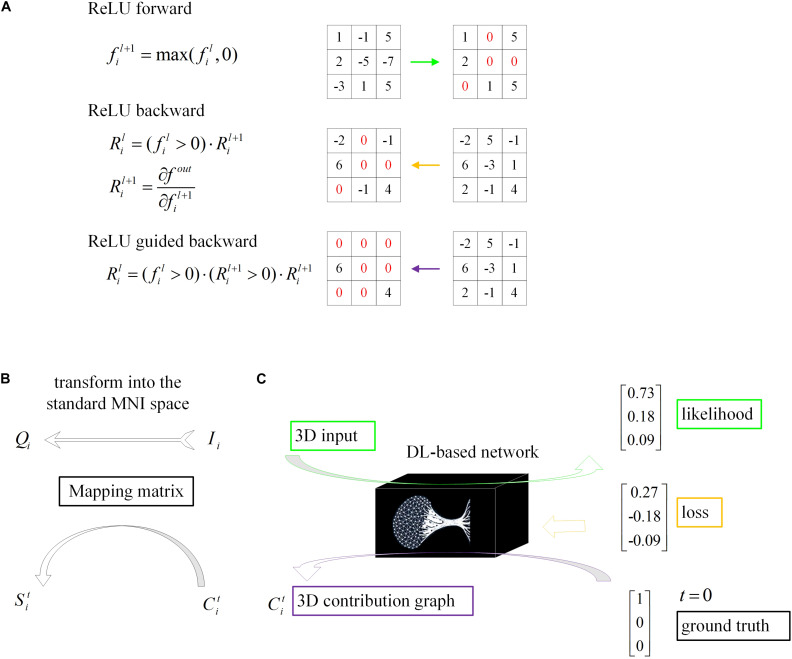
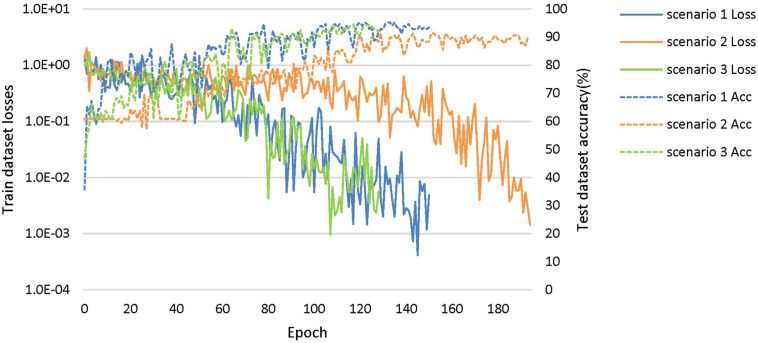
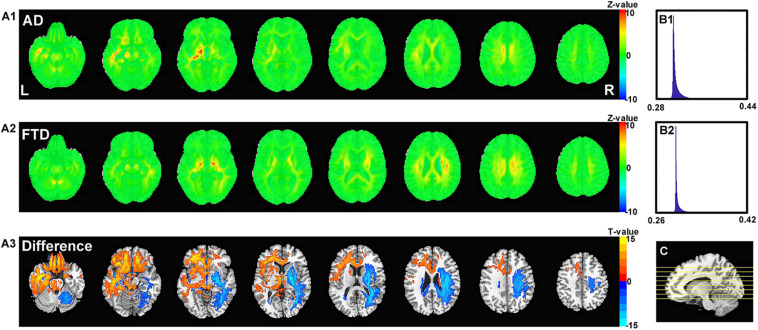
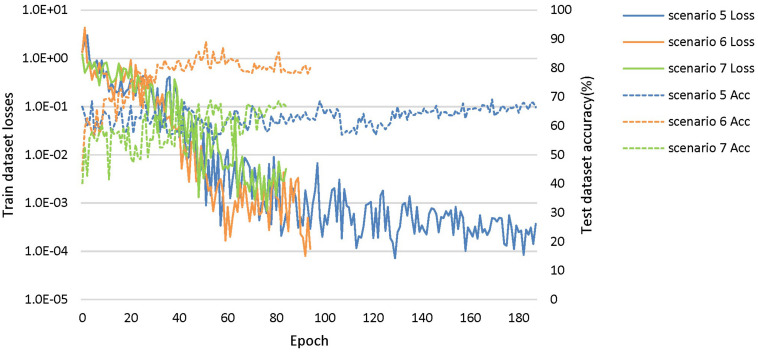
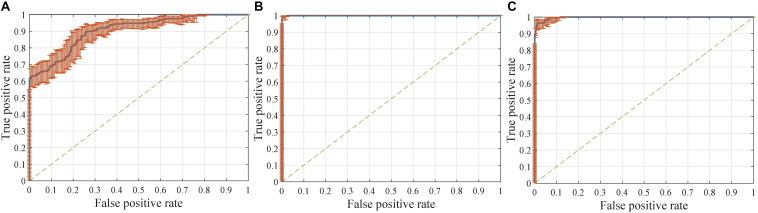
Frontotemporal dementia (FTD) and Alzheimer's disease (AD) have overlapping symptoms, and accurate differential diagnosis is important for targeted intervention and treatment. Previous studies suggest that the deep learning (DL) techniques have the potential to solve the differential diagnosis problem of FTD, AD and normal controls (NCs), but its performance is still unclear. In addition, existing DL-assisted diagnostic studies still rely on hypothesis-based expert-level preprocessing. On the one hand, it imposes high requirements on clinicians and data themselves; On the other hand, it hinders the backtracking of classification results to the original image data, resulting in the classification results cannot be interpreted intuitively. In the current study, a large cohort of 3D T1-weighted structural magnetic resonance imaging (MRI) volumes ( = 4,099) was collected from two publicly available databases, i.e., the ADNI and the NIFD. We trained a DL-based network directly based on raw T1 images to classify FTD, AD and corresponding NCs. And we evaluated the convergence speed, differential diagnosis ability, robustness and generalizability under nine scenarios. The proposed network yielded an accuracy of 91.83% based on the most common T1-weighted sequence [magnetization-prepared rapid acquisition with gradient echo (MPRAGE)]. The knowledge learned by the DL network through multiple classification tasks can also be used to solve subproblems, and the knowledge is generalizable and not limited to a specified dataset. Furthermore, we applied a gradient visualization algorithm based on guided backpropagation to calculate the contribution graph, which tells us intuitively why the DL-based networks make each decision. The regions making valuable contributions to FTD were more widespread in the right frontal white matter regions, while the left temporal, bilateral inferior frontal and parahippocampal regions were contributors to the classification of AD. Our results demonstrated that DL-based networks have the ability to solve the enigma of differential diagnosis of diseases without any hypothesis-based preprocessing. Moreover, they may mine the potential patterns that may be different from human clinicians, which may provide new insight into the understanding of FTD and AD.
额颞叶痴呆(FTD)和阿尔茨海默病(AD)具有重叠症状,准确的鉴别诊断对于针对性干预和治疗至关重要。先前的研究表明,深度学习(DL)技术有潜力解决FTD、AD和正常对照(NC)的鉴别诊断问题,但其性能仍不明确。此外,现有的DL辅助诊断研究仍依赖基于假设的专家级预处理。一方面,这对临床医生和数据本身提出了很高要求;另一方面,它阻碍了将分类结果回溯到原始图像数据,导致分类结果无法直观解释。在当前研究中,从两个公开可用数据库,即阿尔茨海默病神经成像倡议(ADNI)和额颞叶痴呆神经影像数据集(NIFD)中收集了一大组3D T1加权结构磁共振成像(MRI)体积数据( = 4,099)。我们基于原始T1图像直接训练了一个基于DL的网络,以对FTD、AD和相应的NC进行分类。并且我们在九种情况下评估了收敛速度、鉴别诊断能力、鲁棒性和泛化能力。基于最常见的T1加权序列[磁化准备快速梯度回波采集(MPRAGE)],所提出的网络准确率达到了91.83%。DL网络通过多个分类任务学到的知识也可用于解决子问题,并且该知识具有泛化性,不限于特定数据集。此外,我们应用了基于引导反向传播的梯度可视化算法来计算贡献图,这直观地告诉我们基于DL的网络做出每个决策的原因。对FTD有重要贡献的区域在右侧额叶白质区域更为广泛,而左侧颞叶、双侧额下回和海马旁回区域是AD分类的贡献区域。我们的结果表明,基于DL的网络有能力在无需任何基于假设的预处理的情况下解决疾病鉴别诊断之谜。此外,它们可能挖掘出与人类临床医生可能不同的潜在模式,这可能为理解FTD和AD提供新的见解。