Fiocchi Alessandro, Jensen-Jarolim Erika
Allergy Unit, Bambino Gesù Children's Hospital, IRCCS, Piazza Sant'Onofrio 4, 00165, Rome, Italy.
The Interuniversity Messerli Research Institute of the University of Veterinary Medicine Vienna, Medical University Vienna and University Vienna, Vienna, Austria.
World Allergy Organ J. 2021 Feb;14(2):100514. doi: 10.1016/j.waojou.2021.100514. Epub 2021 Jan 29.
Uncertainty has surrounded the duration of immunity against SARS CoV-2. This concerns both the duration of vaccine immunity and the duration of natural immunity. We aim to critically review the information available today, and draw practical conclusions.
This is a narrative review of the recently published information on the topic, compared with the knowledge we already have of the behavior of various viral infectious agents.
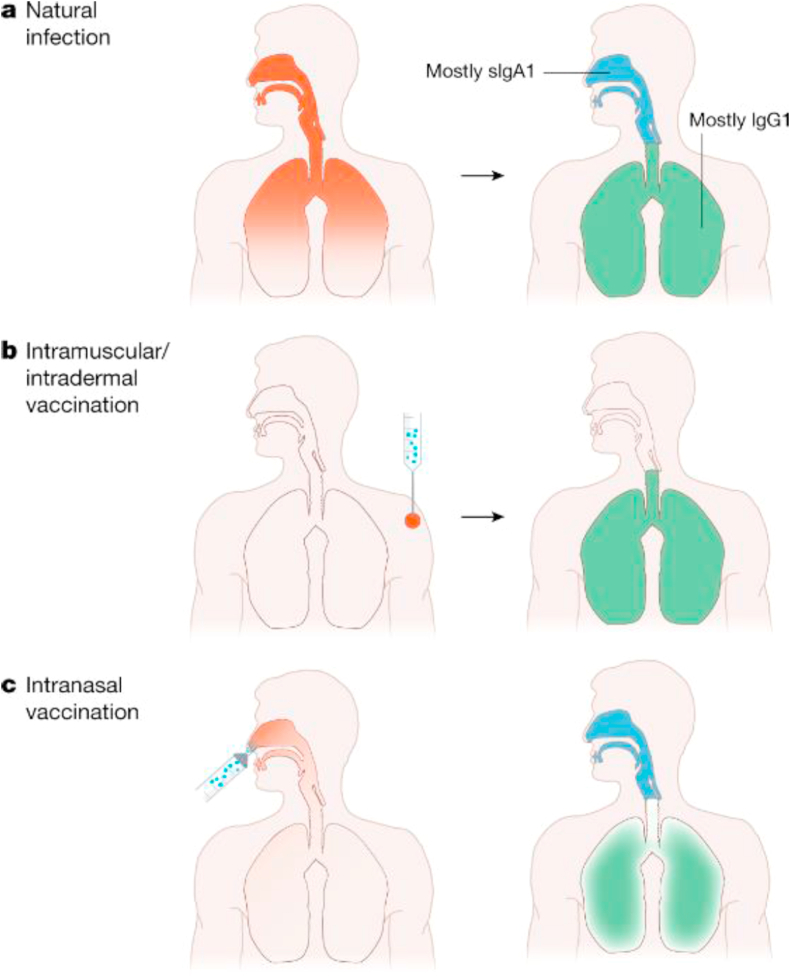
It is too early to have any meaningful information on the duration of vaccine immunity against SARS CoV-2. For those who already had the infeciton, the rate of reinfection is very low. Most reinfections are due to laboratory errors, to incomplete cure of the primary infection, to the supervening immunodeficiency of the host, or to pre-existing immunodeficiency made evident by the SARS CoV-2 infection. The available studies on the immunology of the infection converge in indicating that it generates a robust and persistent immunity. This behavior does not differ from that of respiratory viruses known to date: in naturally occurring viral respiratory infections, reinfections are exceptional.
The civil community awaits suggestions from scientists not only to protect susceptible people, but to be able to safely resume activities made uncertain by the pandemic. From the information we have to-date, we suggest that, in principle, patients who have already overcome the infection should not be prioritized to the SARS CoV-2 vaccine. Instead, they could be provided with an immunological passport that allows them to resume a normal social life.
针对严重急性呼吸综合征冠状病毒2(SARS-CoV-2)的免疫持续时间一直存在不确定性。这涉及疫苗免疫的持续时间和自然免疫的持续时间。我们旨在严格审查目前可得的信息,并得出实际结论。
这是一篇叙述性综述,将近期发表的关于该主题的信息与我们已掌握的各种病毒感染因子的行为知识进行比较。
目前获取有关SARS-CoV-2疫苗免疫持续时间的任何有意义信息都为时过早。对于那些已经感染过的人,再次感染的几率非常低。大多数再次感染是由于实验室误差、初次感染未完全治愈、宿主随后出现的免疫缺陷或SARS-CoV-2感染使先前存在的免疫缺陷显现出来。关于该感染免疫学的现有研究一致表明,它会产生强大且持久的免疫力。这种情况与目前已知的呼吸道病毒并无不同:在自然发生的病毒性呼吸道感染中,再次感染是罕见的。
民众期待科学家给出建议,不仅是为了保护易感人群,也是为了能够安全地恢复因疫情而变得不确定的活动。根据我们目前所掌握的信息,我们建议,原则上,已经康复的患者不应优先接种SARS-CoV-2疫苗。相反,可以为他们提供免疫护照,使他们能够恢复正常的社会生活。