Zhao Enfa, Chen Shimin, Dang Ying
Department of Structural Heart Disease, The First Affiliated Hospital of Xi'an Jiaotong University, Xi'an, China.
Department of Gastroenterology, Traditional Chinese Medicine Hospital of Taihe Country, Taihe, China.
Front Mol Biosci. 2021 Jan 21;7:620765. doi: 10.3389/fmolb.2020.620765. eCollection 2020.
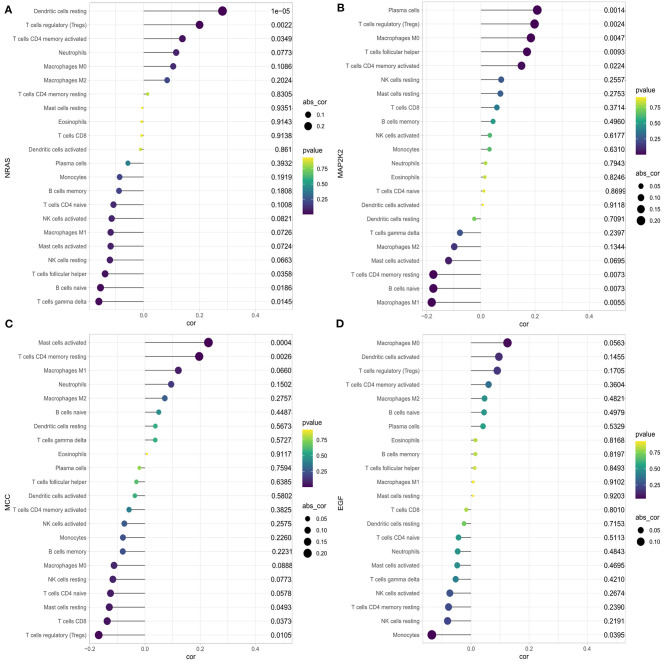
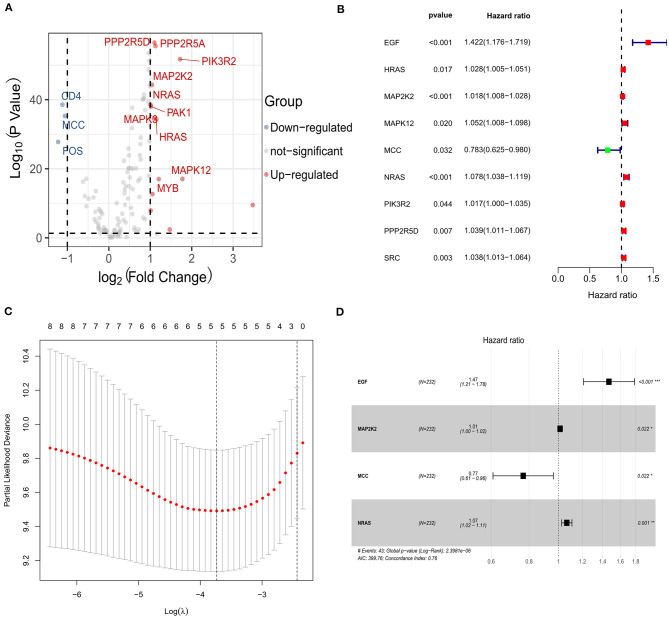
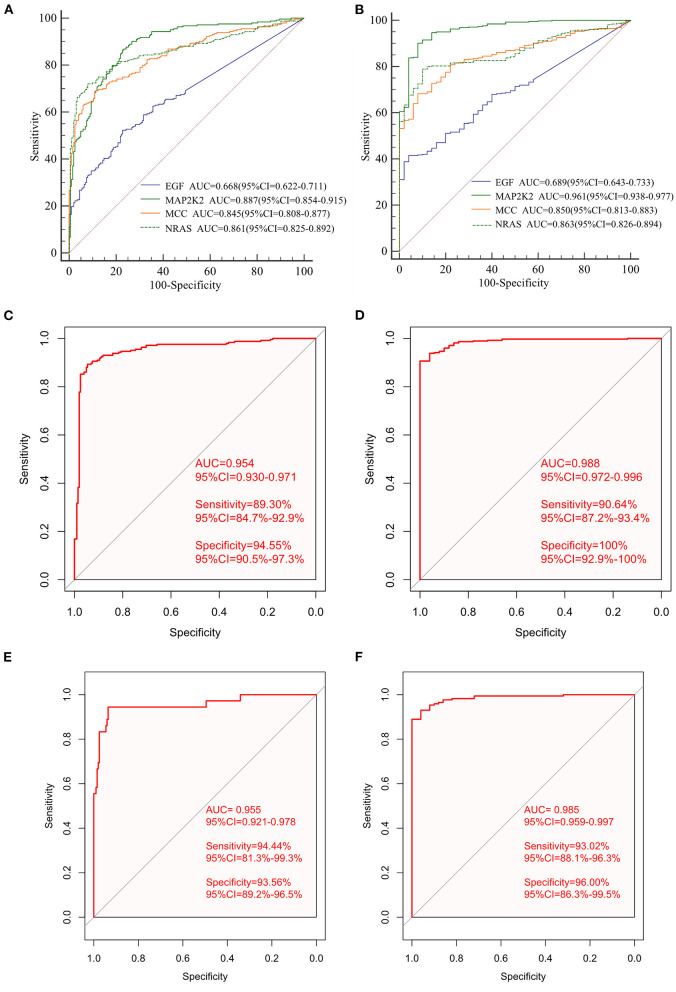
The purpose of this study was to develop and validate a novel immune checkpoint-related gene signature for prediction of overall survival (OS) in hepatocellular carcinoma (HCC). mRNA expression profiles and clinical follow-up information were obtained in the International Cancer Genome Consortium database. An external dataset from The Cancer Genome Atlas (TCGA) Liver Hepatocellular Carcinoma database was used to validate the results. The univariate and multivariate Cox regression analyses were performed based on the differentially expressed genes. We generated a four-mRNA signature to predict patient survival. Furthermore, the reliability and validity were validated in TCGA cohort. An integrated bioinformatics approach was performed to evaluate its diagnostic and prognostic value. A four-gene (epidermal growth factor, mutated in colorectal cancer, mitogen-activated protein kinase kinase 2, and NRAS proto-oncogene, GTPase) signature was built to classify patients into two risk groups using a risk score with different OS in two cohorts (all < 0.0001). Multivariate regression analysis demonstrated the signature was an independent predictor of HCC. Furthermore, the signature presented an excellent diagnostic power in differentiating HCC and adjacent tissues. Immune cell infiltration analysis revealed that the signature was associated with a number of immune cell subtypes. We identified a four-immune checkpoint-related gene signature as a robust biomarker with great potential for clinical application in risk stratification and OS prediction in HCC patients and could be a potential indicator of immunotherapy in HCC. The diagnostic signature had been validated to accurately distinguish HCC from adjacent tissues.
本研究的目的是开发并验证一种新型免疫检查点相关基因特征,用于预测肝细胞癌(HCC)的总生存期(OS)。在国际癌症基因组联盟数据库中获取了mRNA表达谱和临床随访信息。使用来自癌症基因组图谱(TCGA)肝细胞癌数据库的外部数据集来验证结果。基于差异表达基因进行单变量和多变量Cox回归分析。我们生成了一个四mRNA特征来预测患者生存。此外,在TCGA队列中验证了其可靠性和有效性。采用综合生物信息学方法评估其诊断和预后价值。构建了一个四基因(表皮生长因子、结直肠癌中突变、丝裂原活化蛋白激酶激酶2和NRAS原癌基因、GTP酶)特征,使用风险评分将患者分为两个风险组,两个队列中的总生存期均不同(均<0.0001)。多变量回归分析表明该特征是HCC的独立预测因子。此外,该特征在区分HCC和相邻组织方面具有出色的诊断能力。免疫细胞浸润分析显示该特征与多种免疫细胞亚型相关。我们确定了一个四免疫检查点相关基因特征作为一种强大的生物标志物,在HCC患者的风险分层和OS预测中具有巨大的临床应用潜力,并且可能是HCC免疫治疗的一个潜在指标。该诊断特征已被验证能够准确区分HCC和相邻组织。