Huang Meng, Tetreault Tyler A, Vaishnav Avani, York Philip J, Staub Blake N
Department of Neurosurgery, University of Miami, Miami, Florida, USA.
Department of Orthopedic Surgery, University of Colorado, Aurora, Colorado, USA.
Ann Transl Med. 2021 Jan;9(1):86. doi: 10.21037/atm-2020-ioi-07.
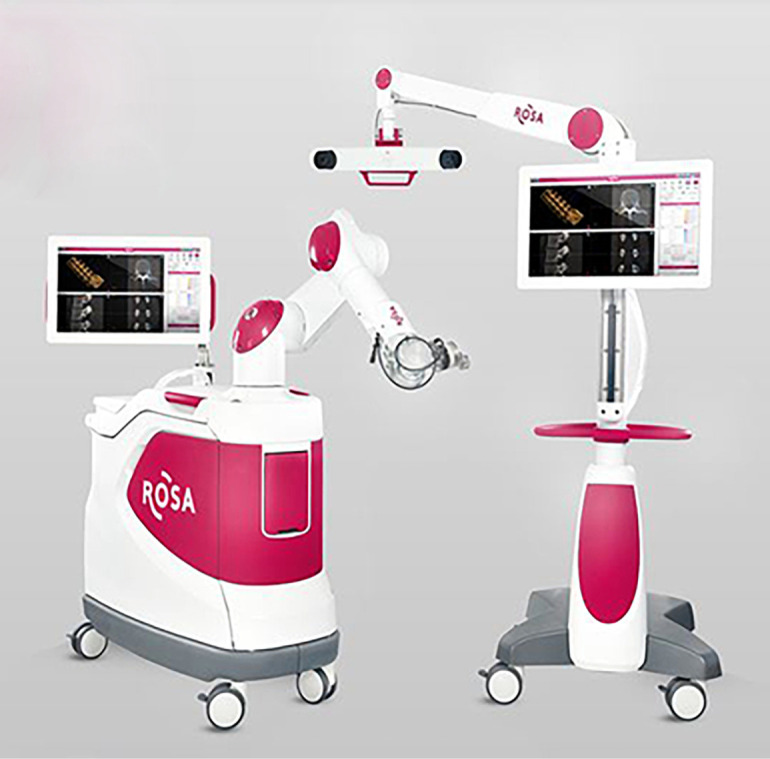
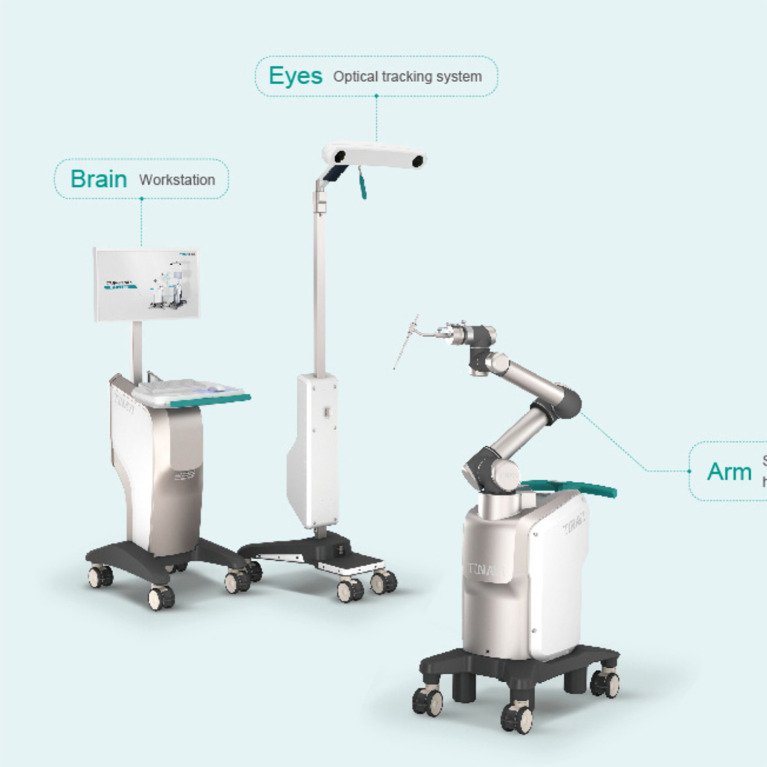
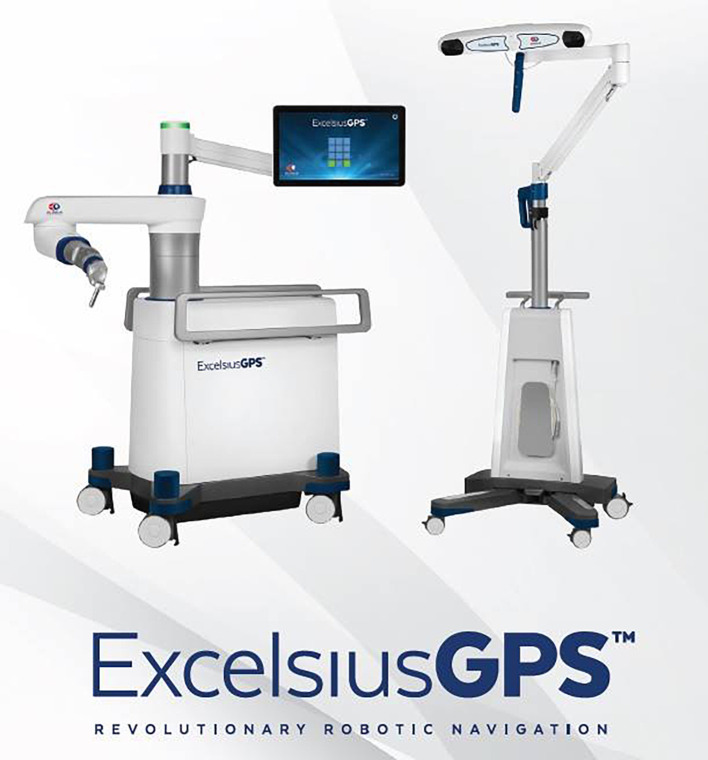
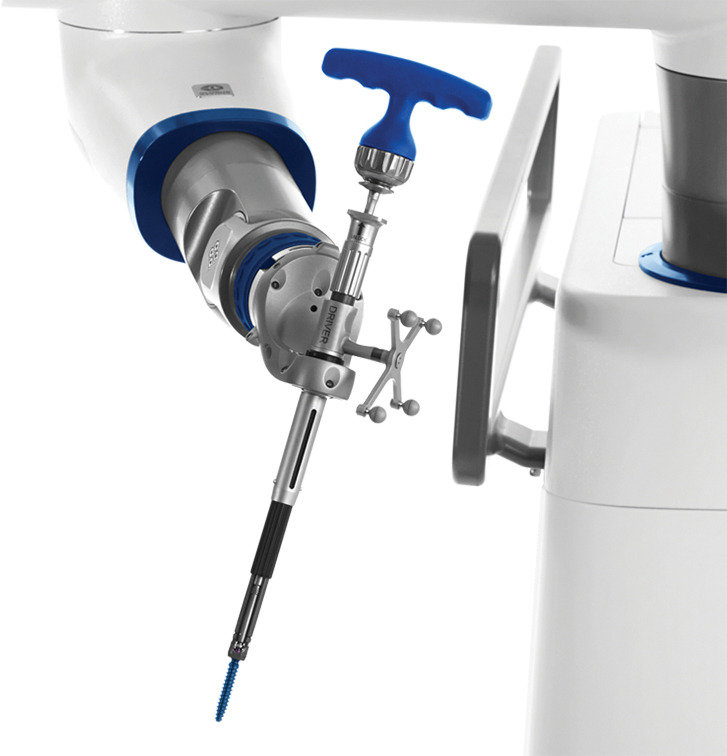
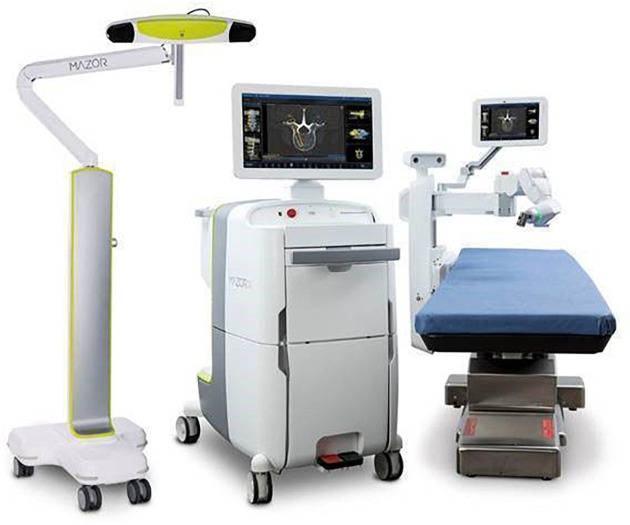
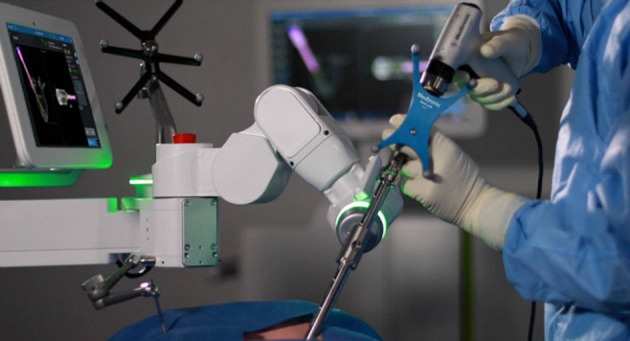
The advent and widespread adoption of pedicle screw instrumentation prompted the need for image guidance in spine surgery to improve accuracy and safety. Although the conventional method, fluoroscopy, is readily available and inexpensive, concerns regarding radiation exposure and the drive to provide better visual guidance spurred the development of computer-assisted navigation. Contemporaneously, a non-navigated robotic guidance platform was also introduced as a competing modality for pedicle screw placement. Although the robot could provide high precision trajectory guidance by restricting four of the six degrees of freedom (DOF), the lack of real-time depth control and high capital acquisition cost diminished its popularity, while computer-assisted navigation platforms became increasingly sophisticated and accepted. The recent integration of real-time 3D navigation with robotic platforms has resulted in a resurgence of interest in robotics in spine surgery with the recent introduction of numerous navigated robotic platforms. The currently available navigated robotic spine surgery platforms include the ROSA Spine Robot (Zimmer Biomet Robotics formerly Medtech SA, Montpellier, France), ExcelsiusGPS (Globus Medical, Inc., Audubon, PA, USA), Mazor X spine robot (Medtronic Navigation Louisville, CO; Medtronic Spine, Memphis, TN; formerly Mazor Robotics, Caesarea, Israel) and TiRobot (TINAVI Medical Technologies, Beijing, China). Here we provide an overview of these navigated spine robotic platforms, existing applications, and potential future avenues of implementation.
椎弓根螺钉内固定技术的出现及广泛应用促使脊柱手术中需要图像引导以提高准确性和安全性。尽管传统方法——荧光透视法容易获得且成本低廉,但对辐射暴露的担忧以及提供更好视觉引导的需求推动了计算机辅助导航技术的发展。与此同时,一种非导航机器人引导平台也作为椎弓根螺钉置入的竞争方式被引入。尽管该机器人可以通过限制六个自由度中的四个来提供高精度的轨迹引导,但缺乏实时深度控制和高昂的购置成本降低了其受欢迎程度,而计算机辅助导航平台则变得越来越成熟并被广泛接受。实时三维导航与机器人平台的最新整合使得脊柱手术中对机器人技术的兴趣再度兴起,最近出现了众多导航机器人平台。目前可用的导航机器人脊柱手术平台包括ROSA脊柱机器人(齐默尔生物梅德机器人公司,前身为法国蒙彼利埃的美迪泰克公司)、ExcelsiusGPS(美国宾夕法尼亚州奥杜邦的Globus Medical公司)、Mazor X脊柱机器人(美国科罗拉多州路易斯维尔的美敦力导航公司;美国田纳西州孟菲斯的美敦力脊柱公司;前身为以色列凯撒利亚的Mazor Robotics公司)和天玑机器人(中国北京的天智航医疗科技股份有限公司)。在此,我们对这些导航脊柱机器人平台、现有应用以及潜在的未来实施途径进行概述。