
2009年至2019年韩国甲型肝炎的全国血清流行率。
Nationwide seroprevalence of hepatitis A in South Korea from 2009 to 2019.
作者信息
Lee Deog-Yong, Chae Su-Jin, Cho Seung-Rye, Choi Wooyoung, Kim Chang-Ki, Han Myung-Guk
机构信息
Division of Viral Diseases, Center for Laboratory Control of Infectious Diseases, Korea Centers for Disease Control and Prevention, Osong, Republic of Korea.
Seoul Clinical Laboratories, Yongin, Republic of Korea.
出版信息
PLoS One. 2021 Feb 8;16(2):e0245162. doi: 10.1371/journal.pone.0245162. eCollection 2021.
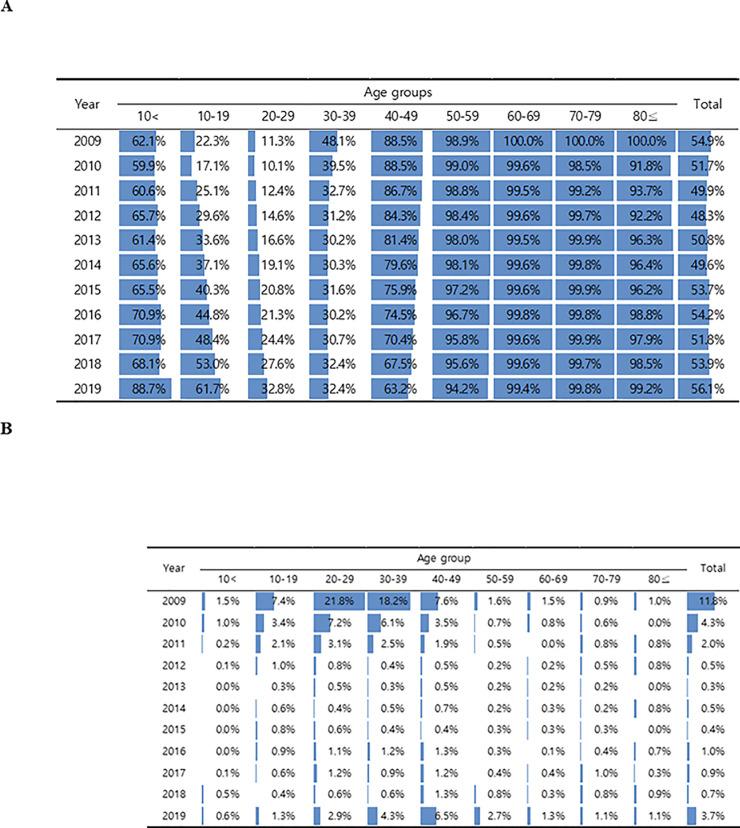
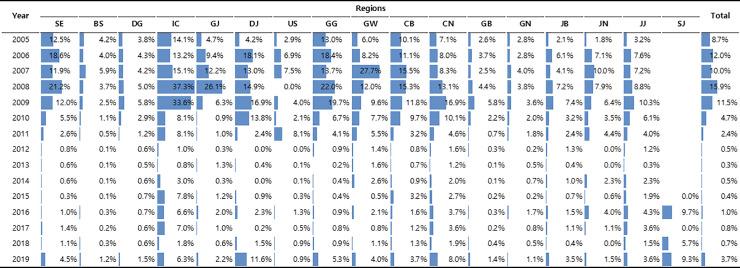
Hepatitis A, an acute type of hepatitis caused by the hepatitis A virus, occurs worldwide. Following the 2009 hepatitis A epidemic in South Korea, patient outbreak reports were collectively converted to an "all-patient report" in 2011, and national immunization programs were introduced for children in 2015. In this study, we aimed to analyze the changes and characteristics of hepatitis A antibody titers in South Korea following the epidemic. The results of hepatitis A antibody tests performed at clinical laboratories from 2009 to 2019 were analyzed based on year, age, region, sex, and medical institution. The average 2009-2018 positive anti-hepatitis A virus immunoglobulin G rate was 51.8%, but it increased (56.06%) in 2019. Significantly different antibody-positive rates were observed based on age: <10 years, 54.5%; 20-29 years, 19.5%; ≥50 years, almost 100%. The positive rate of individuals in their teens and 20s gradually increased, whereas that of those in their 30s and 40s gradually decreased. Males had higher antibody-positive rates than females, and samples from higher-level general hospitals exhibited higher antibody rates. The positive anti-hepatitis A virus immunoglobulin M rates gradually decreased after 2009 and were <1% after 2012. However, a high positive rate of 3.69% was observed in 2019 when there was an epidemic. Anti-hepatitis A virus immunoglobulin G-positive rates were similar throughout the year, but the anti-hepatitis A virus immunoglobulin M-positive rates increased from January, peaked in April, and decreased from July, exhibiting distinct seasonality. This is considered to be related to groundwater pollution during the spring drought season. The introduction of the "all-patient report" and national vaccination program for children has had an effective influence on hepatitis A management. However, for hepatitis A prevention, policy considerations for high-risk age groups with low antibody-positive rates will be necessary.
甲型肝炎是一种由甲型肝炎病毒引起的急性肝炎,在全球范围内均有发生。在2009年韩国甲型肝炎疫情之后,患者疫情报告于2011年统一转换为“全患者报告”,并于2015年针对儿童推行了国家免疫计划。在本研究中,我们旨在分析疫情后韩国甲型肝炎抗体滴度的变化及特征。基于年份、年龄、地区、性别和医疗机构,对2009年至2019年临床实验室进行的甲型肝炎抗体检测结果进行了分析。2009年至2018年抗甲型肝炎病毒免疫球蛋白G平均阳性率为51.8%,但在2019年有所上升(56.06%)。基于年龄观察到显著不同的抗体阳性率:<10岁,54.5%;20 - 29岁,19.5%;≥50岁,几乎100%。青少年和20多岁人群的阳性率逐渐上升,而30多岁和40多岁人群的阳性率逐渐下降。男性的抗体阳性率高于女性,来自高级综合医院的样本抗体率更高。抗甲型肝炎病毒免疫球蛋白M阳性率在2009年后逐渐下降,2012年后<1%。然而,在2019年疫情期间观察到较高的阳性率,为3.69%。抗甲型肝炎病毒免疫球蛋白G阳性率全年相似,但抗甲型肝炎病毒免疫球蛋白M阳性率从1月开始上升,4月达到峰值,7月开始下降,呈现出明显的季节性。这被认为与春季干旱季节的地下水污染有关。“全患者报告”和针对儿童的国家疫苗接种计划的推行对甲型肝炎管理产生了有效影响。然而,对于甲型肝炎的预防,有必要针对抗体阳性率较低的高危年龄组进行政策考量。


 Zotero 插件