Department of Geriatrics, Healthy Ageing Research Centre, Medical University of Lodz, 92-115 Lodz, Poland.
Department of Conservative Nursing, Medical University of Lodz, 90-251 Lodz, Poland.
Nutrients. 2021 Feb 4;13(2):515. doi: 10.3390/nu13020515.
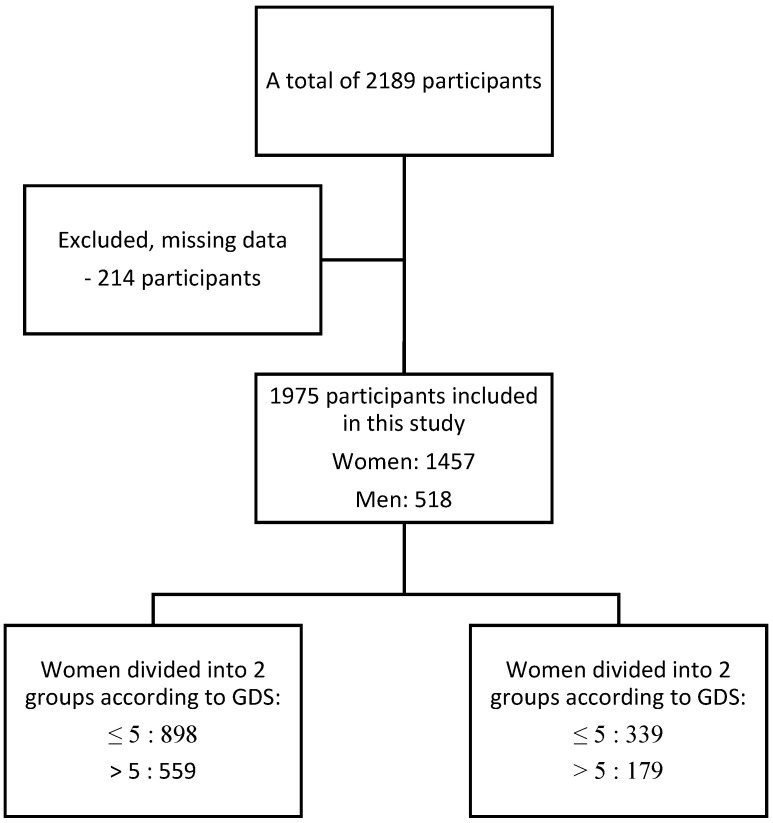
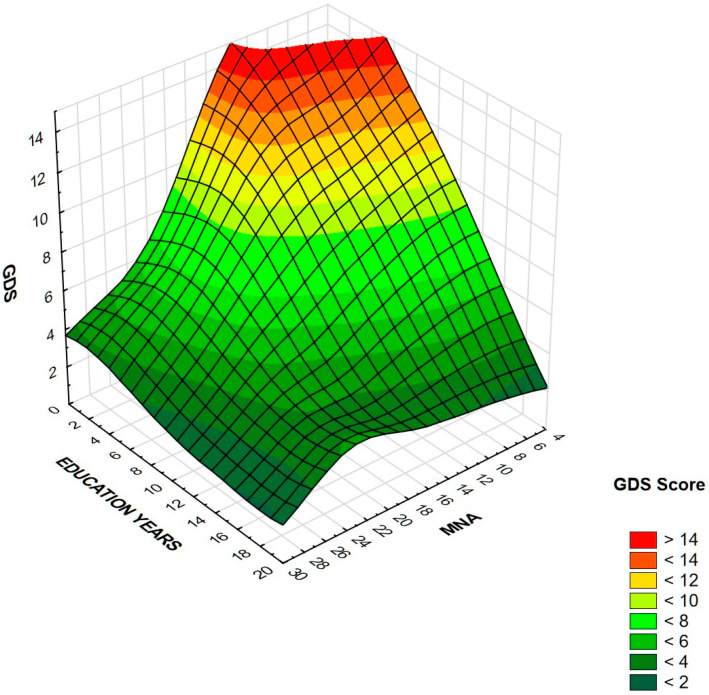
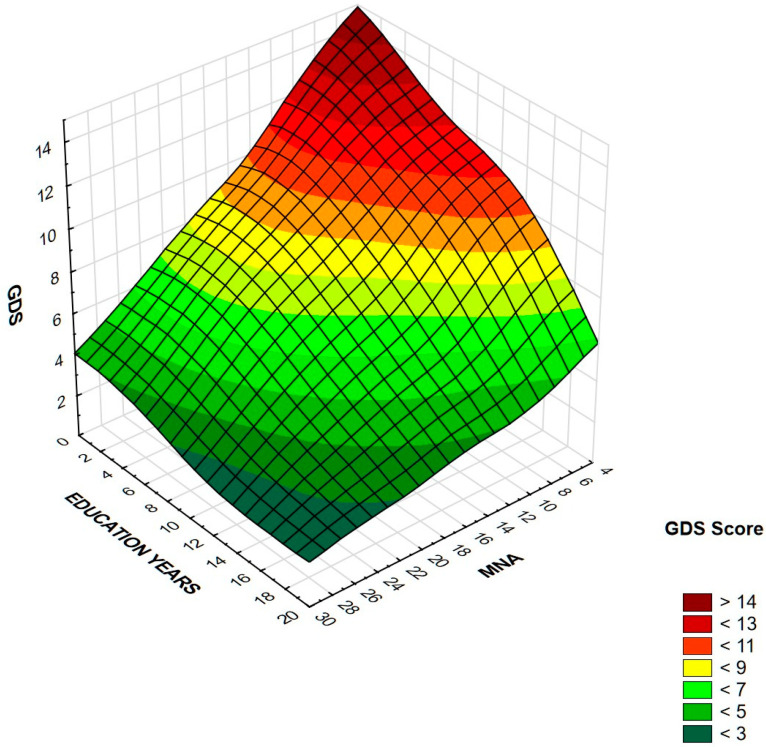
The study analyzes the relationship between nutritional status and depression symptoms severity in the older population. A total of 1975 older outpatients (1457 women and 518 men, median age 75) were included in the study. Depression symptoms severity was assessed using the Geriatric Depression Scale (GDS). Participants were divided into two subgroups according to GDS score. Group A: 0-5 points-without depression symptoms (1237, W:898, M:339), and group B: 6-15 points-with depression symptoms (738, W:559, M:179). The nutritional status of the patients was assessed with Mini Nutritional Assessment (MNA) and basic anthropometric variables (waist, hips, calf circumferences, body mass index (BMI), waist to hip ratio (WHR), and waist to height ratio (WHtR)). Education years and chronic diseases were also noted. Women with higher depression symptoms severity had significantly lower MNA scores [A: 26.5 (24-28) (median (25%-75% quartiles)) vs. B:23 (20.5-26)], shorter education time [A:12 (8-16) vs. B:7 (7-12)], smaller calf circumference [A:36 (33-38) vs. B: 34 (32-37)], and higher WHtR score [A:57.4 (52.3-62.9) vs. B:58.8 (52.1-65.6)]. Men with depression symptoms had lower MNA scores [A:26.5 (24.5-28) vs. B:24 (20.5-26.5)], shorter education [A:12 (9.5-16), B:10 (7-12)], and smaller calf circumference [A:37 (34-39), B:36 (33-38)]. In the model of stepwise multiple regression including age, years of education, anthropometric variables, MNA and concomitant diseases nutritional assessment, and education years were the only independent variables predicting severity of depression symptoms both in women and men. Additionally, in the female group, odds were higher with higher WHtR. Results obtained in the study indicate a strong relationship between proper nutritional status and education level with depression symptoms severity in older women and men.
本研究分析了营养状况与老年人群抑郁症状严重程度之间的关系。共纳入 1975 名老年门诊患者(女性 1457 名,男性 518 名,中位年龄 75 岁)。使用老年抑郁量表(GDS)评估抑郁症状严重程度。根据 GDS 评分将参与者分为两组。A 组:0-5 分,无抑郁症状(1237 人,女性 898 人,男性 339 人);B 组:6-15 分,有抑郁症状(738 人,女性 559 人,男性 179 人)。使用微型营养评估(MNA)和基本人体测量学变量(腰围、臀围、小腿围、体重指数(BMI)、腰臀比(WHR)和腰高比(WHtR))评估患者的营养状况。还记录了受教育年限和慢性疾病。抑郁症状严重程度较高的女性 MNA 评分显著较低[ A:26.5(24-28)(中位数(25%-75%四分位数))vs. B:23(20.5-26)],受教育时间较短[A:12(8-16)vs. B:7(7-12)],小腿围较小[A:36(33-38)vs. B:34(32-37)],WHtR 评分较高[A:57.4(52.3-62.9)vs. B:58.8(52.1-65.6)]。有抑郁症状的男性 MNA 评分较低[A:26.5(24.5-28)vs. B:24(20.5-26.5)],受教育程度较低[A:12(9.5-16),B:10(7-12)],小腿围较小[A:37(34-39),B:36(33-38)]。在逐步多元回归模型中,包括年龄、受教育年限、人体测量学变量、MNA 和并存疾病营养评估,受教育年限是女性和男性抑郁症状严重程度的唯一独立预测因素。此外,在女性组中,WHtR 越高,发生的几率越高。研究结果表明,在老年女性和男性中,适当的营养状况和教育水平与抑郁症状严重程度之间存在很强的关系。