Ye Zhongde, Gould Timothy M, Zhang Huimin, Jin Jun, Weyand Cornelia M, Goronzy Jörg J
From the Department of Medicine, Division of Immunology and Rheumatology, Stanford University, Stanford, CA, 94305, USA.
Department of Medicine, Veterans Affairs Palo Alto Health Care System, Palo Alto, CA, 94306, USA.
NPJ Aging Mech Dis. 2021 Feb 8;7(1):4. doi: 10.1038/s41514-021-00056-9.
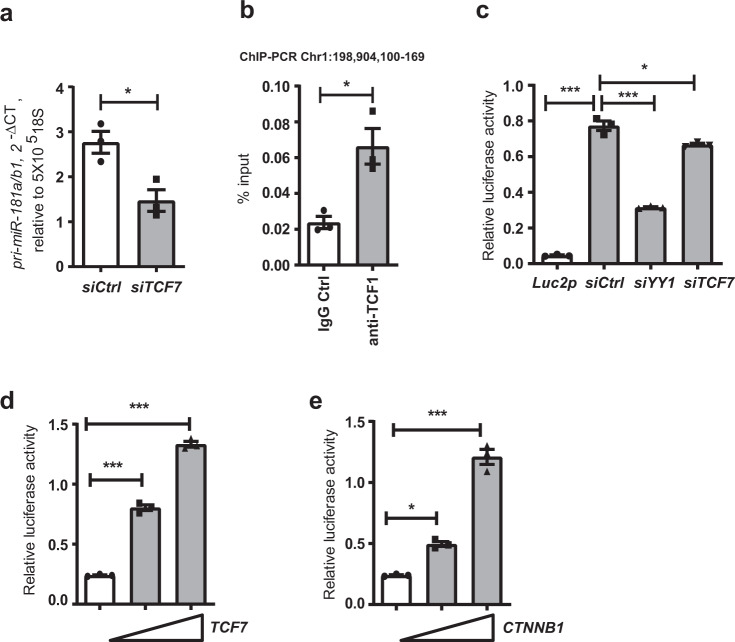
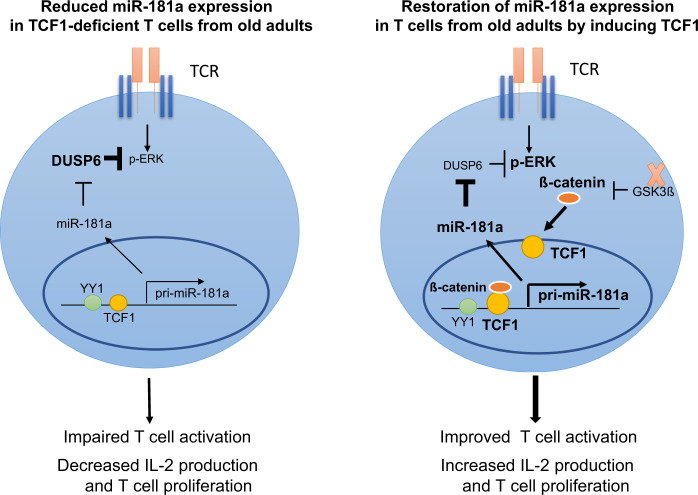
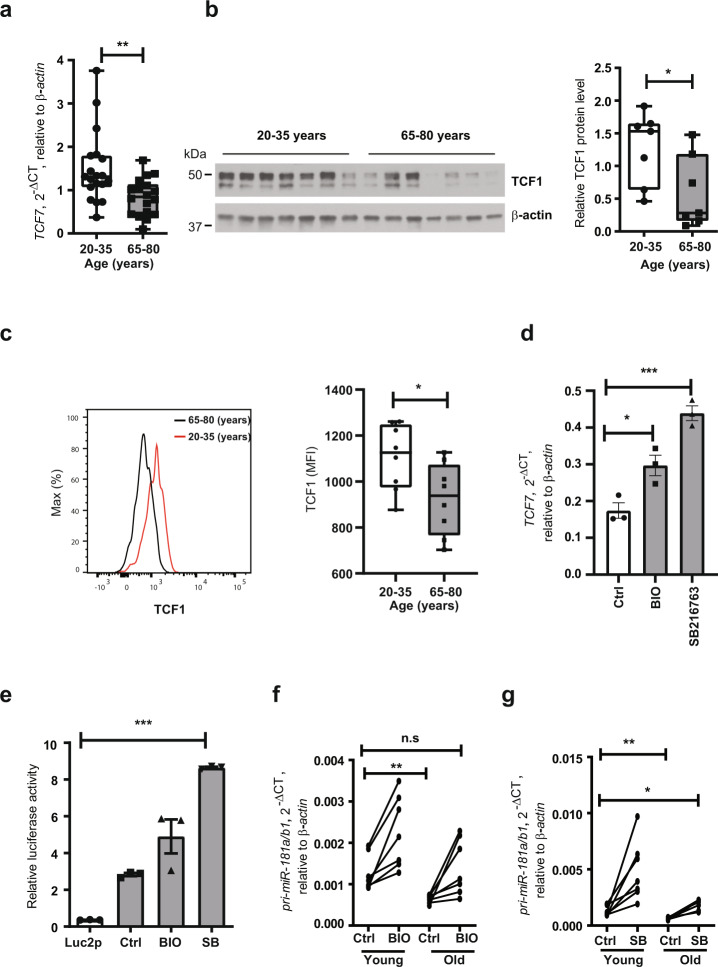
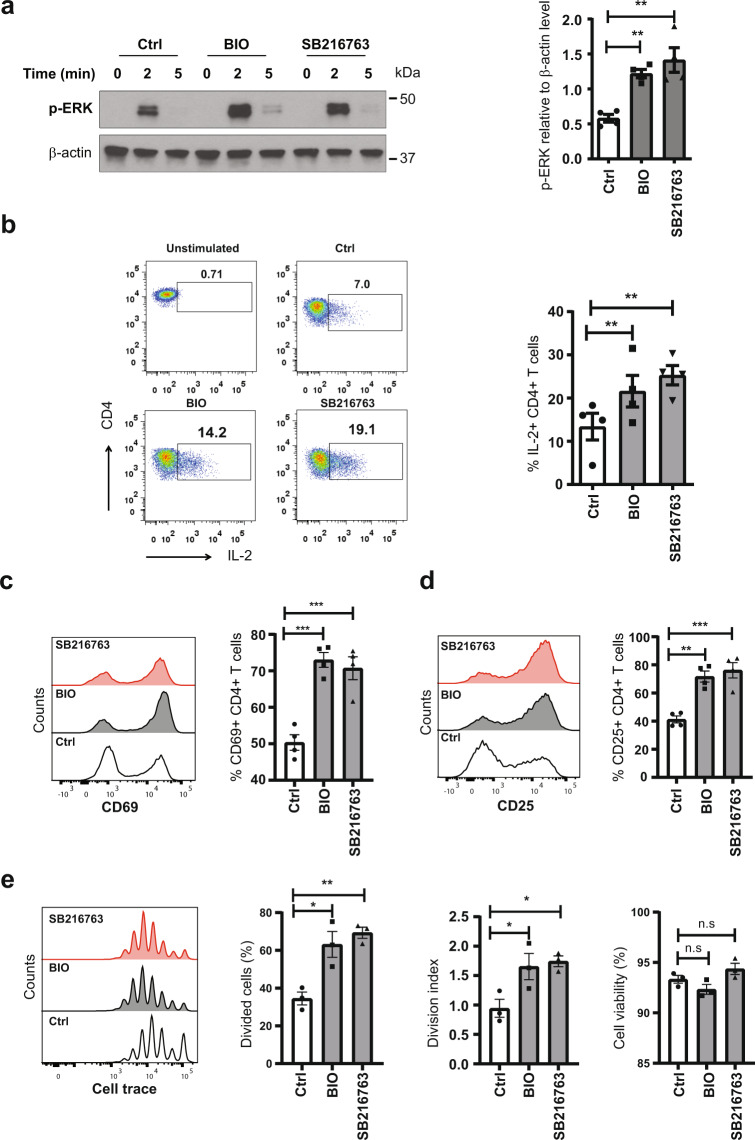
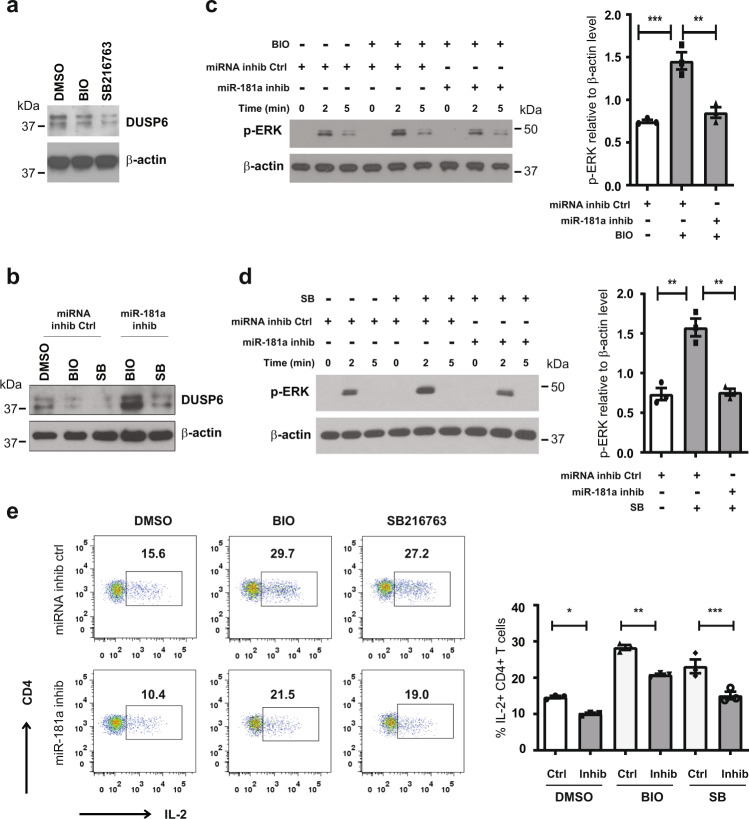
MicroRNAs play an important role in the regulation of T cell development, activation, and differentiation. One of the most abundant microRNAs in lymphocytes is miR-181a, which controls T cell receptor (TCR) activation thresholds in thymic selection as well as in peripheral T cell responses. We previously found that miR-181a levels decline in T cells in the elderly. In this study, we identified TCF1 as a transcriptional regulator of pri-miR-181a. A decline in TCF1 levels in old individuals accounted for the reduced miR-181a expression impairing TCR signaling. Inhibition of GSK3ß restored expression of miR-181a by inducing TCF1 in T cells from old adults. GSK3ß inhibition enhanced TCR signaling to increase downstream expression of activation markers and production of IL-2. The effect involved the upregulation of miR-181a and the inhibition of DUSP6 expression. Thus, inhibition of GSK3ß can restore responses of old T cells by inducing miR-181a expression through TCF1.
微小RNA在T细胞发育、激活和分化的调控中发挥着重要作用。淋巴细胞中最丰富的微小RNA之一是miR-181a,它在胸腺选择以及外周T细胞反应中控制T细胞受体(TCR)的激活阈值。我们之前发现,老年人T细胞中的miR-181a水平会下降。在本研究中,我们确定TCF1是pri-miR-181a的转录调节因子。老年个体中TCF1水平的下降导致miR-181a表达降低,从而损害TCR信号传导。抑制糖原合成酶激酶3β(GSK3β)可通过诱导老年成年人T细胞中的TCF1来恢复miR-181a的表达。抑制GSK3β可增强TCR信号传导,以增加激活标志物的下游表达和白细胞介素-2的产生。该效应涉及miR-181a的上调和双特异性磷酸酶6(DUSP6)表达的抑制。因此,抑制GSK3β可通过TCF1诱导miR-181a表达来恢复老年T细胞的反应。