Li Guang Y, Zhou Yun, Ying Ruo S, Shi Lei, Cheng Yong Q, Ren Jun P, Griffin Jeddidiah W D, Jia Zhan S, Li Chuan F, Moorman Jonathan P, Yao Zhi Q
Center for Inflammation, Infectious Disease and Immunity, James H. Quillen College of Medicine, East Tennessee State University, Johnson City, TN.
Hepatology. 2015 Apr;61(4):1163-73. doi: 10.1002/hep.27634. Epub 2015 Feb 4.
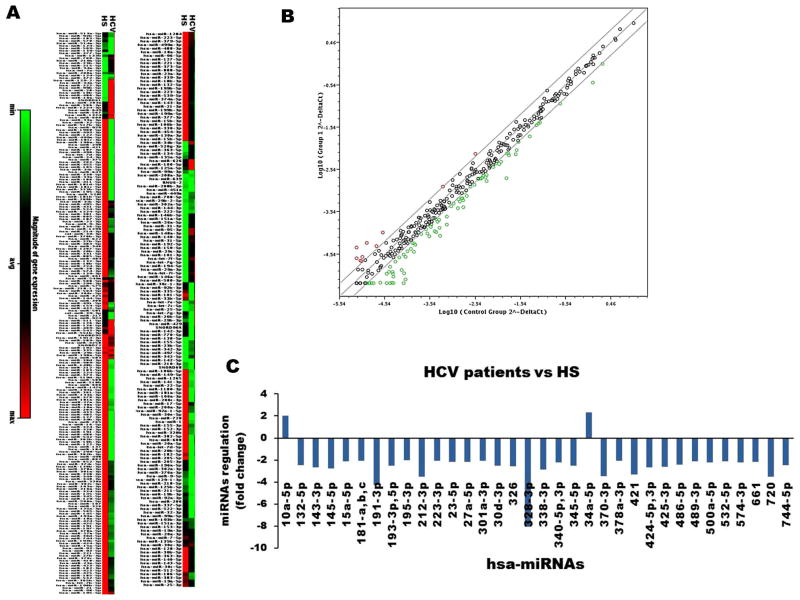
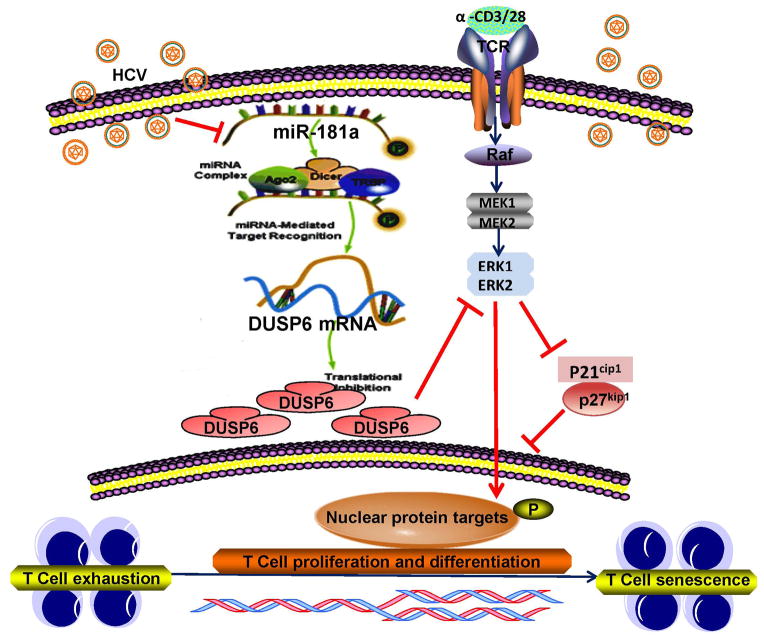
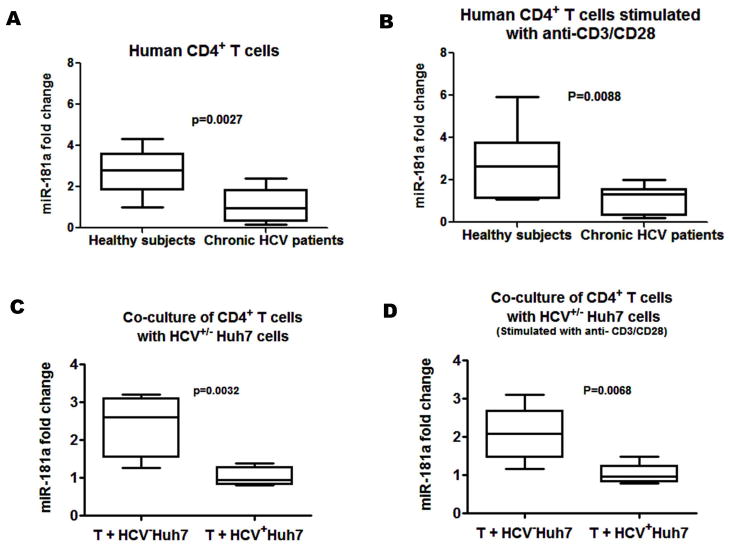
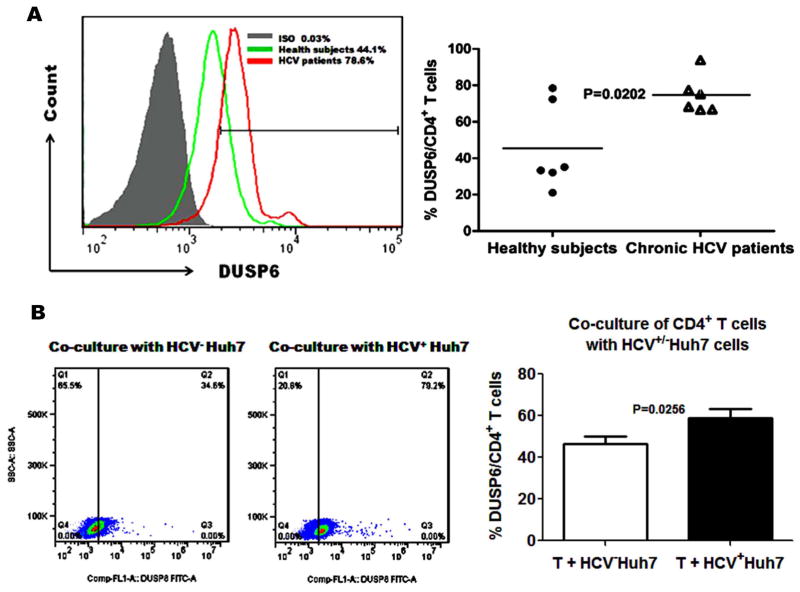
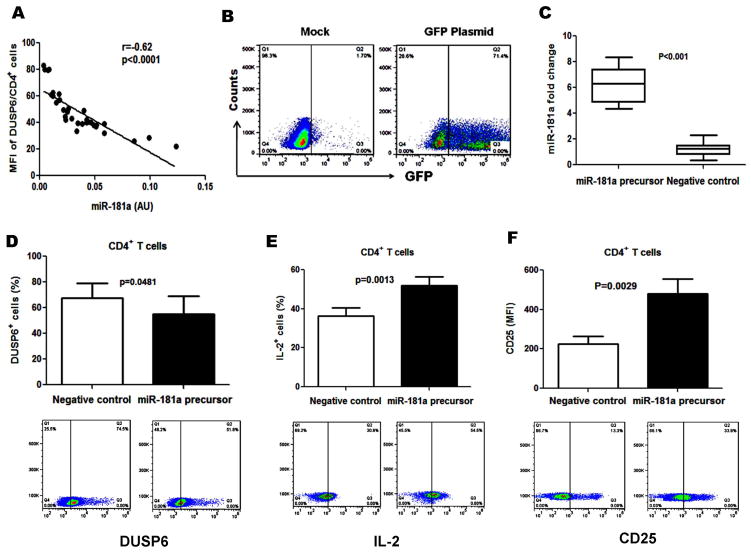
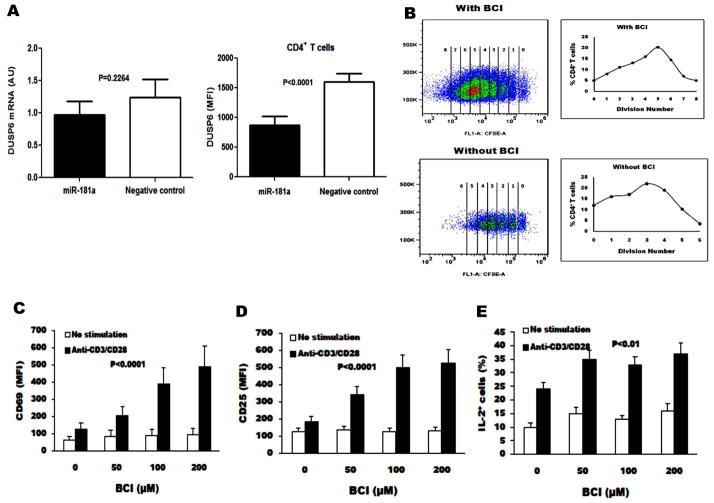
T cells play a crucial role in viral clearance or persistence; however, the precise mechanisms that control their responses during viral infection remain incompletely understood. MicroRNA (miR) has been implicated as a key regulator controlling diverse biological processes through posttranscriptional repression. Here, we demonstrate that hepatitis C virus (HCV)-mediated decline of miR-181a expression impairs CD4(+) T-cell responses through overexpression of dual specific phosphatase 6 (DUSP6). Specifically, a significant decline of miR-181a expression along with overexpression of DUSP6 was observed in CD4(+) T cells from chronically HCV-infected individuals compared to healthy subjects, and the levels of miR-181a loss were found to be negatively associated with the levels of DUSP6 overexpression in these cells. Importantly, reconstitution of miR-181a or blockade of DUSP6 expression in CD4(+) T cells led to improved T-cell responses including enhanced CD25 and CD69 expression, increased interleukin-2 expression, and improved proliferation of CD4(+) T cells derived from chronically HCV-infected individuals.
Since a decline of miR-181a concomitant with DUSP6 overexpression is the signature marker for age-associated T-cell senescence, these findings provide novel mechanistic insights into HCV-mediated premature T-cell aging through miR-181a-regulated DUSP6 signaling and reveal new targets for therapeutic rejuvenation of impaired T-cell responses during chronic viral infection.
T细胞在病毒清除或持续存在中起关键作用;然而,病毒感染期间控制其反应的精确机制仍未完全了解。微小RNA(miR)已被认为是通过转录后抑制控制多种生物学过程的关键调节因子。在此,我们证明丙型肝炎病毒(HCV)介导的miR-181a表达下降通过双特异性磷酸酶6(DUSP6)的过表达损害CD4(+) T细胞反应。具体而言,与健康受试者相比,在慢性HCV感染个体的CD4(+) T细胞中观察到miR-181a表达显著下降以及DUSP6过表达,并且发现这些细胞中miR-181a缺失水平与DUSP6过表达水平呈负相关。重要的是,在CD4(+) T细胞中重建miR-181a或阻断DUSP6表达导致T细胞反应改善,包括增强的CD25和CD69表达、增加的白细胞介素-2表达以及慢性HCV感染个体来源的CD4(+) T细胞增殖改善。
由于miR-181a下降与DUSP6过表达同时出现是与年龄相关的T细胞衰老的标志性标志物,这些发现为HCV介导的通过miR-181a调节的DUSP6信号通路导致的T细胞过早衰老提供了新的机制见解,并揭示了慢性病毒感染期间受损T细胞反应治疗性恢复活力的新靶点。