Centro de Ciencias Genómicas, Universidad Nacional Autonóma de México, Mexico, Mexico.
Department of Integrative Biology, University of California, Berkeley, CA, USA.
ISME J. 2021 Jul;15(7):2092-2106. doi: 10.1038/s41396-021-00907-z. Epub 2021 Feb 8.
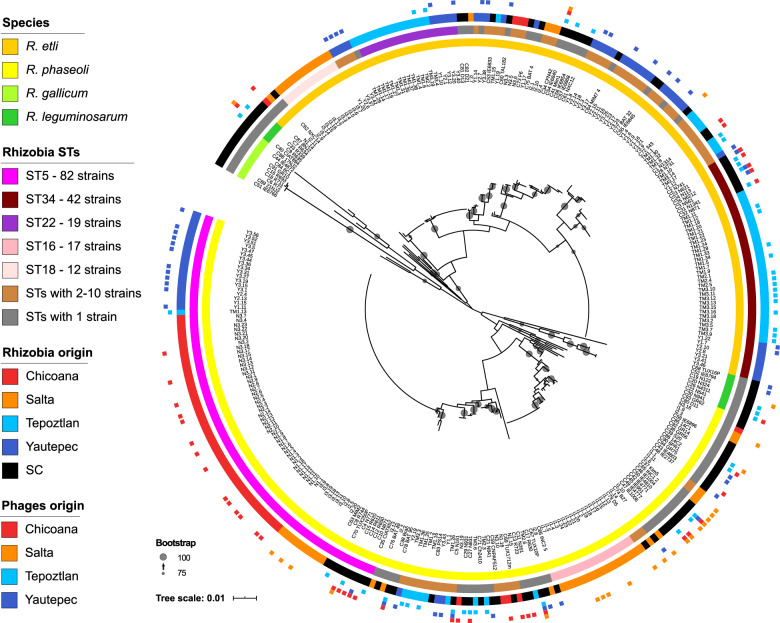
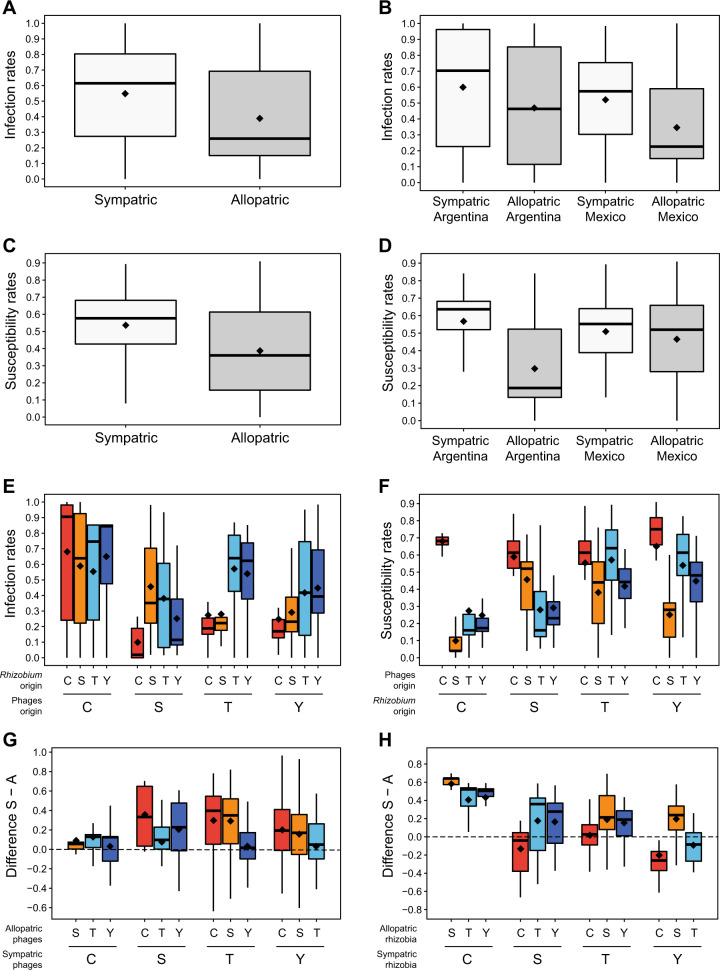
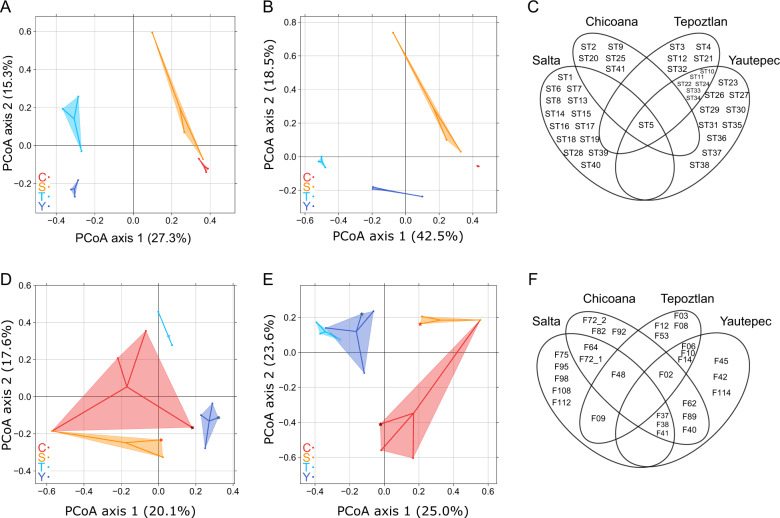
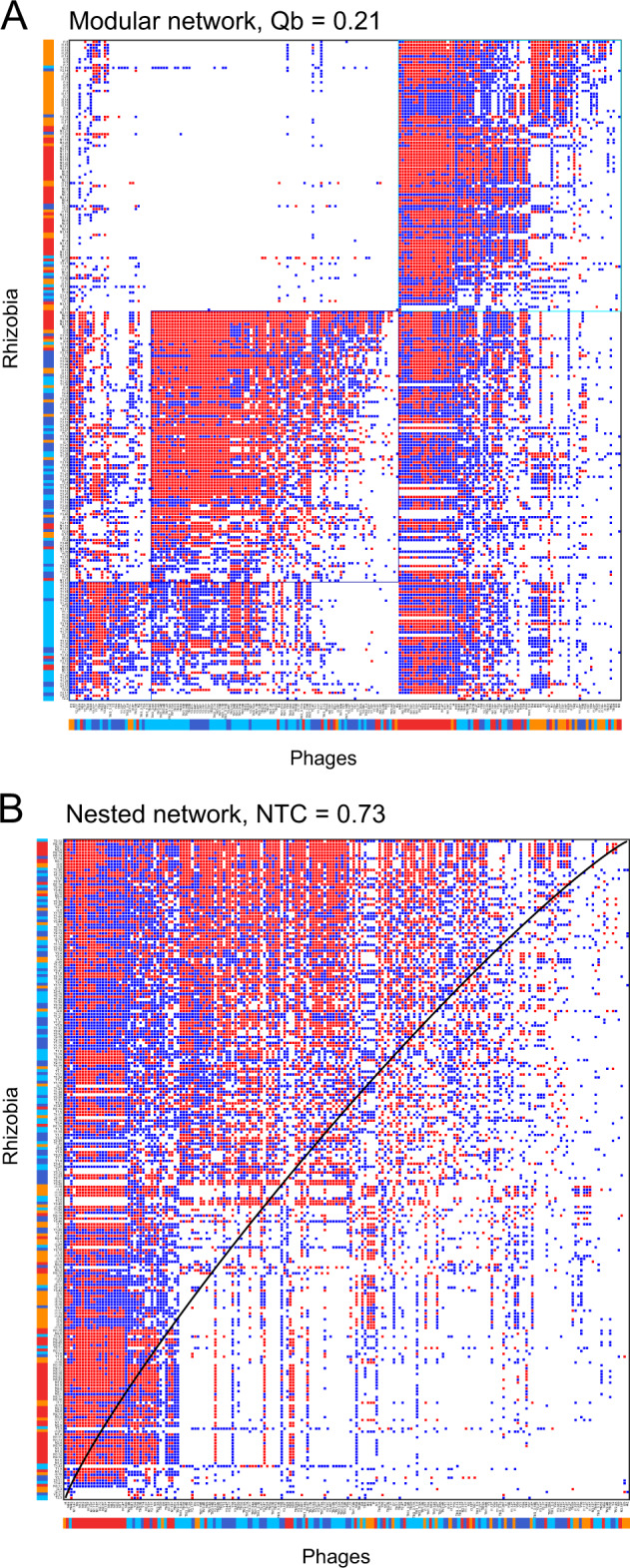
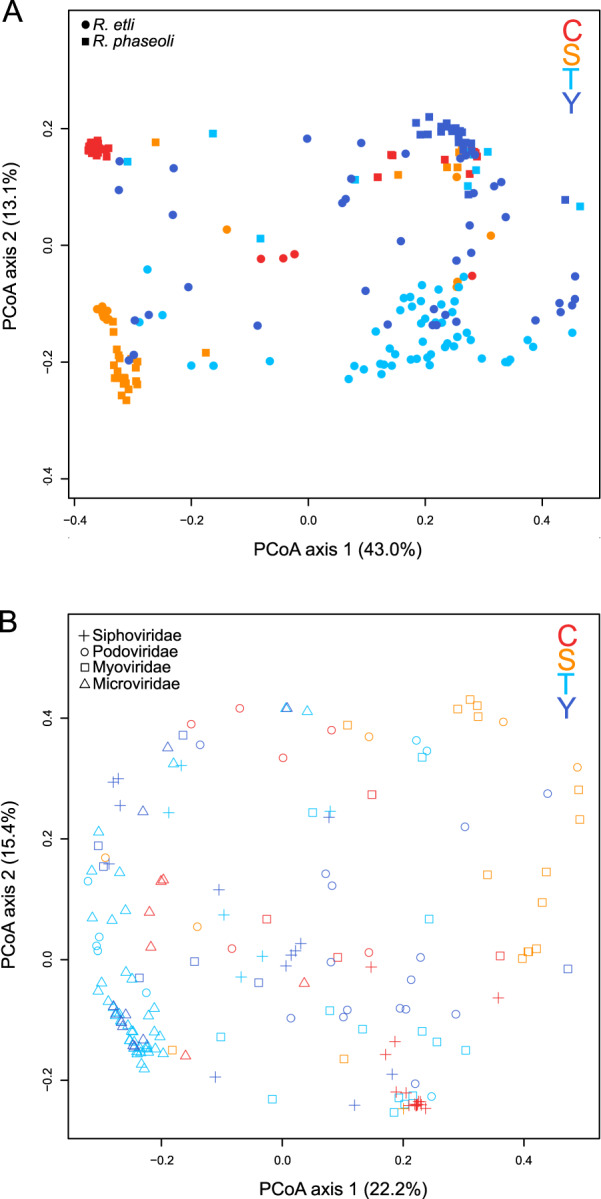
Bacteriophages play significant roles in the composition, diversity, and evolution of bacterial communities. Despite their importance, it remains unclear how phage diversity and phage-host interactions are spatially structured. Local adaptation may play a key role. Nitrogen-fixing symbiotic bacteria, known as rhizobia, have been shown to locally adapt to domesticated common bean at its Mesoamerican and Andean sites of origin. This may affect phage-rhizobium interactions. However, knowledge about the diversity and coevolution of phages with their respective Rhizobium populations is lacking. Here, through the study of four phage-Rhizobium communities in Mexico and Argentina, we show that both phage and host diversity is spatially structured. Cross-infection experiments demonstrated that phage infection rates were higher overall in sympatric rhizobia than in allopatric rhizobia except for one Argentinean community, indicating phage local adaptation and host maladaptation. Phage-host interactions were shaped by the genetic identity and geographic origin of both the phage and the host. The phages ranged from specialists to generalists, revealing a nested network of interactions. Our results suggest a key role of local adaptation to resident host bacterial communities in shaping the phage genetic and phenotypic composition, following a similar spatial pattern of diversity and coevolution to that in the host.
噬菌体在细菌群落的组成、多样性和进化中起着重要作用。尽管它们很重要,但噬菌体多样性和噬菌体-宿主相互作用如何在空间上形成结构仍然不清楚。局部适应可能起着关键作用。固氮共生细菌,称为根瘤菌,已被证明在中美洲和安第斯山脉的起源地对驯化的普通豆进行局部适应。这可能会影响噬菌体-根瘤菌的相互作用。然而,关于噬菌体与其各自的根瘤菌种群的多样性和共同进化的知识还很缺乏。在这里,通过对墨西哥和阿根廷的四个噬菌体-根瘤菌群落的研究,我们表明噬菌体和宿主多样性都是空间结构的。交叉感染实验表明,除了一个阿根廷群落外,在同域根瘤菌中的噬菌体感染率总体上高于异域根瘤菌,这表明噬菌体的局部适应和宿主的不适应。噬菌体-宿主相互作用受到噬菌体和宿主的遗传身份和地理起源的影响。噬菌体的范围从专性噬菌体到非专性噬菌体,揭示了相互作用的嵌套网络。我们的研究结果表明,对驻留宿主细菌群落的局部适应在塑造噬菌体的遗传和表型组成方面起着关键作用,遵循与宿主相似的多样性和共同进化的空间模式。