Barbosa-Alfaro Deyanira, Andrés-Guerrero Vanessa, Fernandez-Bueno Ivan, García-Gutiérrez María Teresa, Gil-Alegre Esther, Molina-Martínez Irene Teresa, Pastor-Jimeno José Carlos, Herrero-Vanrell Rocío, Bravo-Osuna Irene
Innovation, Therapy and Pharmaceutical Development in Ophthalmology (InnOftal) Research Group, UCM 920415, Complutense University of Madrid, 28040 Madrid, Spain.
Departamento de Farmacia Galénica y Tecnología Alimentaria, Facultad de Farmacia, Universidad Complutense de Madrid (UCM), IdISSC, 28040 Madrid, Spain.
Pharmaceutics. 2021 Feb 6;13(2):228. doi: 10.3390/pharmaceutics13020228.
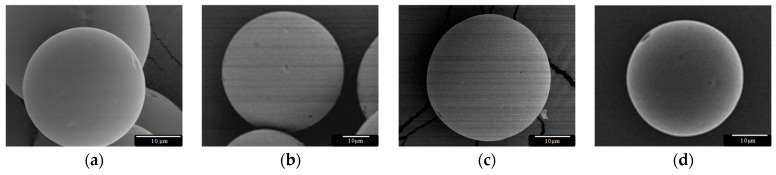
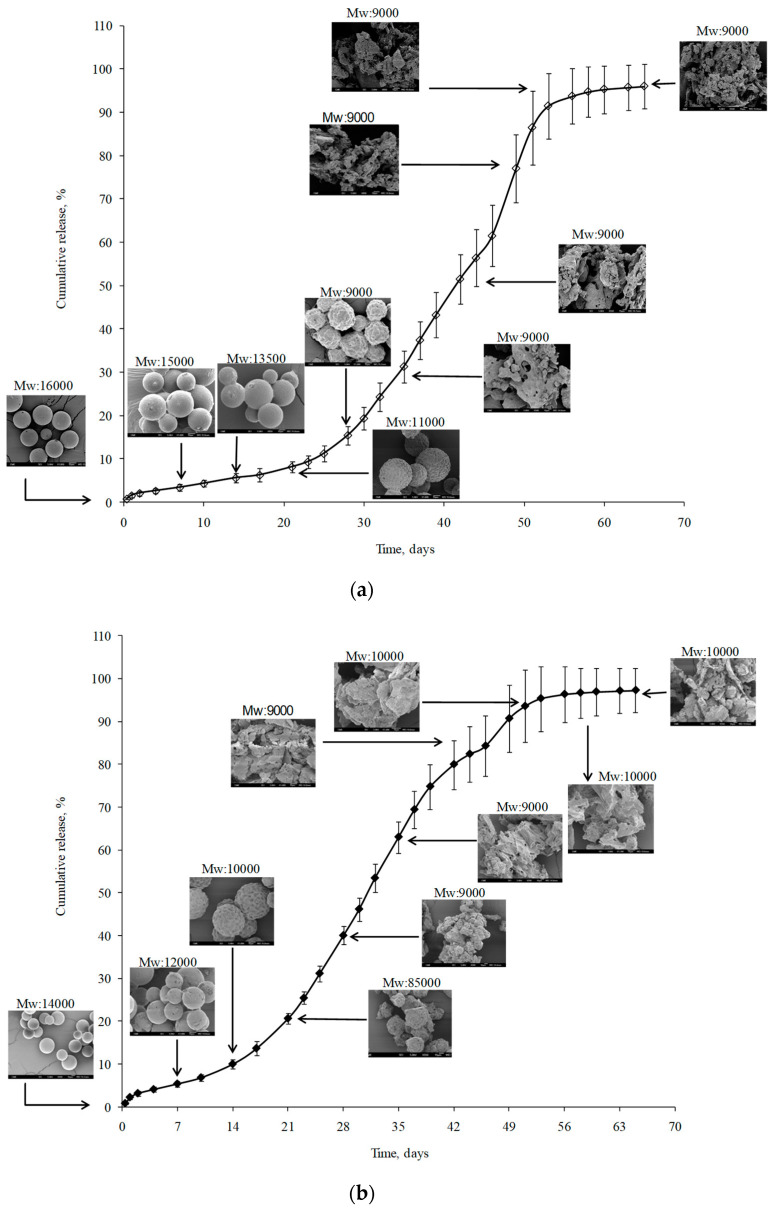
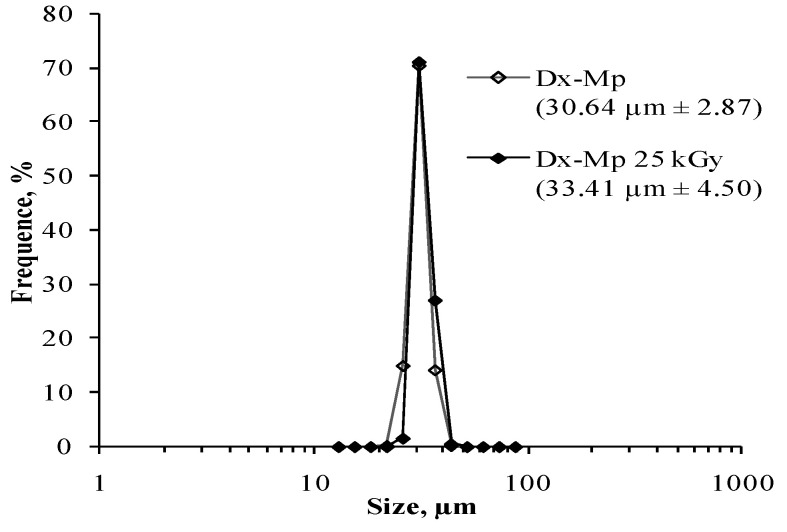
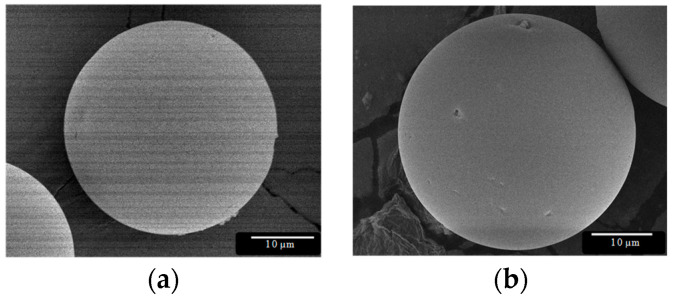
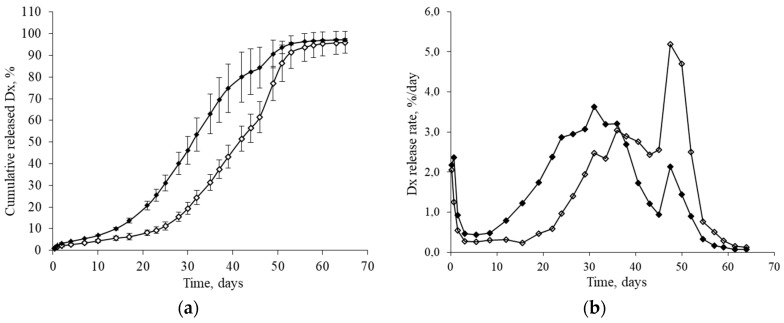
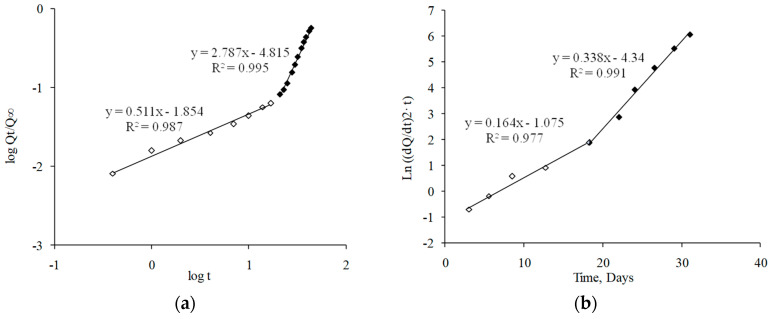
Many diseases affecting the posterior segment of the eye require repeated intravitreal injections with corticosteroids in chronic treatments. The periocular administration is a less invasive route attracting considerable attention for long-term therapies. In the present work, dexamethasone-loaded poly(lactic--glycolic) acid (PLGA) microspheres (Dx-MS) were prepared using the oil-in-water (O/W) emulsion solvent evaporation technique. MS were characterized in terms of mean particle size and particle size distribution, external morphology, polymer integrity, drug content, and in vitro release profiles. MS were sterilized by gamma irradiation (25 kGy), and dexamethasone release profiles from sterilized and non-sterilized microspheres were compared by means of the similarity factor (f). The mechanism of drug release before and after irradiation exposure of Dx-MS was identified using appropriate mathematical models. Dexamethasone release was sustained in vitro for 9 weeks. The evaluation of the in vivo tolerance was carried out in rabbit eyes, which received a sub-Tenon injection of 5 mg of sterilized Dx-MS (20-53 µm size containing 165.6 ± 3.6 µg Dx/mg MS) equivalent to 828 µg of Dx. No detectable increase in intraocular pressure was reported, and clinical and histological analysis of the ocular tissues showed no adverse events up to 6 weeks after the administration. According to the data presented in this work, the sub-Tenon administration of Dx-MS could be a promising alternative to successive intravitreal injections for the treatment of chronic diseases of the back of the eye.
许多影响眼后段的疾病在长期治疗中需要反复进行玻璃体内注射皮质类固醇。眼周给药是一种侵入性较小的途径,在长期治疗中备受关注。在本研究中,采用水包油(O/W)乳液溶剂蒸发技术制备了载地塞米松的聚乳酸-乙醇酸共聚物(PLGA)微球(Dx-MS)。对微球的平均粒径和粒径分布、外部形态、聚合物完整性、药物含量及体外释放曲线进行了表征。微球经γ射线辐照(25 kGy)灭菌,并通过相似因子(f)比较灭菌和未灭菌微球的地塞米松释放曲线。使用适当的数学模型确定Dx-MS辐照前后的药物释放机制。地塞米松在体外可持续释放9周。在兔眼中进行了体内耐受性评估,兔眼接受了5 mg灭菌Dx-MS(粒径20 - 53 µm,含165.6 ± 3.6 µg Dx/mg MS)的Tenon囊下注射,相当于828 µg Dx。未报告眼压有可检测到的升高,给药后6周内眼组织的临床和组织学分析未显示不良事件。根据本研究提供的数据,Tenon囊下注射Dx-MS可能是连续玻璃体内注射治疗眼后段慢性疾病的一种有前景的替代方法。