Systems Biology Ireland, School of Medicine, University College Dublin, Dublin 4, Ireland.
UCD Charles Institute of Dermatology, School of Medicine, University College Dublin, Dublin 4, Ireland.
Biomolecules. 2021 Feb 7;11(2):236. doi: 10.3390/biom11020236.
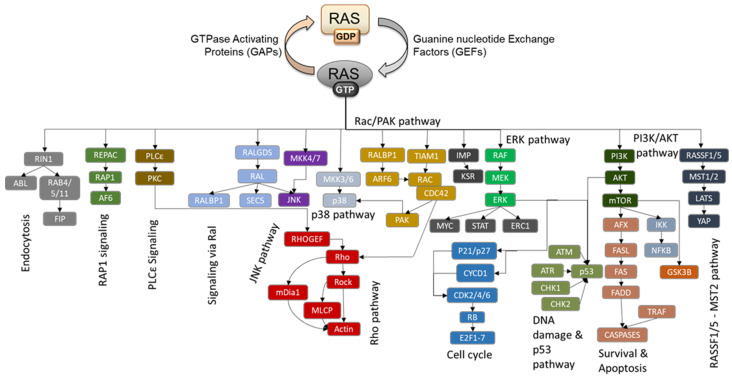
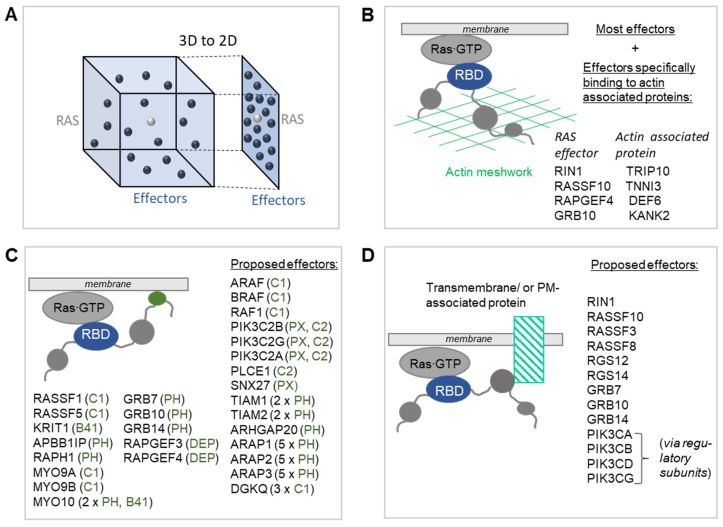
RAS oncogenes are among the most commonly mutated proteins in human cancers. They regulate a wide range of effector pathways that control cell proliferation, survival, differentiation, migration and metabolic status. Including aberrations in these pathways, RAS-dependent signaling is altered in more than half of human cancers. Targeting mutant RAS proteins and their downstream oncogenic signaling pathways has been elusive. However, recent results comprising detailed molecular studies, large scale omics studies and computational modeling have painted a new and more comprehensive portrait of RAS signaling that helps us to understand the intricacies of RAS, how its physiological and pathophysiological functions are regulated, and how we can target them. Here, we review these efforts particularly trying to relate the detailed mechanistic studies with global functional studies. We highlight the importance of computational modeling and data integration to derive an actionable understanding of RAS signaling that will allow us to design new mechanism-based therapies for RAS mutated cancers.
RAS 癌基因是人类癌症中最常见的突变蛋白之一。它们调节广泛的效应途径,控制细胞增殖、存活、分化、迁移和代谢状态。包括这些途径的异常,RAS 依赖性信号在超过一半的人类癌症中发生改变。靶向突变 RAS 蛋白及其下游致癌信号通路一直难以实现。然而,最近的研究结果包括详细的分子研究、大规模组学研究和计算模型,为 RAS 信号描绘了一个新的、更全面的图景,帮助我们理解 RAS 的复杂性、其生理和病理功能如何调节,以及我们如何靶向它们。在这里,我们回顾这些努力,特别是试图将详细的机制研究与全局功能研究联系起来。我们强调计算建模和数据集成的重要性,以得出对 RAS 信号的可操作理解,这将使我们能够为 RAS 突变癌症设计新的基于机制的治疗方法。