Agricultural Biotechnology Centre, Faculty of Agriculture, University of Peradeniya, Peradeniya, Sri Lanka.
Postgraduate Institute of Science, University of Peradeniya, Peradeniya, Sri Lanka.
PLoS One. 2021 Feb 10;16(2):e0245592. doi: 10.1371/journal.pone.0245592. eCollection 2021.
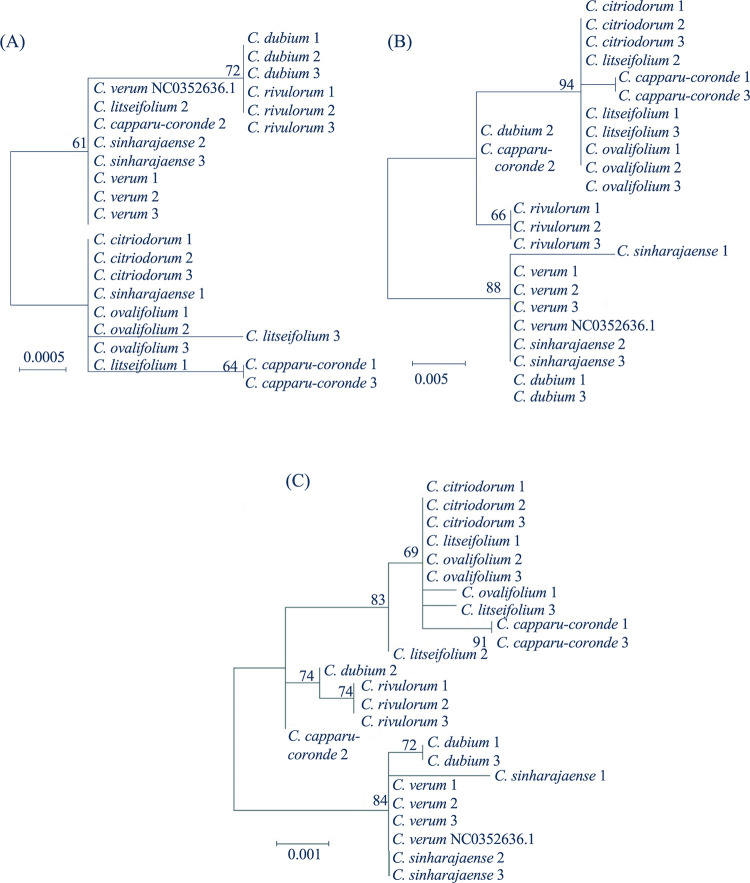
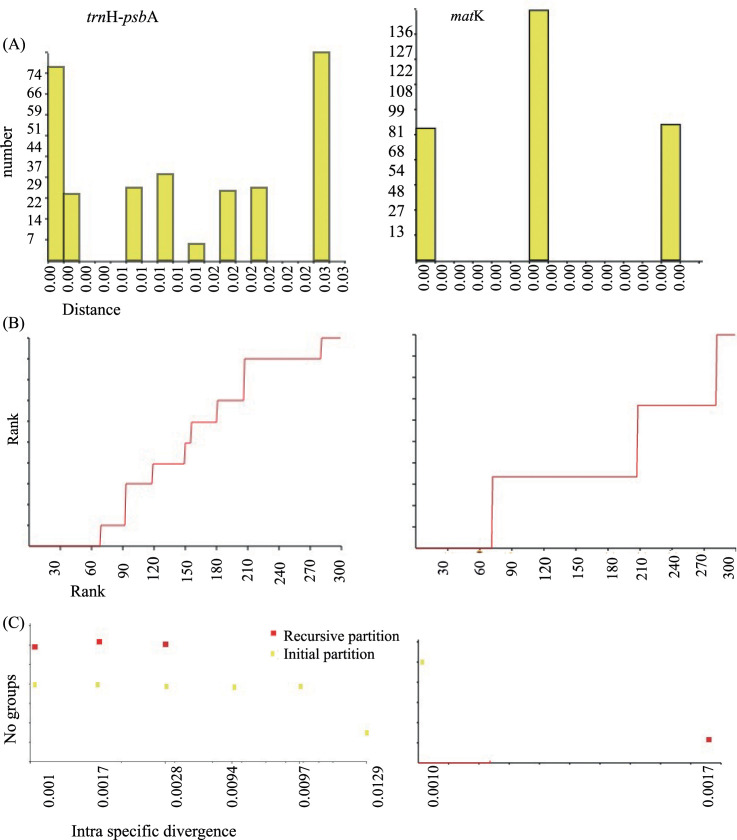
The genus Cinnamomum consists of about 250 species spread globally. Out of these, C. verum (C. zeylanicum), also known as true cinnamon or Ceylon cinnamon, has gained worldwide attention due to its culinary uses and medicinal values. Sri Lanka is the largest true cinnamon producer in the world and accounts for about 80-90% of global production. Other than the cultivated species, Sri Lankan natural vegetation is home to seven endemic wild species of the genus Cinnamomum. While these are underutilized, proper identification and characterization are essential steps in any sustainable conservation and utilization strategies. Currently, species identification is purely based on morphological traits, and intraspecific diversity has made it more challenging. In this study, all the eight Cinnamomum species found in Sri Lanka, C. capparu-coronde, C. citriodorum C. dubium, C. litseifolium, C. ovalifolium, C. rivulorum, C. sinharajaense, and C. verum were collected in triplicates and identified using typical morphological traits. DNA extracted with the same collection was assessed with universal barcoding regions, rbcL, matK, and trnH-psbA. While no intraspecific sequence differences were observed in C. citriodorum, C. rivulorum, and C. verum, the others had polymorphic sites in one, two, or all regions assessed. Interestingly, two individuals of C. sinharajaense had identical barcodes to the cultivated species C. verum, while the other one had one variable cite in matK region and three cites in trnH-psbA reigon. Further, one C. dubium and one C. capparu-coronde accession each had identical, rbcL, and trnH-psbA sequences while those had only a single nucleotide variation observed in matK region. Overall, the phylogeny of Cinnamomum species found in Sri Lanka could not be completely resolved with DNA barcoding regions studied.
樟属约有 250 个种分布于全球。其中,肉桂(C. verum,即锡兰肉桂)因其烹饪用途和药用价值而备受关注。斯里兰卡是全球最大的肉桂产地,约占全球产量的 80-90%。除了栽培种之外,斯里兰卡的自然植被还栖息着七种肉桂属的特有野生种。虽然这些种尚未得到充分利用,但正确的鉴定和特征描述是任何可持续保护和利用策略的必要步骤。目前,种的鉴定纯粹基于形态特征,种内的多样性使其变得更具挑战性。在本研究中,收集了斯里兰卡的所有八种肉桂属植物,即樟(C. capparu-coronde)、柠檬樟(C. citriodorum)、细叶樟(C. dubium)、山鸡椒(C. litseifolium)、卵叶樟(C. ovalifolium)、瑞丽江樟(C. rivulorum)、辛哈拉贾樟(C. sinharajaense)和肉桂(C. verum),并使用典型的形态特征对其进行了三重采集和鉴定。使用相同的采集方法提取的 DNA 被评估了通用条形码区域 rbcL、matK 和 trnH-psbA。虽然在柠檬樟、瑞丽江樟和肉桂中未观察到种内序列差异,但其他种在评估的一个、两个或所有区域均存在多态性位点。有趣的是,辛哈拉贾樟的两个个体与栽培种肉桂具有相同的条形码,而另一个个体在 matK 区域有一个变异位点,在 trnH-psbA 区域有三个变异位点。此外,一个细叶樟和一个樟(C. capparu-coronde)个体在 rbcL 和 trnH-psbA 序列上完全相同,而在 matK 区域仅观察到一个核苷酸变异。总体而言,用所研究的 DNA 条形码区域无法完全解析斯里兰卡肉桂属物种的系统发育关系。