Barbour A G
Department of Microbiology, University of Texas Health Science Center, San Antonio 78284.
J Clin Microbiol. 1988 Mar;26(3):475-8. doi: 10.1128/jcm.26.3.475-478.1988.
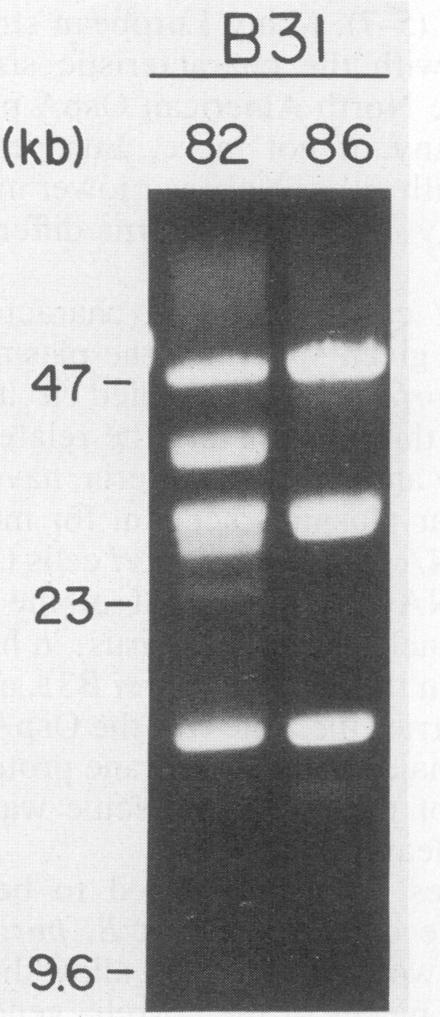
A simple procedure for extraction of plasmid-enriched DNA from borreliae was used in a plasmid analysis of 13 strains of the Lyme disease agent, Borrelia burgdorferi. The extracted DNA was subjected to low-percentage agarose gel electrophoresis and examined either directly by ethidium bromide staining or after hybridization of the plasmids in situ with a DNA probe for the gene encoding the major outer membrane protein OspA. Each isolate had four to seven discernible plasmids of various sizes. Only 2 of the 13 strains had the same plasmid profile. The ospA gene probe hybridized to large plasmids to strains from both North America and Europe. A strain which had been passaged many times was found to have lost two of the six plasmids originally present. These findings indicate the potential usefulness of plasmid analysis as a strain-typing procedure and for identifying possible plasmid-conferred virulence factors.
一种从疏螺旋体中提取富含质粒DNA的简单方法被用于对13株莱姆病病原体伯氏疏螺旋体进行质粒分析。提取的DNA进行低百分比琼脂糖凝胶电泳,要么直接用溴化乙锭染色检查,要么在质粒原位与编码主要外膜蛋白OspA的基因的DNA探针杂交后检查。每个分离株有四到七个大小各异、可辨别的质粒。13株菌株中只有2株具有相同的质粒图谱。ospA基因探针与来自北美和欧洲菌株的大质粒杂交。发现一株经过多次传代的菌株丢失了原本存在的六个质粒中的两个。这些发现表明质粒分析作为一种菌株分型程序以及用于鉴定可能由质粒赋予的毒力因子具有潜在用途。