Mahidol-Oxford Tropical Medicine Research Unit, Nuffield Department of Medicine, University of Oxford, Oxford, UK.
Institute of Biomedical Engineering, Department of Engineering Science, University of Oxford, Oxford, UK.
Nat Commun. 2021 Feb 10;12(1):915. doi: 10.1038/s41467-021-21134-2.
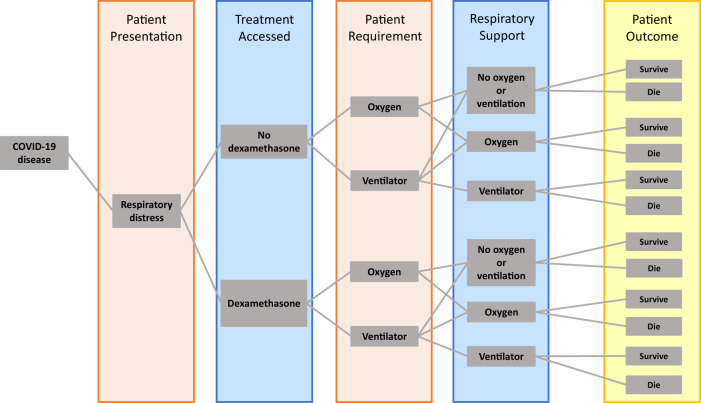
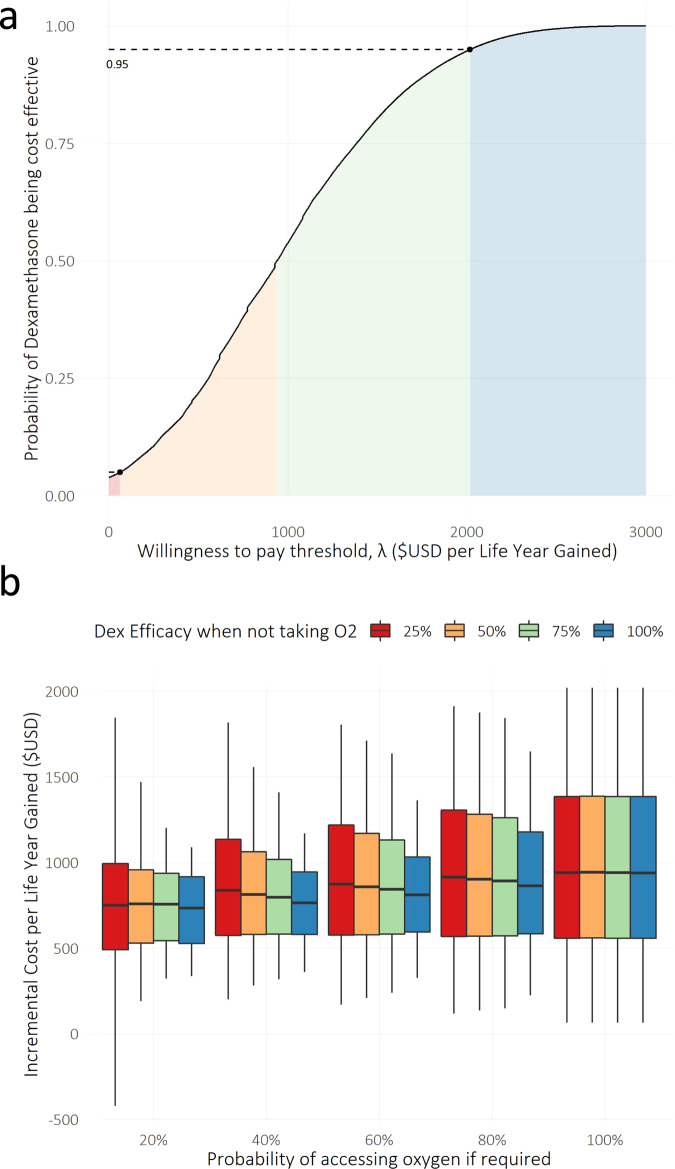
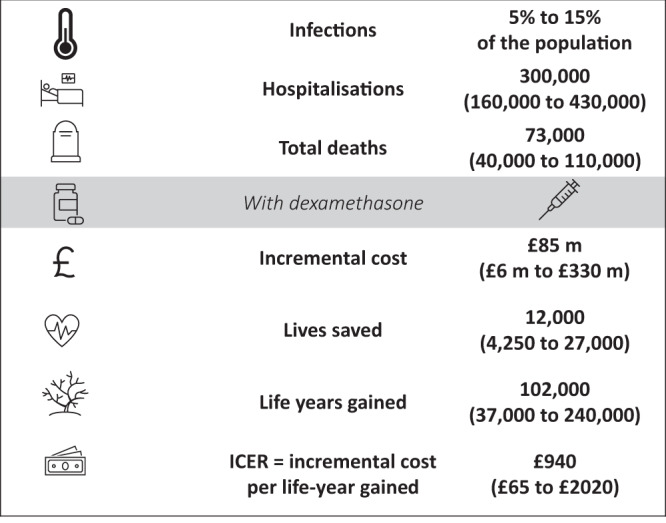
Dexamethasone can reduce mortality in hospitalised COVID-19 patients needing oxygen and ventilation by 18% and 36%, respectively. Here, we estimate the potential number of lives saved and life years gained if this treatment were to be rolled out in the UK and globally, as well as the cost-effectiveness of implementing this intervention. Assuming SARS-CoV-2 exposure levels of 5% to 15%, we estimate that, for the UK, approximately 12,000 (4,250 - 27,000) lives could be saved between July and December 2020. Assuming that dexamethasone has a similar effect size in settings where access to oxygen therapies is limited, this would translate into approximately 650,000 (240,000 - 1,400,000) lives saved globally over the same time period. If dexamethasone acts differently in these settings, the impact could be less than half of this value. To estimate the full potential of dexamethasone in the global fight against COVID-19, it is essential to perform clinical research in settings with limited access to oxygen and/or ventilators, for example in low- and middle-income countries.
地塞米松可分别降低需吸氧和通气治疗的住院 COVID-19 患者 18%和 36%的死亡率。在此,我们评估了如果在英国和全球范围内推广该治疗方案,可能拯救的生命数量和延长的生命年数,以及实施这一干预措施的成本效益。假设 SARS-CoV-2 的暴露水平为 5%至 15%,我们估计,2020 年 7 月至 12 月期间,英国大约可挽救 12000 人(4250-27000 人)的生命。假设地塞米松在氧气治疗机会有限的情况下具有相似的效果大小,那么在同一时期,全球范围内可挽救约 65 万人(24 万-140 万人)的生命。如果地塞米松在这些环境中的作用不同,其影响可能不到这一数值的一半。为了评估地塞米松在全球抗击 COVID-19 中的全部潜力,在氧气和/或呼吸机获取机会有限的环境中,例如在中低收入国家开展临床研究至关重要。